
Small copper vs Eastern tailed-blue
These two are easy to mix up. Here's how to tell a small copper from an eastern tailed-blue, and whether either one bites or stings.
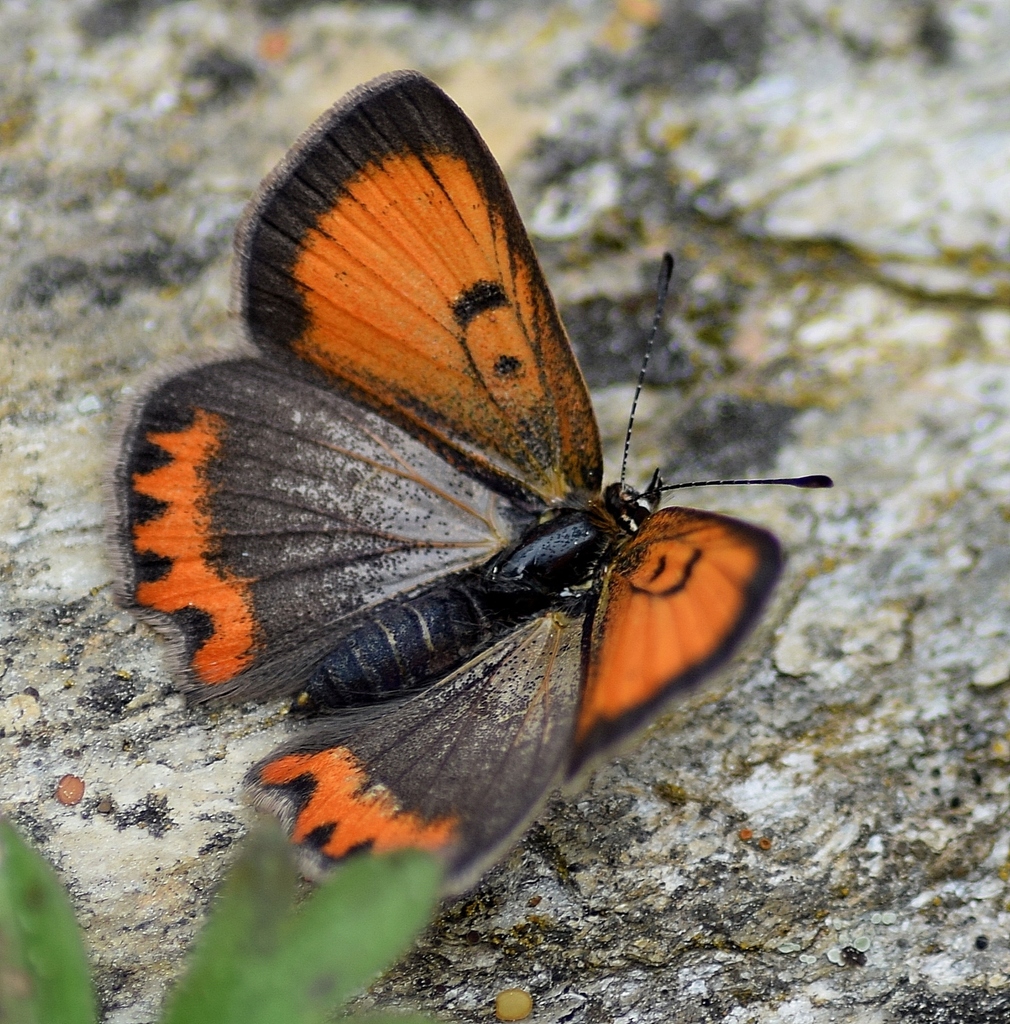
Small copper
Lycaena phlaeas
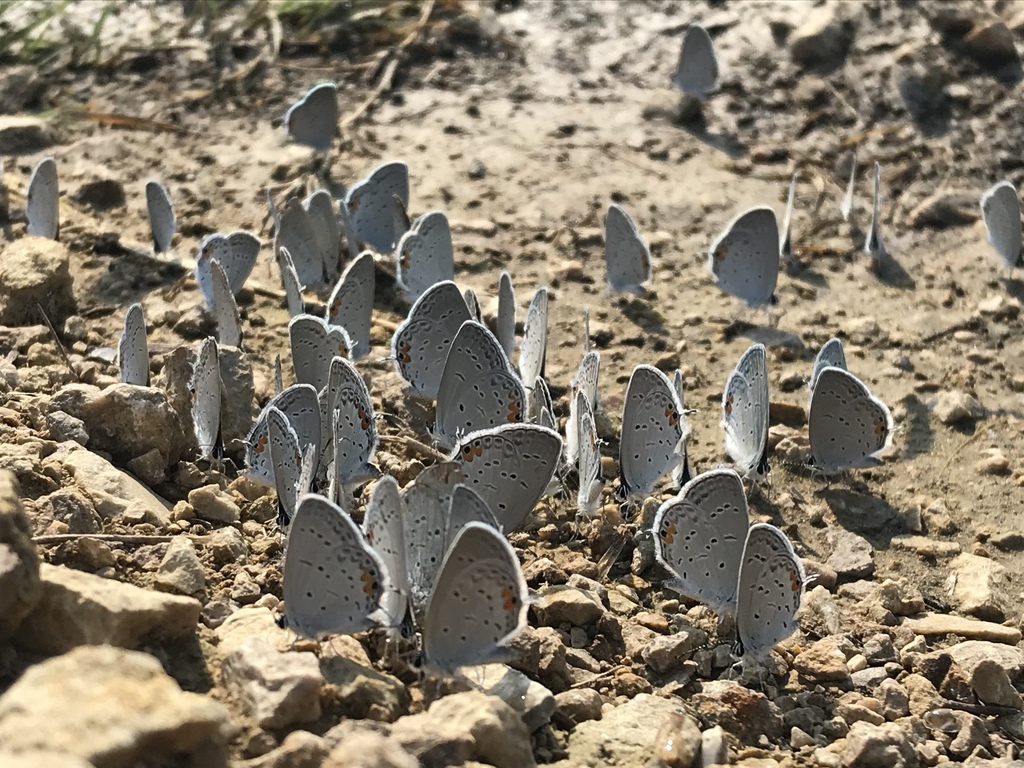
Eastern tailed-blue
Cupido comyntas
≠The key differences
Copper has a distinctive orange upper surface and different underside spotting; no hindwing tails.
⚖︎Side by side
| Small copper | Eastern tailed-blue | |
|---|---|---|
| To humans | Non-toxic | Non-toxic |
| Size | 20-35 mm wingspan | Wingspan 18-30 mm |
| Colours | Bright orange, Dark brown, Black, Pale buff | Sky blue, Warm brown, Pale gray, Orange |
| Family | Lycaenidae | Lycaenidae |
| Habitat | Open, sunny habitats with short vegetation: meadows, road verges, heathland, brownfield sites, gardens and coastal grassland. | Open, sunny places: fields, meadows, roadsides, lawns, gardens, and disturbed sites |
| Range | Widespread across Europe and Asia, North Africa, and present in parts of North America (Holarctic distribution with regional subspecies). | Widespread across eastern and central North America: from eastern Canada south through the eastern and central United States and into parts of Mexico. Less common or replaced by similar species in far western North America. |
| Active | Multiple broods from spring to autumn (commonly April to October in temperate zones); active during daylight, especially warm, sunny hours. | Spring through fall (earliest broods in spring, continuing into autumn); active during daylight, especially in sunny conditions |
| Pest? | No | No |
🔍How to spot a small copper
- Bright orange upperwings with a broad dark brown border and several black spots on the forewing.
- Small wingspan (20-35 mm) and compact rounded wing shape compared with larger copper species.
- Paler underside with faint submarginal spots and less vivid orange—useful when wings are closed.
- Frequent low, fast flight over short vegetation and habit of basking with wings open on sunny days.
🔍How to spot an eastern tailed-blue
- Very small wingspan (about 18-30 mm) — noticeably smaller than many other common blues
- Tiny tail-like projection on each hindwing plus an orange submarginal spot near the tail on the underside
- Males bluish upperside with narrow dark border; females brownish with blue dusting
- Underside pale gray with small dark spots; check hindwing for the orange spot and short tail
?Frequently asked questions
What is the difference between a small copper and an eastern tailed-blue?
Copper has a distinctive orange upper surface and different underside spotting; no hindwing tails.
Is a small copper or an eastern tailed-blue more dangerous?
Small copper: Non-toxic. Eastern tailed-blue: Non-toxic. Harmless to people. Eastern tailed-blues do not bite or sting and are harmless to people.
Identification from photos is never certain: don't handle insects you can't identify, and get medical advice for bites, stings or allergic reactions.