
Small copper
Lycaena phlaeas · Coppers
A small, brightly coloured copper-and-brown butterfly common in open grassy habitats; caterpillars feed on sorrels and docks.
!Is the small copper dangerous?
No. Harmless to people. Does not bite or sting. No known medically significant toxins; handle gently to avoid damaging delicate wings.
Pets
Harmless to pets. Not poisonous if ingested, though eating insects is not recommended for pet diets.
📖Overview
The small copper is a compact butterfly known for its bright orange upper wings with dark brown margins and spots. It occupies a wide range of open habitats such as meadows, grassland, wasteland and urban lawns. Adults visit flowers for nectar and are active in warm weather; larvae feed mainly on plants in the dock and sorrel family (Rumex). The species often produces two to four broods per year where the climate allows and can be locally abundant.
🔍How to identify a small copper
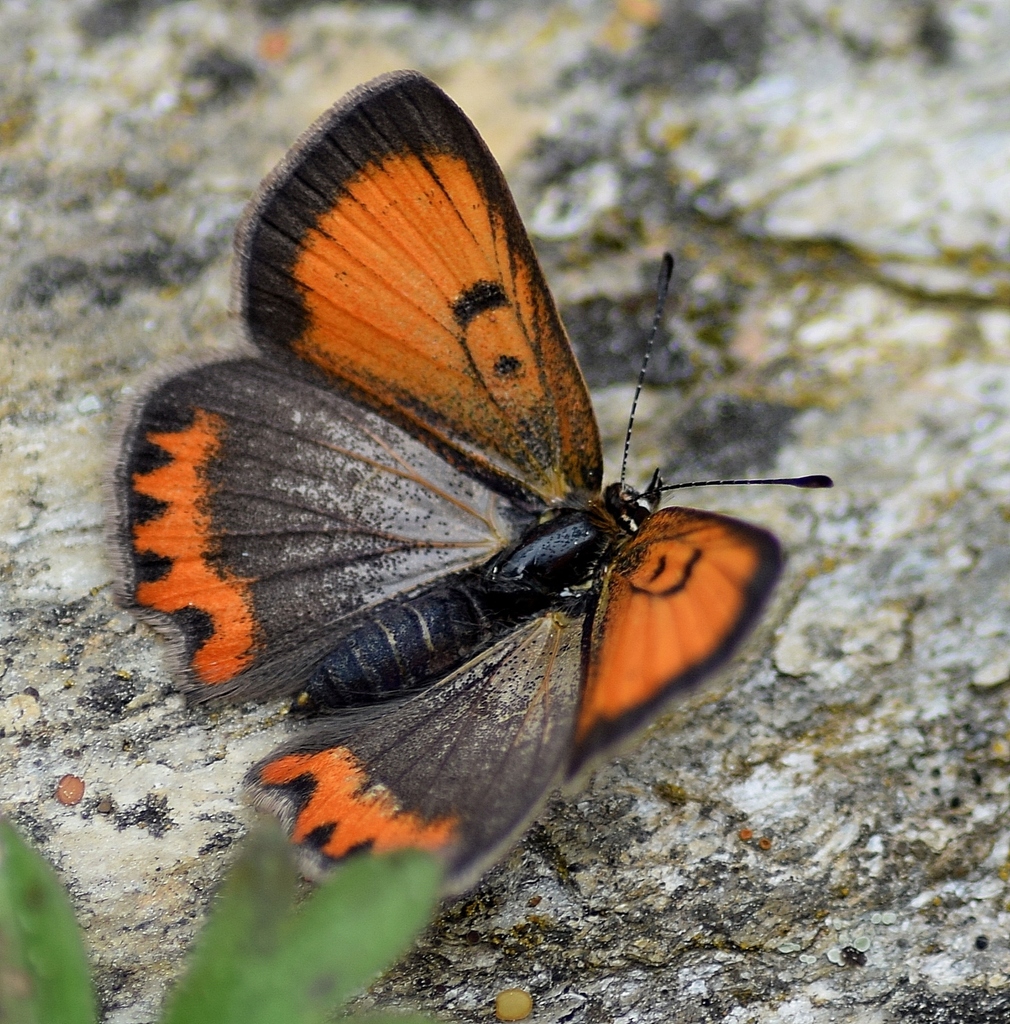
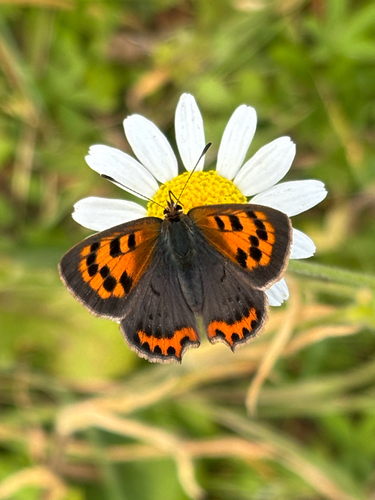
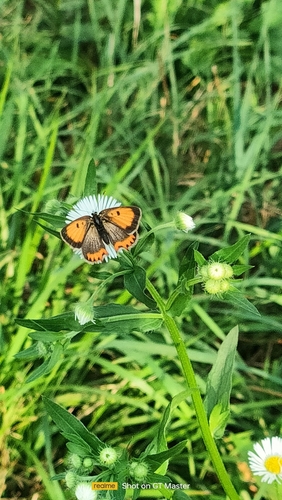
Upperwings: vivid orange panels bordered and spotted with dark brown or black; forewings usually show several black spots within the orange field. Underside: paler, often yellowish or grey-buff with small dark spots and a row of faint submarginal spots. Wingspan is small and shape compact with rounded forewing tips. Males are generally similar to females but may show slightly brighter ground colour.
- Bright orange upperwings with a broad dark brown border and several black spots on the forewing.
- Small wingspan (20-35 mm) and compact rounded wing shape compared with larger copper species.
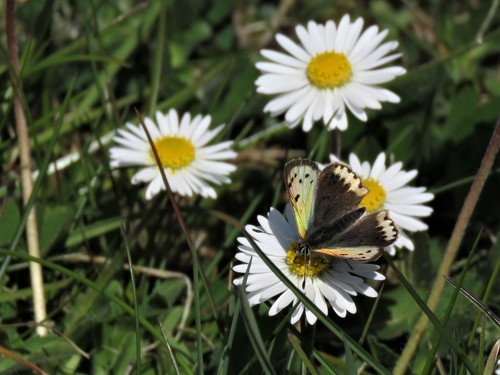
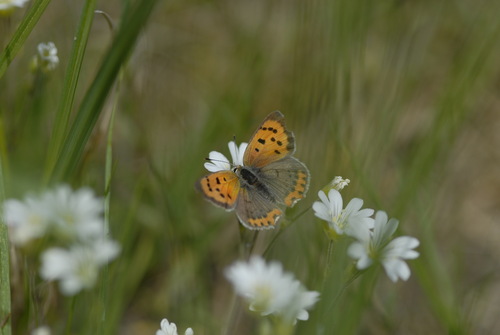
- Paler underside with faint submarginal spots and less vivid orange—useful when wings are closed.
- Frequent low, fast flight over short vegetation and habit of basking with wings open on sunny days.
Lookalikes
Scarce copper Lycaena virgaureae
Scarce copper is generally larger with different spot patterns and often a less broad dark border on the upperwing; ranges overlap only in some areas.
Purple-edged copper Lycaena hippothoe
Purple-edged copper has a distinct purple sheen and different underside pattern; usually found in moister, more northerly habitats.
Large copper Lycaena dispar
Larger, and males have an almost unspotted bright orange upperside; the hindwing underside is bluish-grey with an orange band near the edge. Usually found in wet fens and marshes.
↻Life cycle
Egg
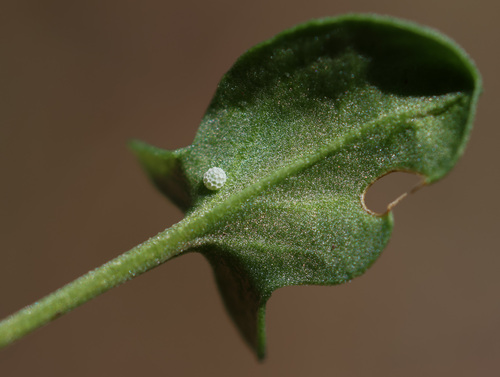
Small eggs are laid singly on or near the foodplant (Rumex species).
Larva (caterpillar)
Greenish caterpillars feed on the leaves and flowers of sorrels and docks; they grow through several instars over days to weeks depending on temperature.
Pupa (chrysalis)
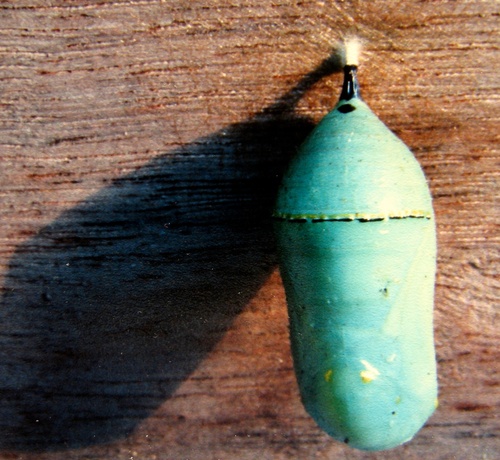
Pupation occurs close to the ground among vegetation; the pupa is relatively inconspicuous and lasts about 1-3 weeks, or longer if overwintering.
Adult (butterfly)
Adults emerge to feed on nectar, mate and lay eggs; often produce multiple generations per year in warm areas.
🍃Diet and predators
Young eat
Leaves and flowers of dock and sorrel plants (Rumex spp.).
Adults eat
Nectar from a range of small flowers such as thistles, knapweeds and other composite and herbaceous flowers.
Predators of the young
Predatory insects, spiders, parasitic wasps and flies, and birds that forage among vegetation.
Predators of adults
Birds, dragonflies, and other aerial insectivores; also predation by spiders and insectivorous mammals when roosting.
🌱Effect on plants and gardens
Larvae feed mainly on docks and sorrels (Rumex species). In normal numbers they do not cause significant agricultural damage but may defoliate individual plants locally.
📍Where and when to find it
Look in sunny, open areas with short vegetation. Adults visit low flowers; eggs and larvae are on docks and sorrels (Rumex) often at the base of plants.
Best time
April to October in temperate regions, with peak activity on warm, sunny days and during the middle of the day.
Observation tips
Approach slowly and photograph with wings both open and closed to capture upperwing pattern and underside; search low vegetation for resting or nectaring individuals.
✨Fun facts
- Despite its small size, the small copper is highly territorial: males often defend short perches and dart at intruders.
- It is one of the most widespread copper butterflies, with several local subspecies adapted to different climates.
- Caterpillars feed on common, often weedy plants (docks and sorrels), which helps the species thrive in human-modified habitats.
?Frequently asked questions
Do small coppers bite?
No. They are harmless and do not bite or sting people.
Why is there a small copper in my garden?
They are attracted to sunny patches with nectar flowers and hostplants (docks and sorrels). Gardens with short vegetation and flowers are suitable habitat.
How can I attract small coppers to my garden?
Leave some docks or sorrels for caterpillars, provide a variety of nectar-rich flowers and sunny, sheltered spots for basking.
Are small coppers endangered?
Status varies regionally. In many places they are common and stable, though local declines can occur where habitat is lost. No global IUCN threatened listing widely applied.
How do I tell a small copper from similar orange butterflies?
Look for the small size, dark brown borders with black spots on the orange upperwings and the pale, spotted underside; compare with regional field guides for precise separation.
📷Photos of the small copper
More butterflies & moths
This guide was written with AI assistance and fact-checked, last updated 2026-10-10. Identification from photos is never certain: don't handle insects you can't identify, and get medical advice for bites, stings or allergic reactions. More about the small copper: iNaturalist, Wikipedia.