
Elephant hawk-moth
Deilephila elpenor · Hawk-moths
A striking pink-and-olive nocturnal moth with a 45-60 mm wingspan; common in gardens and woodlands across much of Eurasia.
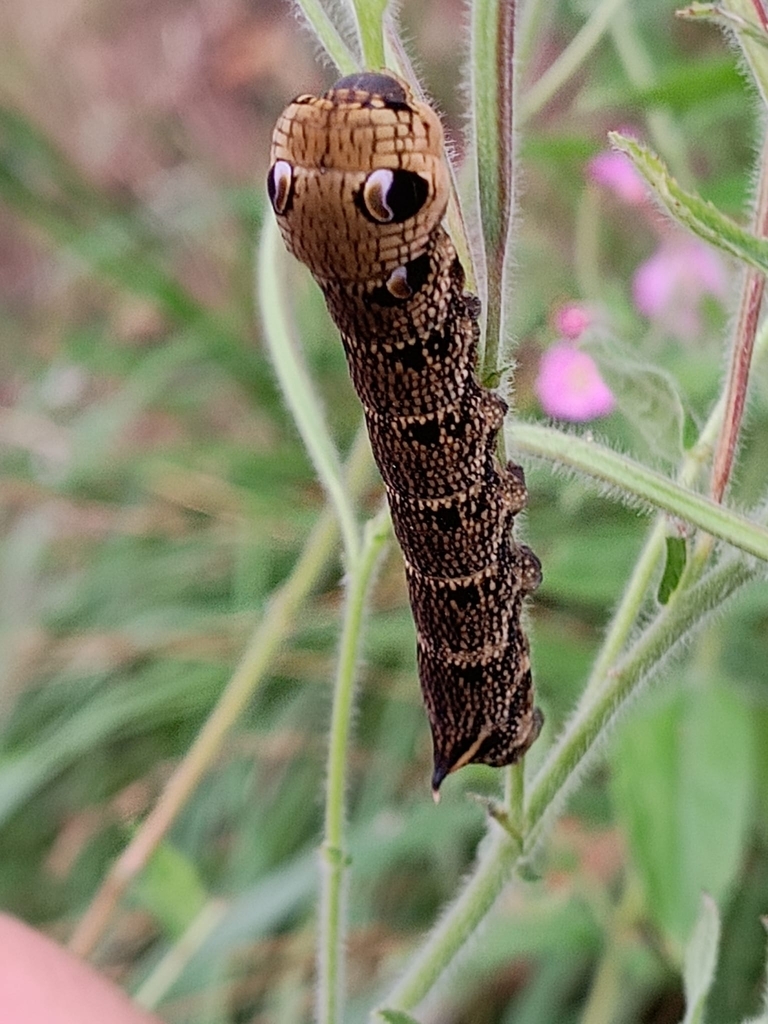
!Is the elephant hawk-moth dangerous?
No. Harmless to people. Adults do not bite or sting. Larvae may be handled briefly without harm, but as with any caterpillar wash hands after handling to avoid skin irritation in sensitive individuals.
Pets
Not a threat to pets. Curious pets might try to eat a caterpillar; this may cause mild stomach upset but the species is not poisonous to dogs or cats.
📖Overview
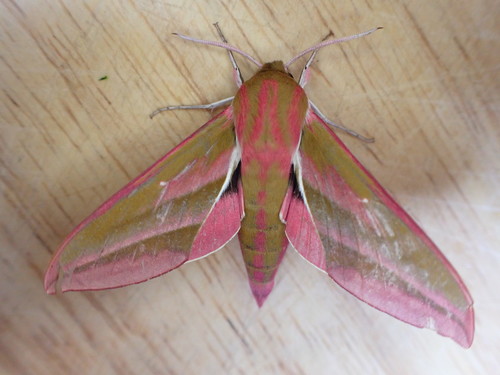
The elephant hawk-moth is a medium-sized nocturnal moth noted for its bright pink and olive colouring and a heavy, streamlined body typical of hawk-moths. Adults fly at dusk and through the night, visiting flowers for nectar. The caterpillar is large, brown or green with eye-like markings and its tapering, trunk-like front end inspired the common name "elephant". The species is widespread across Europe and into Asia and is commonly seen in gardens, woodland edges and hedgerows where larval food plants occur.
🔍How to identify an elephant hawk-moth
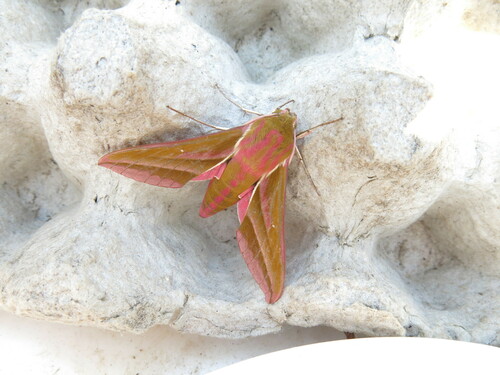
Adult wings are elongated and pointed; forewings show a mix of pink and olive tones with darker lines and patches, while the hindwings are usually paler pink or brownish. The body is stout and robust. Males and females look similar. Larvae are large (up to 70 mm), thick-bodied, usually brown or green, with conspicuous eye-like marks on the chest and a tapered rear end; when disturbed they rear up, enhancing the false-head effect.
- Pink and olive forewings with contrasting lines and patches; hindwings paler pink or brown.
- Stout, streamlined body typical of hawk-moths and a wingspan of 45-60 mm.
- Large caterpillar with eye-like marks and a habit of rearing the anterior body when disturbed.
Lookalikes
Small elephant hawk-moth Deilephila porcellus
Smaller (wingspan ~40 mm) and more uniformly pink/red without the strong olive tones; overall more compact appearance.
Poplar hawk-moth Laothoe populi
Poplar hawk-moth is larger and grey-brown with scalloped wings, typically resting with the hindwings projecting in front of the forewings; it lacks the bright pink colouring of the elephant hawk-moth.
↻Life cycle
Egg
Small pale eggs are laid singly on host plant leaves or near the base of plants.
Larva (caterpillar)
A large, heavy-bodied caterpillar that feeds on host plants; it grows through several instars and shows eye-like markings and a defensive rearing posture.
Pupa
The caterpillar pupates in a brown chrysalis in the soil or leaf litter, where it overwinters in cooler regions or develops into a pupa that emerges after a few weeks in multivoltine populations.
Adult (moth)
Nocturnal nectar-feeding moth with strong, rapid flight and a proboscis for feeding at flowers; adults mate and females lay eggs on or near larval food plants.
🍃Diet and predators
Young eat
Leaves of willowherbs (Epilobium), bedstraws (Galium), fuchsia and other low-growing herbaceous plants.
Adults eat
Nectar from a range of flowers including honeysuckle, petunia, phlox and other tubular, night-scented or nectar-rich flowers.
Predators of the young
Birds, small mammals, predatory insects and parasitic wasps and flies.
Predators of adults
Bats, nocturnal birds and predatory insects.
🌱Effect on plants and gardens
Larvae feed on a range of herbaceous plants such as willowherbs (Epilobium), bedstraws (Galium), fuchsia and other low-growing plants. Adults visit nectar-rich flowers (honeysuckle, petunia, phlox) and act as pollinators.
📍Where and when to find it
Adults at night visiting garden and meadow flowers; caterpillars on host plants such as willowherbs, bedstraw and fuchsia; pupae in soil or leaf litter near host plants.
Best time
May to August (peak evenings after dusk); caterpillars most easily found in late summer and autumn.
Observation tips
Look at dusk around nectar-rich flowers, try a light trap or moth-attracting sheet to see adults; search low foliage for large, cryptic caterpillars during the day.
✨Fun facts
- The caterpillar's "elephant" name comes from its trunk-like head and habit of rearing up when threatened.
- Adults are strong fliers and hover at flowers like tiny hummingbirds to feed on nectar.
- The bright pink colouring makes it one of the most instantly recognizable moths in gardens where it occurs.
?Frequently asked questions
Are elephant hawk-moths harmful?
No. They do not bite or sting and are harmless to people and pets.
Do elephant hawk-moth caterpillars eat garden plants?
They feed on a few common herbaceous plants (willowherbs, bedstraw, fuchsia) but rarely occur in numbers large enough to damage gardens.
Why is an elephant hawk-moth in my house?
Adults are nocturnal and attracted to lights; they may accidentally enter houses through open doors or windows at night.
How can I attract elephant hawk-moths to my garden?
Plant nectar-rich, tubular flowers (honeysuckle, petunia, phlox) and keep patches of native host plants such as willowherbs or bedstraw for caterpillars.
How do I get rid of elephant hawk-moths?
They are beneficial pollinators and not pests. If you need to remove one indoors, gently catch it in a jar and release outdoors after dusk; avoid killing them.
📷Photos of the elephant hawk-moth
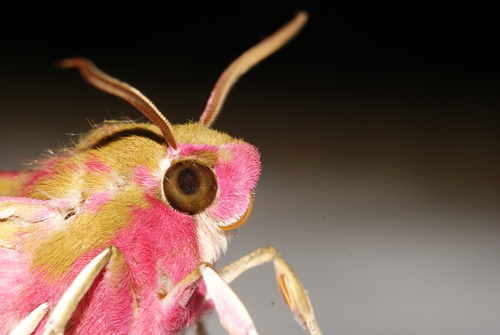
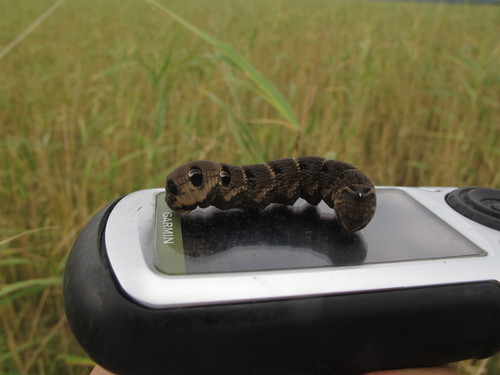
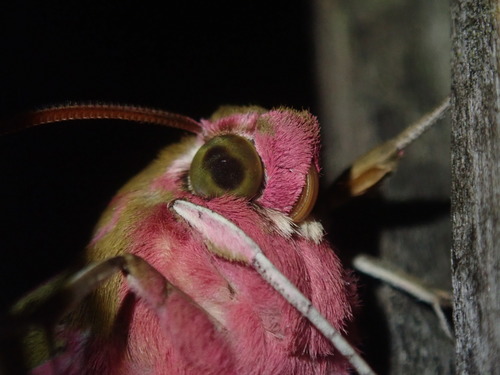
More butterflies & moths
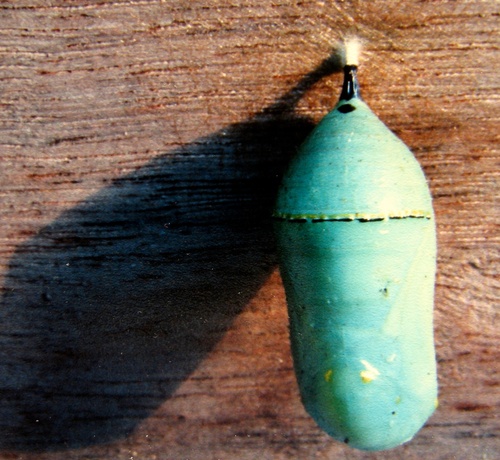
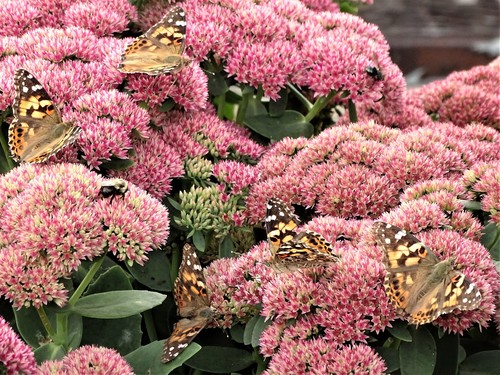
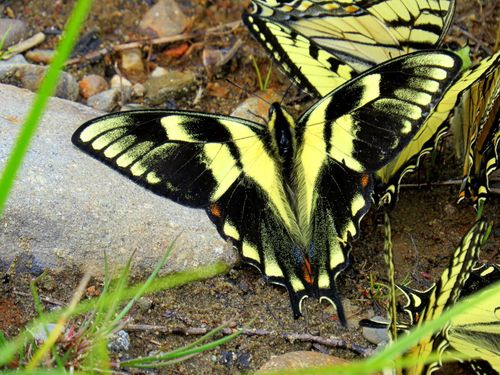
This guide was written with AI assistance and fact-checked, last updated 2026-10-10. Identification from photos is never certain: don't handle insects you can't identify, and get medical advice for bites, stings or allergic reactions. More about the elephant hawk-moth: iNaturalist, Wikipedia.