
Zebra swallowtail
Protographium marcellus · Swallowtail butterflies
A striking black-and-white swallowtail of eastern North America whose caterpillars feed mainly on pawpaw trees.
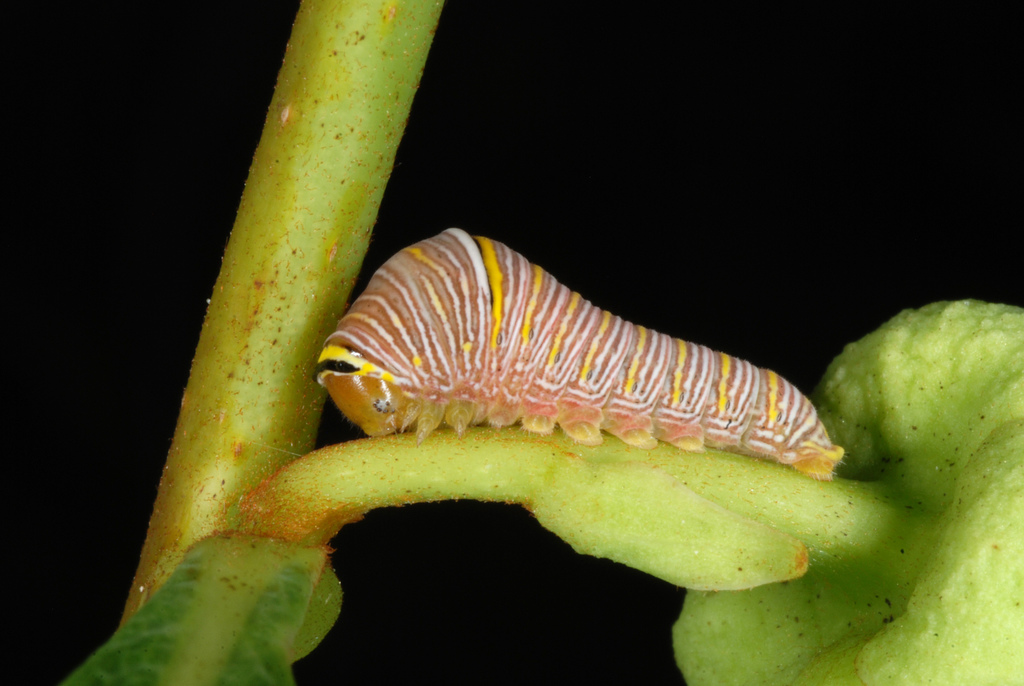
!Is the zebra swallowtail dangerous?
No. Adults and caterpillars are not dangerous to people. Caterpillars have an osmeterium (a defensive scent organ) that can emit an unpleasant smell if handled; some people may find this irritating. No venom or toxic bites/stings.
Pets
Not toxic to pets. As with many non-food items, ingestion of many caterpillars could cause mild gastrointestinal upset in pets; avoid allowing pets to eat large numbers of larvae.
📖Overview
Protographium marcellus, the zebra swallowtail, is a medium-sized swallowtail butterfly found across eastern North America. Adults are active in spring and summer and produce multiple broods where food plants are available. Females lay eggs on pawpaw (Asimina) leaves, and the caterpillars develop and pupate nearby. Adults visit a variety of nectar sources and are often seen flying along woodland edges, near streams and in gardens that contain pawpaw.
🔍How to identify a zebra swallowtail
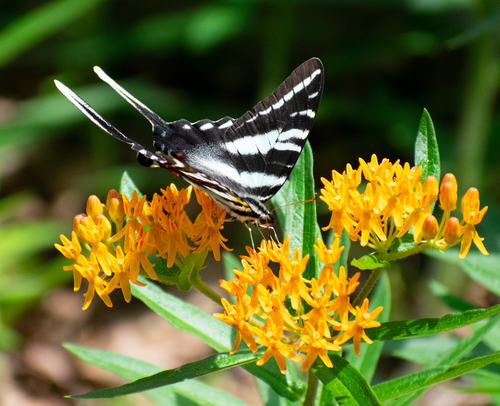
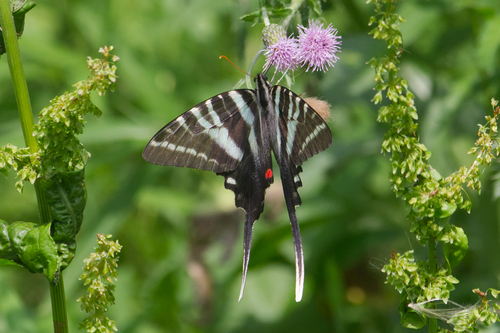
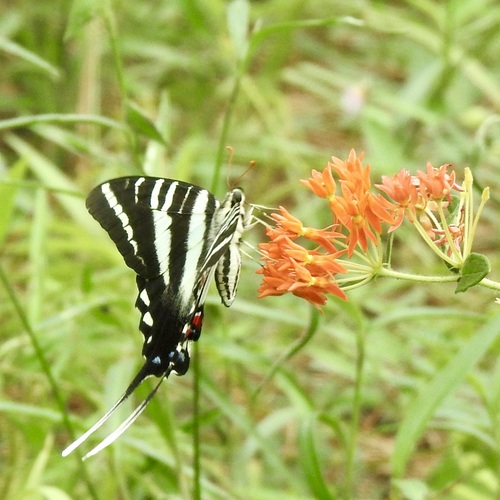
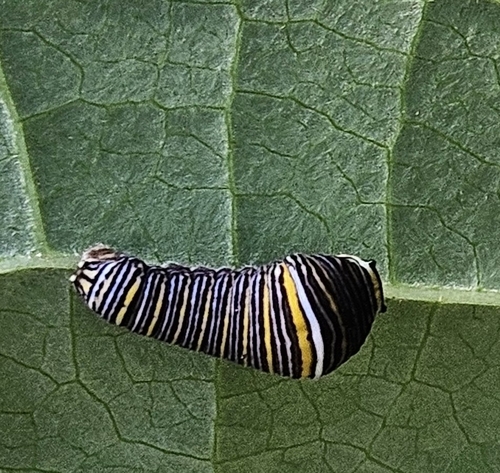
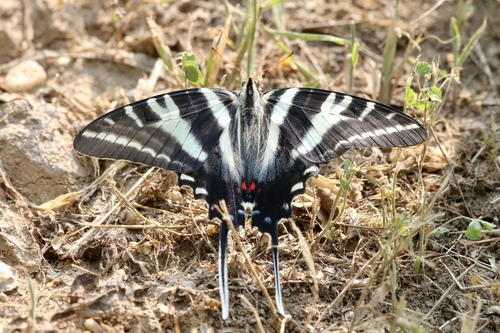
The zebra swallowtail adult has long, sword-like tails on each hindwing and a bold pattern of black stripes on a pale greenish-white background resembling a zebra. The hindwing has red spots near the tail and blue spots along the inner edge, and the underside has a bright red stripe across the hindwing. Spring adults are smaller and paler with shorter tails than summer adults. Young caterpillars are dark, while later instars are green with fine yellow and black bands and a broader black, yellow and white band behind the head; like other swallowtails they have an osmeterium. The chrysalis is compact and green or brown.
- Bold black zebra-like stripes on creamy white wings with long tail extensions on the hindwings
- Red spots near the hindwing tail and a red stripe across the underside of the hindwing
- Caterpillars: green with fine yellow and black bands, found on pawpaw
- Habitat association with pawpaw plants (Asimina) is a strong clue
Lookalikes
Zebra longwing Heliconius charithonia
Also black-and-white striped, but has long, narrow wings without tails and yellow rather than pale greenish-white stripes; found mainly in Florida and southern Texas.
Eastern tiger swallowtail Papilio glaucus
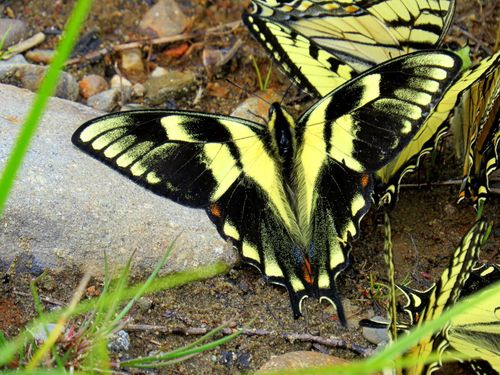
Eastern tiger swallowtail has thicker yellow ground color and black tiger stripes (yellow-dominant), while zebra swallowtail is white/cream with narrow black zebra stripes and distinct tails.
↻Life cycle
Egg
Females lay single pale green eggs on young pawpaw leaves or trunks. Eggs hatch in about 4-10 days depending on temperature.
Larva (caterpillar)
Caterpillars pass through several instars. Young caterpillars are dark; later instars are green with fine yellow and black bands, and all have an osmeterium used to deter predators. Caterpillars are cannibalistic, so usually only one is found per plant.
Pupa (chrysalis)
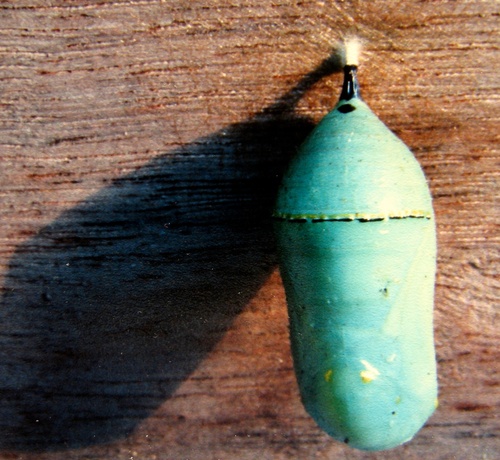
The chrysalis is attached to stems or leaf litter and is mottled brown or green, resembling plant debris. Pupation lasts from about 10 days to several weeks depending on season.
Adult (butterfly)
Adults emerge, feed on nectar, mate, and females seek pawpaw to lay eggs. There are multiple broods per year in much of the range.
🍃Diet and predators
Young eat
Leaves of pawpaw trees (Asimina spp.)
Adults eat
Nectar from flowers such as thistles, milkweed, phlox, redbud, and other nectar-rich species; occasionally sap and rotting fruit
Predators of the young
Birds, predatory insects, parasitic wasps and flies
Predators of adults
Birds, dragonflies, mantids and other predators of butterflies; bright patterns and erratic flight help reduce captures
🌱Effect on plants and gardens
Larvae feed almost exclusively on pawpaw species (Asimina spp.), sometimes on cultivated pawpaw in gardens. Adults visit a wide range of nectar-bearing flowers and can help with pollination.
📍Where and when to find it
Look for adults along woodland edges, streams and gardens with nectar flowers; check pawpaw plants for eggs and caterpillars. Pupae are attached to stems or hidden among leaf litter.
Best time
Spring through summer, during sunny warm days; mid-morning to late afternoon is best for adult activity.
Observation tips
Search pawpaw understory for eggs and caterpillars on young leaves. Use a long lens to photograph adults in flight or feeding; approach slowly and avoid touching caterpillars to prevent stressing them.
✨Fun facts
- Zebra swallowtail caterpillars specialize on pawpaw, a native tree that produces fruit prized by humans.
- Caterpillars are cannibalistic, which is why you usually find only one per pawpaw plant.
- The species has several broods in warm areas and can be one of the earliest swallowtails flying in spring.
?Frequently asked questions
Are zebra swallowtails dangerous?
No. They are harmless to humans. Caterpillars can emit a foul-smelling defensive secretion if handled, but they do not bite or sting.
Do zebra swallowtail caterpillars eat pawpaw?
Yes. Pawpaw (Asimina species) is the main host plant; females lay eggs on pawpaw leaves and the caterpillars feed on them.
Why is a zebra swallowtail in my yard?
If you have pawpaw trees or nearby woodland with pawpaw, the yard provides food for caterpillars and nectar sources for adults, attracting zebra swallowtails.
How do I get rid of zebra swallowtails from my pawpaw?
They are not usually harmful at natural densities. Handpicking a few caterpillars is effective. Broad insecticides are unnecessary and harm beneficial insects. If heavy defoliation occurs, use targeted measures and consult local extension advice.
When can I see zebra swallowtails?
In most of their range adults are active from spring through late summer. In the southern parts of their range there can be several broods from March to September.
📷Photos of the zebra swallowtail
More butterflies & moths
This guide was written with AI assistance and fact-checked, last updated 2026-10-10. Identification from photos is never certain: don't handle insects you can't identify, and get medical advice for bites, stings or allergic reactions. More about the zebra swallowtail: iNaturalist, Wikipedia.