
Evergreen bagworm moth
Thyridopteryx ephemeraeformis · Bagworm moths
A North American moth whose caterpillars build distinctive portable cases and can defoliate evergreens and shade trees when abundant.
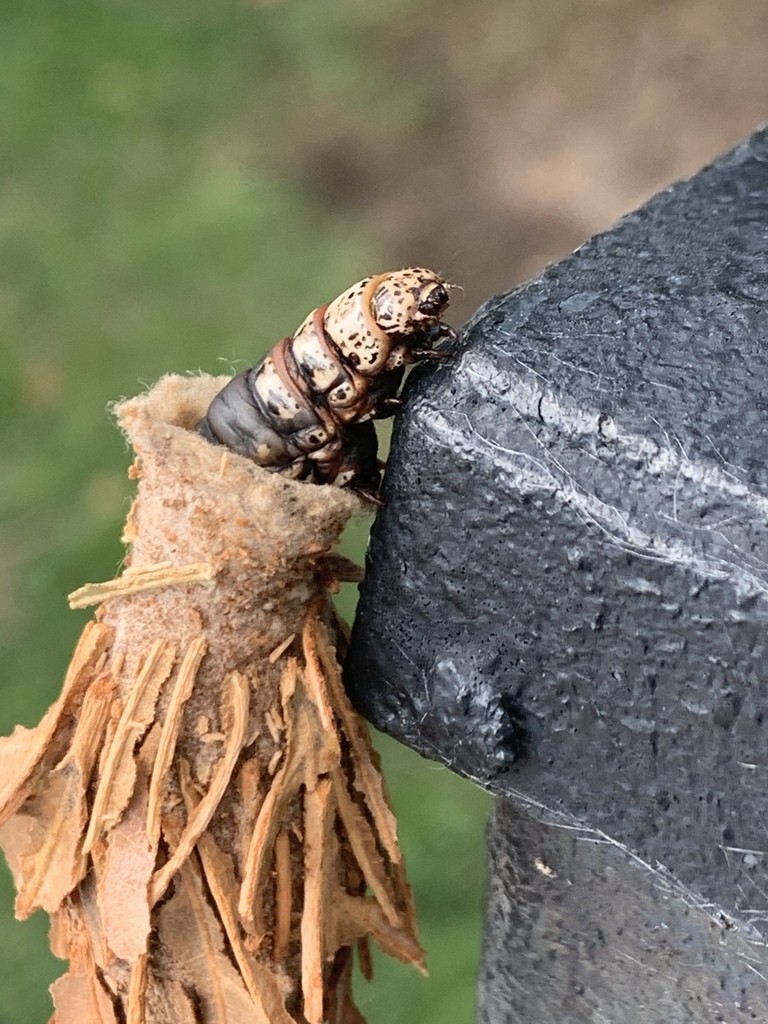
!Is the evergreen bagworm moth dangerous?
No. Bagworms are not venomous, do not bite or sting and pose no medical threat. They are not hairy caterpillars; wearing gloves when removing bags simply protects hands from scratchy foliage.
Pets
Generally not toxic to pets if encountered briefly. Pets that chew and swallow many larvae or bags could get mild gastrointestinal upset; discourage pets from eating them.
📖Overview
Thyridopteryx ephemeraeformis is a small moth in the bagworm family (Psychidae). The larvae (commonly called bagworms) construct conical, portable silken bags covered with bits of foliage, twigs, and debris and live inside them while feeding. High populations can strip foliage from ornamental evergreens and broadleaf trees, making this species an important pest in gardens and landscapes. Adults are short-lived: males are winged and fly to find females, while females remain wingless and almost caterpillar-like.
🔍How to identify an evergreen bagworm moth
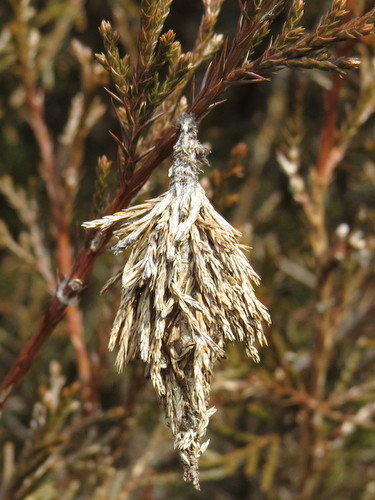
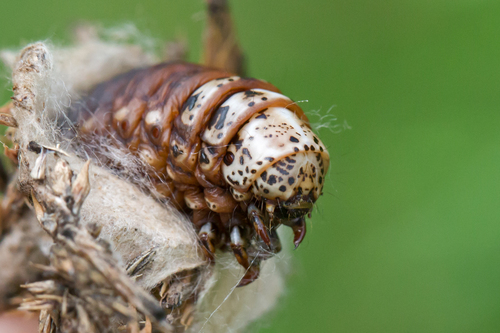
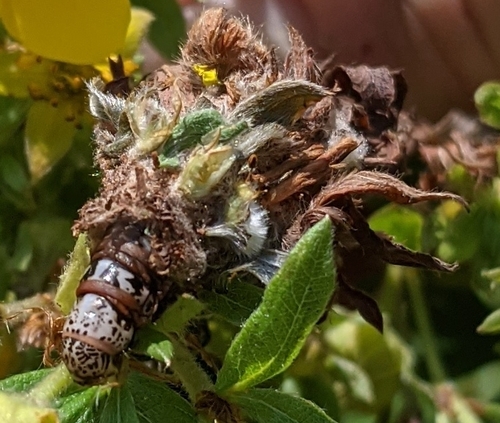
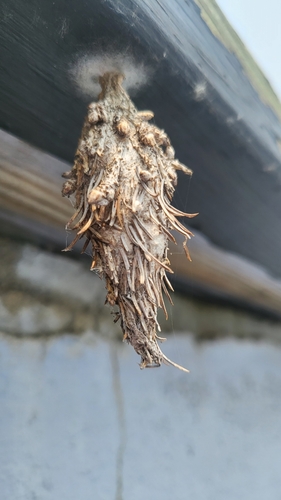
Larvae carry a tapered, portable case (bag) 15-50 mm long made of silk and glued-on plant material; colour and materials match the host plant (brown, green, or grey). Larvae themselves are dark brown to black caterpillars with paler mottling on the head and thorax. Adult males are small, black, furry-bodied moths with largely clear, nearly scaleless wings and feathery antennae; wingspan is about 20-30 mm. Adult females are wingless, grub-like, cream to yellowish, much reduced and remain in the bag to mate and lay eggs.
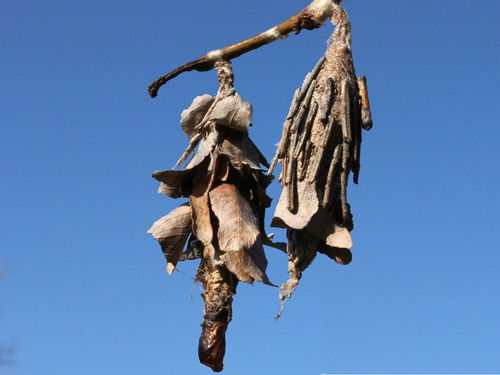
- Look for conical, portable bags 15-50 mm long attached to branches, trunks, or walls; bags are covered with host plant material.
- Inspect foliage for chewed or missing needles and webbed feeding near bag openings where larvae protrude to feed.
- Note the adult male: a small black moth with largely clear wings; females are wingless and remain inside the bag.
- Timing: bags with eggs remain on plants through winter and small active larvae are visible in spring and early summer.
Lookalikes
Household casebearer (plaster bagworm) Phereoeca uterella
Much smaller bags, usually found inside homes on walls and fabrics; larvae feed on fabrics and dust rather than tree foliage.
Other bagworm species Various Psychidae
Related bagworm species may differ slightly in bag shape or preferred host plants; Thyridopteryx ephemeraeformis is the common landscape pest in North America and often uses evergreen material on its bag.
Casebearer moths (Coleophoridae) Coleophora spp.
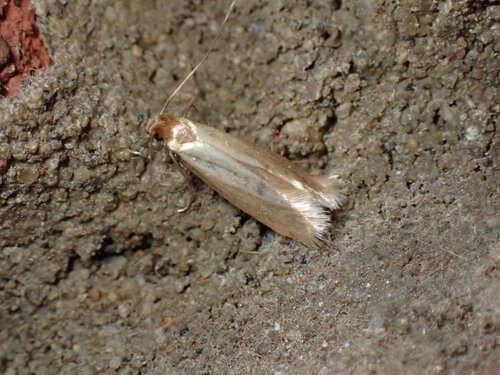
Casebearers are typically much smaller, their cases are differently shaped and often silken or leaf-based; host plants and feeding patterns differ.
↻Life cycle
Egg (overwintering)
A single female lays hundreds of eggs inside her bag in late summer or fall; the bag with eggs commonly remains attached to the host and overwinters until spring.
Larva (caterpillar) with bag
Eggs hatch in spring and tiny larvae enlarge their silk case while feeding on nearby foliage. Larval feeding lasts several weeks; this is the stage that causes plant damage.
Pupa (inside bag)
Larvae pupate inside the bag; pupal stage lasts days to weeks in summer before adults emerge.
Adult moth
Winged males emerge to seek wingless females. After mating, the female lays eggs inside her bag and dies; adults are short-lived.
🍃Diet and predators
Young eat
Leaves and needles of a wide range of trees and shrubs, especially evergreens (arborvitae, juniper, cedar, spruce) but also many deciduous hosts.
Adults eat
Adults do not feed (females remain in the bag; males live briefly and do not feed significantly).
Predators of the young
Birds, predatory insects and parasitic wasps attack larvae; small mammals may occasionally eat bags.
Predators of adults
Birds and parasitic wasps may attack adults; winged males are vulnerable to general predators.
🌱Effect on plants and gardens
Larvae feed on foliage of many trees and shrubs. They are especially damaging to evergreens such as arborvitae, juniper, cedar, and spruce but also eat deciduous trees (maple, oak, apple) when abundant. Heavy infestations can cause branch dieback or kill small plants.
How to get rid of evergreen bagworm moths
Hand removal of bags in winter and early spring is the simplest, most effective control for small infestations: scrape or cut bags from branches and destroy them (drop into soapy water or seal in a bag and discard). For active larvae in spring and early summer, Bacillus thuringiensis kurstaki (Btk) sprays are effective on young caterpillars. Broad-spectrum insecticides or systemic insecticides can control heavy infestations but use as a last resort and follow label instructions. Encourage natural enemies (birds, parasitic wasps) and inspect susceptible plants regularly.
📍Where and when to find it
Look on branches, twigs and trunks of evergreens (arborvitae, juniper, spruce) and on deciduous trees. Bags may also be attached to fences, walls and outdoor furniture. Eggs overwinter inside the bags; small larvae and feeding damage are most visible in spring and early summer.
Best time
Best observed from spring through mid-summer when larvae are active; dormant bags are easy to spot in fall and winter.
Observation tips
Photograph bags close-up to show materials used (needles, twigs). In winter use a stick or gloved hand to remove a few bags for inspection — do not release them. For monitoring, check the undersides of branches and inner parts of dense foliage.
✨Fun facts
- Female evergreen bagworms are wingless and never leave their bag; they mate and lay eggs from inside it.
- A single female can lay several hundred eggs, so a few bags left on a plant can produce a damaging population the next year.
- Bags often blend with the host plant because larvae glue on bits of the very foliage they are eating.
?Frequently asked questions
Are evergreen bagworms dangerous?
No, they are not dangerous to humans or pets. They are an economic and aesthetic pest because larvae can defoliate and sometimes kill ornamental trees and shrubs.
Do evergreen bagworms bite or sting?
No. Larvae do not bite or sting humans. Wear gloves when removing bags, as the bags can be tough and covered in scratchy plant material.
Why are there bagworms on my arborvitae?
Arborvitae and other evergreens are a preferred food. Female bags with eggs can remain on plants over winter; larvae hatch in spring and feed on the nearest foliage.
How do I get rid of bagworms?
For small infestations, remove and destroy bags by hand in winter or early spring. For active larvae, apply Bacillus thuringiensis kurstaki (Btk) when caterpillars are small, or use approved insecticides following label directions. Encourage birds and parasitoids.
When is the best time to control bagworms?
Early spring and late spring to early summer when larvae are small are the most effective times. Removing bags in winter prevents large hatches in spring.
📷Photos of the evergreen bagworm moth
More butterflies & moths
This guide was written with AI assistance and fact-checked, last updated 2026-10-10. Identification from photos is never certain: don't handle insects you can't identify, and get medical advice for bites, stings or allergic reactions. More about the evergreen bagworm moth: iNaturalist, Wikipedia.