
Lime hawk-moth
Mimas tiliae · Hawk moths
A stout, nocturnal moth of parks and woodlands whose caterpillars feed mainly on lime (linden) and related trees.
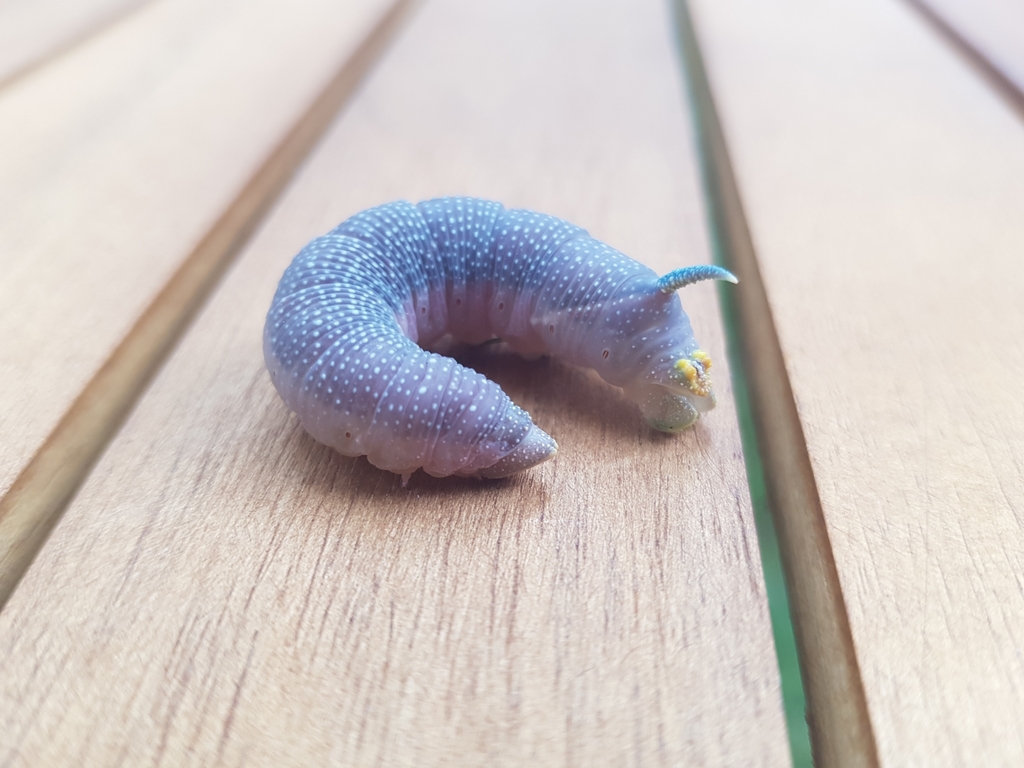
!Is the lime hawk-moth dangerous?
No. Adults and caterpillars are harmless to people. They do not bite or sting. Handle caterpillars gently if necessary; there are no medically significant toxins. If skin irritation occurs after handling, wash with soap and water — this is uncommon.
Pets
Not toxic to pets. Large caterpillars might provoke curiosity in dogs or cats but are not poisonous; discourage pets from eating large numbers of larvae to avoid digestive upset.
📖Overview
Mimas tiliae is a medium-large hawk moth found across much of Europe into temperate parts of Asia. Adults are nocturnal and commonly attracted to light. The species is single-brooded in most of its range, with adults flying in spring and early summer. Larvae feed on leaves of lime (Tilia) and several other deciduous trees; they are green with pale diagonal stripes and turn brownish just before pupating.
This moth favours parks, avenues, gardens with mature lime trees, woodland edges and hedgerows. It is not harmful to people and is generally not a serious pest of trees, though large outbreaks can cause noticeable defoliation locally. Populations are stable in many regions but can be locally scarce depending on habitat and climate.
🔍How to identify a lime hawk-moth
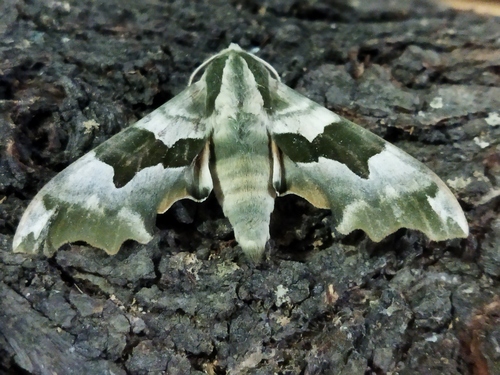
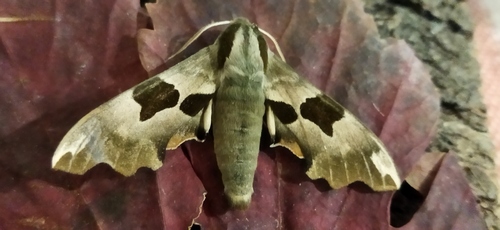
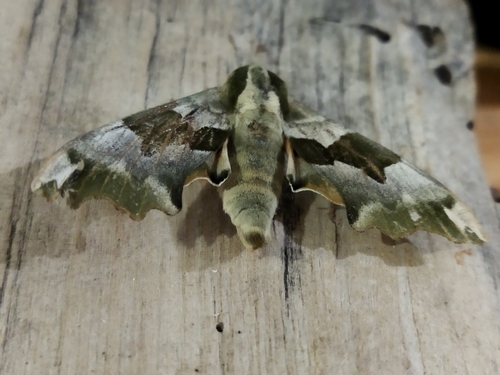
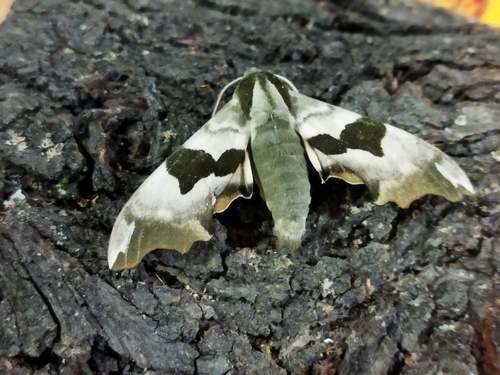
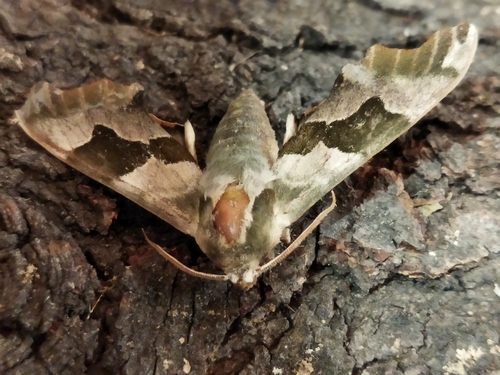
Wingspan typically 70-80 mm. Forewings have a strongly scalloped (wavy) outer margin; coloration varies from pale green through olive to pinkish-buff or brown, with a dark green central cross-band that is often broken into two blotches. Hindwings are paler, buff to olive. The body is robust, typical of hawk moths. Caterpillars are bulky, reaching about 65 mm, bright green with yellow diagonal stripes on the sides and a bluish tail horn; they turn brownish shortly before pupation.
- Wingspan 70-80 mm with triangular forewings and variable green to brown mottled colour.
- Scalloped forewing edge and a dark green central band, often broken into two blotches.
- Caterpillars large and bulky, bright green with yellow diagonal side stripes and a bluish tail horn; they turn brownish before pupating.
- Active at night and often attracted to light; rests with wings held flat at rest (typical sphingid posture).
Lookalikes
Poplar hawk-moth Laothoe populi
Poplar hawk-moth is grey to buff without the dark green central blotches, and rests with its hindwings sticking out in front of the forewings, showing a rusty-red patch.
Eyed hawk-moth Smerinthus ocellata
Eyed hawk-moth shows large blue-and-black eye-spots on pink hindwings; Mimas tiliae lacks hindwing eye-spots and has dark green blotches on the forewings.
Small elephant hawk-moth Deilephila porcellus
Much smaller with distinctive pink and yellow tones and no green; easily separated by size and colour.
↻Life cycle
Egg
Females lay single eggs on the underside of host tree leaves in spring; eggs hatch in about 1-2 weeks depending on temperature.
Larva (caterpillar)
Caterpillars feed on host leaves, growing through several instars; they are green with diagonal stripes and a bluish tail horn and turn brownish before pupating.
Pupa
Fully grown caterpillars pupate in the soil or leaf litter in a shallow chamber and overwinter as pupae in most of the range.
Adult (moth)
Adults emerge in spring/early summer, fly at night and visit light sources; they do not feed, and mate and lay eggs to start the next generation.
🍃Diet and predators
Young eat
Leaves of lime (Tilia), and also birch, elm, alder, Prunus and other deciduous trees
Adults eat
Adults do not feed; they have a reduced proboscis and live on reserves from the caterpillar stage
Predators of the young
Birds, predatory insects, parasitic wasps and flies
Predators of adults
Bats, night-flying birds, and nocturnal insectivores; also captured by spiders and mantids if encountered
🌱Effect on plants and gardens
Larvae feed mainly on lime (Tilia) species but also accept birch (Betula), elm (Ulmus), alder (Alnus), Prunus species and others. Heavy local feeding can defoliate individual trees but usually causes no long-term harm to healthy mature trees.
📍Where and when to find it
Adults: at night near lights, in parks, gardens and woodland edges. Larvae: on leaves of lime (Tilia) and other host trees; search tree foliage in daylight.
Best time
Late April to July for adults; caterpillars in the weeks following the adult flight period. Nighttime best for photographing adults using light traps.
Observation tips
To photograph adults, use a light sheet or check well-lit garden areas after dusk. For caterpillars, examine upper and lower leaf surfaces of lime and nearby deciduous trees; approach slowly as large caterpillars may drop or curl when disturbed.
✨Fun facts
- Despite the name, 'lime' refers to the lime or linden tree (Tilia), not the citrus fruit.
- The species shows considerable colour variation; pale green individuals can be very cryptic on fresh foliage while brown forms blend with bark or dead leaves.
- Pupae overwinter in the soil, allowing the moth to emerge early in spring when host leaves are available.
?Frequently asked questions
Are lime hawk-moths dangerous?
No. They do not sting or bite and are harmless to people.
Do lime hawk-moth caterpillars bite?
Caterpillars do not seek to bite people. They may try to defend themselves if handled but are not venomous.
Why is a lime hawk-moth in my house?
Adults are attracted to artificial light at night and may enter houses through open windows or doors, especially if nearby trees provide habitat.
How do I get rid of a lime hawk-moth in my home?
Gently capture it in a jar or glass with a piece of stiff paper and release it outside at night near trees. Avoid killing it; they are harmless and short-lived.
Will lime hawk-moth caterpillars defoliate my lime tree?
They can cause noticeable defoliation on individual trees if present in high numbers, but healthy mature trees usually recover and serious long-term damage is uncommon.
When can I see lime hawk-moths?
Adults fly mainly from late April to July. Look for them at night near streetlights, park trees and gardens with linden trees.
📷Photos of the lime hawk-moth
More butterflies & moths
This guide was written with AI assistance and fact-checked, last updated 2026-10-10. Identification from photos is never certain: don't handle insects you can't identify, and get medical advice for bites, stings or allergic reactions. More about the lime hawk-moth: iNaturalist, Wikipedia.