
Peppered moth
Biston betularia · Geometer moths
A common night-flying moth famous for its industrial melanism; larvae feed on tree leaves and adults are harmless to people.
!Is the peppered moth dangerous?
No. Peppered moths do not bite or sting and are not poisonous. They are harmless to people; handle gently if necessary. No special first aid is needed if touched.
Pets
Not toxic to pets. A curious pet may eat a moth and could have mild stomach upset but serious effects are unlikely.
📖Overview
The peppered moth, Biston betularia, is a medium-large geometer moth well known for its light (typica) and dark (carbonaria) colour forms. It is a classic example of natural selection: darker forms became common in polluted areas in the 19th and 20th centuries and declined as air quality improved. Larvae are inchworms (looping caterpillars) that feed on the leaves of a range of trees and shrubs. Adults are nocturnal, attracted to light, and do not bite or sting.
🔍How to identify a peppered moth
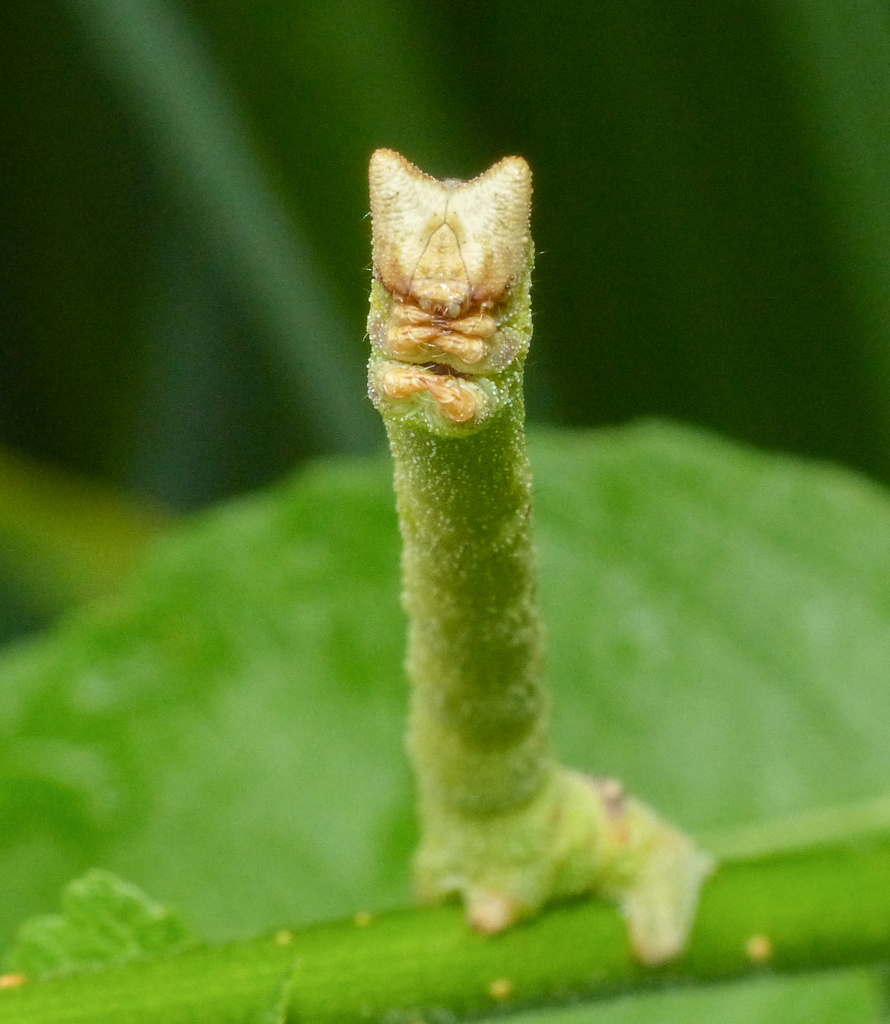
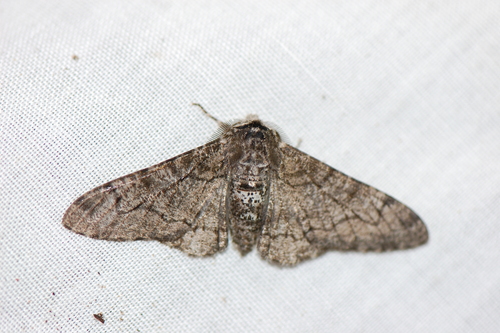
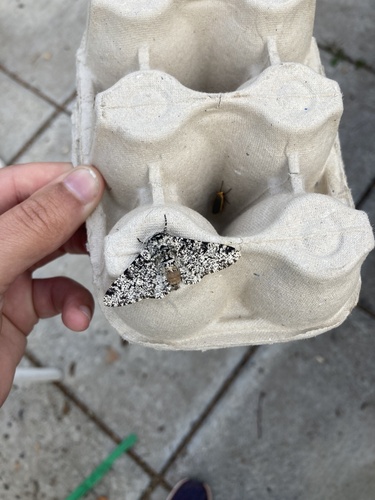
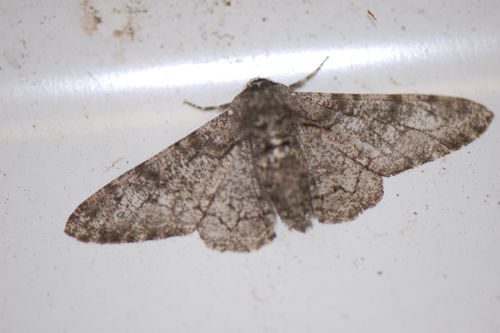
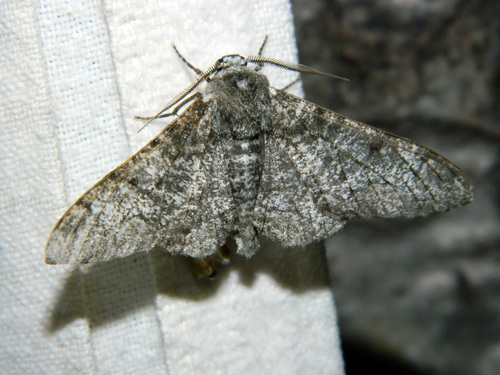
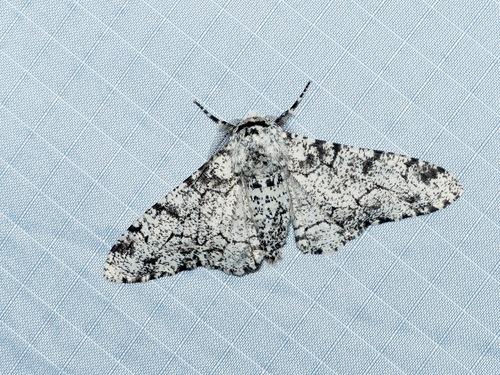
Adults have a wingspan typically 45-62 mm. The typical (typica) form has off-white to pale-cream wings mottled with fine black and grey speckling that gives a 'peppered' appearance. The melanic form (carbonaria) is mostly dark grey to black and lacks the pale background. Wing shape is broad with scalloped outer margins and subtle darker lines across the wings. Caterpillars are long, slender and stick-like, well camouflaged, usually grey or brown with faint longitudinal lines and small tubercles.
- Look at wing pattern: typical form is pale with fine black speckling giving a 'peppered' look; melanic form is much darker.
- Wingspan 45-62 mm with scalloped outer margins and subtle transverse lines.
- Caterpillars are stick-like (inchworms) and mimic twigs when at rest.
- Melanic carbonaria individuals lack the pale background and appear uniformly dark grey or black.
Lookalikes
Oak beauty Biston strataria
Oak beauty tends to have more distinct banding and a slightly different wing shape; local range and subtle pattern differences separate them.
Pale brindled beauty Phigalia pilosaria
Flies in late winter and early spring rather than summer, has thinner, semi-translucent greyish-green wings with dark cross-lines, and its females are wingless.
↻Life cycle
Egg
Females lay small eggs in bark crevices and on twigs of host trees in spring or early summer depending on region.
Larva (caterpillar)
The caterpillar is a looping 'inchworm' that feeds on leaves for several weeks; it is well camouflaged and mimics twigs.
Pupa
Pupation occurs in the soil, where the pupa overwinters before adults emerge the following spring or summer.
Adult (moth)
Adults are nocturnal, mate, and the female lays eggs to begin the next generation; adults live about 1-2 weeks.
🍃Diet and predators
Young eat
Leaves of deciduous trees and shrubs (birch, willow, oak, hawthorn, rowan, fruit trees and others)
Adults eat
Adults do not feed; they live off reserves built up as caterpillars.
Predators of the young
Birds, predatory insects and spiders
Predators of adults
Nocturnal insectivorous bats and birds; resting adults are preyed on by daytime- foraging birds when exposed
🌱Effect on plants and gardens
Caterpillars feed on leaves of many deciduous trees and shrubs including birch, willow, oak, rowan, hawthorn and fruit trees. They rarely cause serious damage in healthy mature trees.
📍Where and when to find it
Adults: attracted to lights near woodlands, gardens and hedgerows. Larvae: on leaves and twigs of host trees such as birch, willow and oak.
Best time
Best observed at night during the local flight season (spring to summer depending on region); caterpillars are found during the growing season.
Observation tips
Use a light sheet at night to attract adults, but handle moths gently. For caterpillars, inspect young leaves and small twigs and photograph with a shallow angle to show the 'twig-like' posture.
✨Fun facts
- The peppered moth is the classic textbook example of industrial melanism: dark (melanic) forms rose in polluted 19th-century Britain and later declined as air quality improved.
- Melanic and light forms interbreed; the colour difference is due to genetic variation influenced by natural selection from bird predation.
- Caterpillars resemble twigs so well that predators often overlook them; they adopt a rigid posture to enhance the disguise.
?Frequently asked questions
Are peppered moths dangerous?
No. They do not bite or sting and are not poisonous.
Do peppered moths bite people?
No. Adults are harmless and will not bite people.
Why is a peppered moth in my house?
Adults are nocturnal and are commonly attracted to lights, which can bring them inside through open windows or doors.
How do I get rid of peppered moths in my home?
Reduce outdoor lighting at night, close or screen windows, and gently usher moths outside; there is no need for insecticide for occasional visitors.
Will peppered moth caterpillars damage my garden trees?
They feed on leaves but rarely cause serious harm to healthy mature trees; heavy defoliation is uncommon in most gardens.
Why are some peppered moths black?
The dark 'carbonaria' form became common in polluted areas because it was better camouflaged on soot-darkened trees, an example of natural selection.
📷Photos of the peppered moth
More butterflies & moths
This guide was written with AI assistance and fact-checked, last updated 2026-10-10. Identification from photos is never certain: don't handle insects you can't identify, and get medical advice for bites, stings or allergic reactions. More about the peppered moth: iNaturalist, Wikipedia.