
Eastern tiger swallowtail
Papilio glaucus · Swallowtail butterflies
Large, showy yellow-and-black swallowtail common in eastern North America, often seen feeding on flowers and patrolling woodland edges.
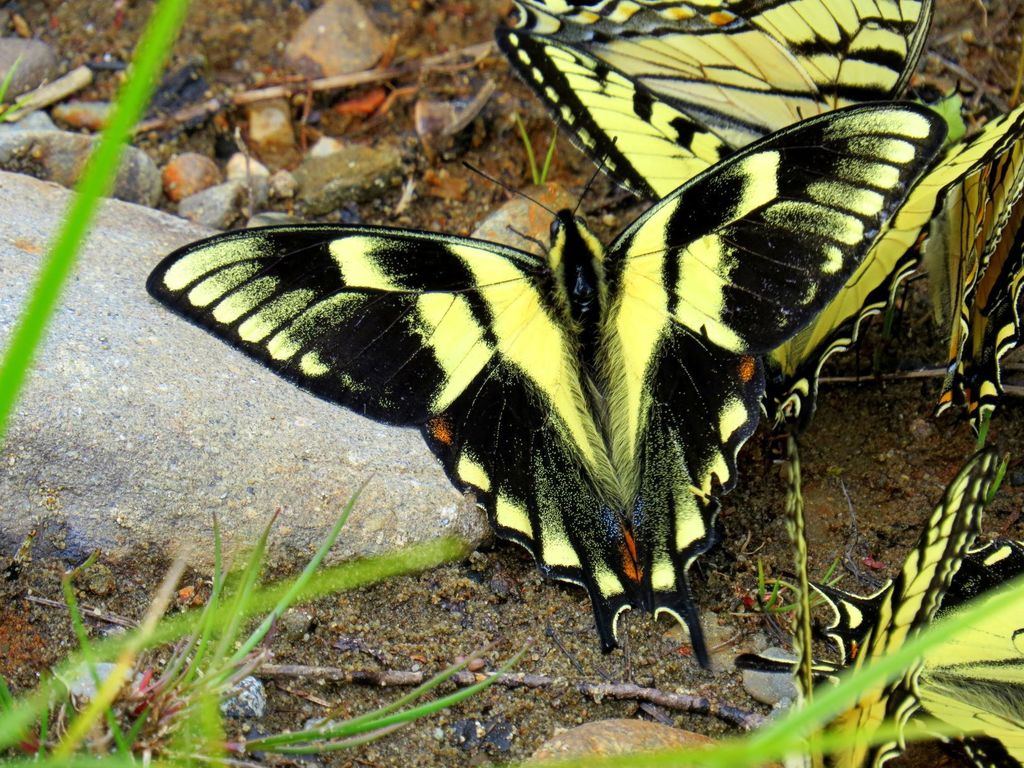
!Is the eastern tiger swallowtail dangerous?
No. Not dangerous. Adults do not sting or bite. Caterpillars are smooth, have no stinging hairs and are harmless to touch; when disturbed they may push out a forked orange organ (osmeterium) that releases a strong smell but is harmless. No known medical risk from normal handling; wash hands after contact with caterpillars or chrysalises if desired.
Pets
Harmless to pets. Larvae and adults are not poisonous if eaten, though large numbers of caterpillars could cause mild digestive upset in pets; discourage pets from eating wildlife.
📖Overview
The Eastern tiger swallowtail is a large, unmistakable butterfly of eastern North America. Adults fly from spring through early autumn; males patrol sunny woodland edges, rivers and gardens seeking mates while females lay eggs on host trees. The species has one to three broods per year depending on latitude. Larvae (caterpillars) feed on the leaves of a variety of deciduous trees and pupate in chrysalis attached to twigs or stems. Populations are widespread and typically stable where native woodland and riparian habitat remain.
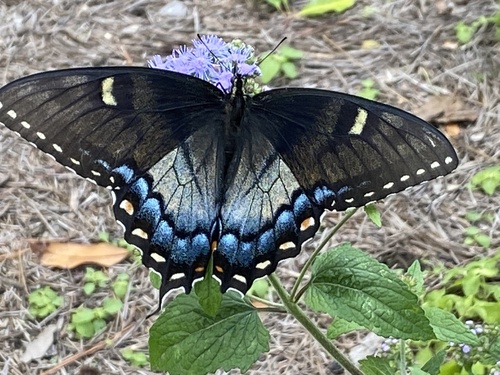
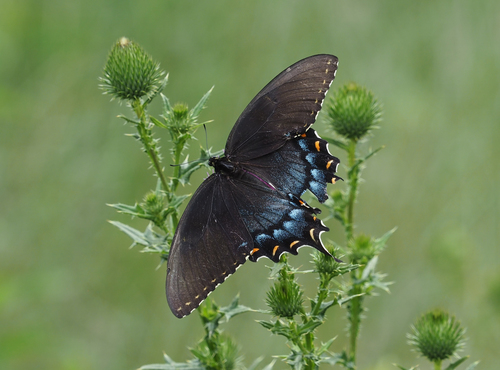
Females occur in two main colour forms: the common yellow-striped form and a dark (melanic) form that mimics unpalatable pipevine swallowtails in some regions. The species is a valuable pollinator and a popular subject for gardeners and nature observers because of its size, fast flight and distinctive tail streamers on the hindwings.
🔍How to identify a eastern tiger swallowtail
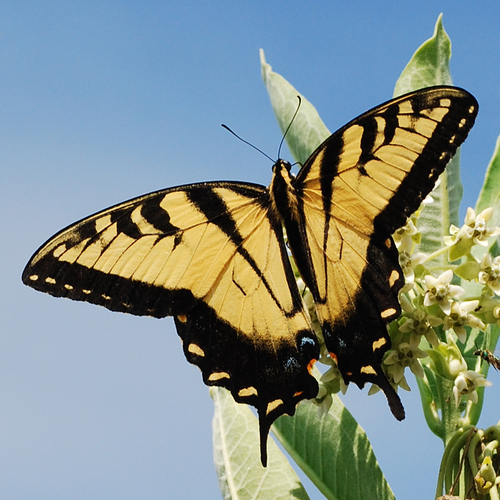
Wings are bright yellow with bold black tiger-like stripes and a series of blue and orange spots near the trailing edge of the hindwing. Forewing margin has a black band with yellow spots; hindwing bears the characteristic tail-like extensions at the veins. Females have extensive blue scaling on the upper hindwing while males have little blue; females can be yellow like males or almost entirely dark (female-limited melanic form). Wingspan typically ranges from about 80-140 mm in adults. Underside of the wings is paler yellow with similar striping and a row of orange and blue spots near the hindwing margin.
- Large yellow wings with bold black 'tiger' stripes across both fore- and hindwings
- Characteristic tail-like extensions on each hindwing
- Blue band and orange submarginal spots on the hindwing; females may be dark melanic form lacking yellow ground color
Lookalikes
Canadian tiger swallowtail Papilio canadensis
Very similar in appearance but generally smaller, flies earlier in spring in northern areas, and has differences in genitalia and wing shape; ranges overlap in northern U.S. and Canada.
Spicebush swallowtail Papilio troilus
Usually darker overall with more green/blue scaling on the hindwing and lacks the bold yellow ground color and stripe pattern; spicebush caterpillars mimic curled leaf buds and have a different host preference (spicebush, sassafras).
↻Life cycle
Egg
Single pale green eggs are laid on the upper surface of host tree leaves and hatch in about 4-10 days depending on temperature.
Larva (caterpillar)
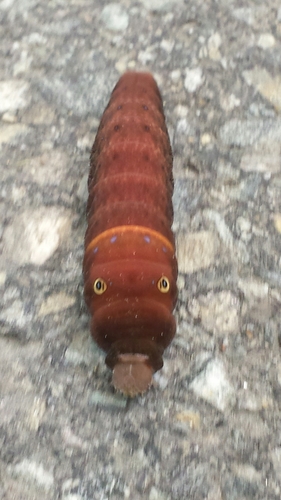
Young caterpillars are mottled and resemble bird droppings; later instars are green or brown with eye-like markings and feed on host leaves for 2-5 weeks.
Pupa (chrysalis)
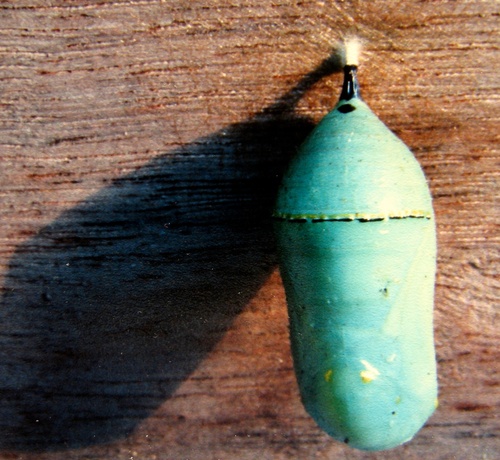
The chrysalis is green or brown and attaches to twigs or stems; the pupa overwinters in northern populations or transforms to an adult in 1-3 weeks for summer broods.
Adult (butterfly)
Adults emerge with a wingspan around 80-140 mm, feed on nectar, mate, and females search host trees to lay eggs; adults live about 2 weeks to a month.
🍃Diet and predators
Young eat
Leaves of deciduous trees and shrubs: wild cherry, tulip tree, willow, ash, birch, apple, and others (varies by locality).
Adults eat
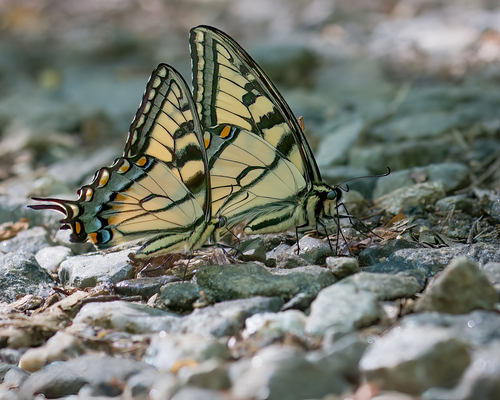
Nectar from a variety of flowering plants (milkweed, thistle, buddleia, joe-pye weed, redbud, azalea and many garden flowers). Males also visit damp soil or puddles for minerals (puddling).
Predators of the young
Birds, parasitic wasps and flies, predatory insects; early-instar mimicry of bird droppings helps reduce predation.
Predators of adults
Birds, spiders, dragonflies, and other insectivores; bright coloring and fast flight help reduce capture.
🌱Effect on plants and gardens
Adults feed on nectar from many flowering plants (e.g., milkweed, thistles, joe-pye weed, lilac, redbud) and act as pollinators. Caterpillars feed on the leaves of a wide range of deciduous trees including wild cherry, willow, tulip tree, ash, birch, and apple. Heavy local defoliation is rare; the species is not a major agricultural pest.
📍Where and when to find it
Adults: sunny woodland edges, gardens, meadows and along streams feeding at flowers. Females: near host trees where eggs are laid. Larvae: on leaves of host trees; pupae on twigs or stems.
Best time
Best seen from spring through early autumn (March-September), during warm, sunny days. Peak activity mid-morning through afternoon.
Observation tips
Use a long lens and approach slowly; photograph when they visit flowers or when they settle with wings closed. Look for males along woodland edges patrolling and for pupae attached to shaded stems.
✨Fun facts
- Caterpillars mimic bird droppings in early instars — an effective disguise from predators.
- Female dark morphs mimic the unpalatable pipevine swallowtail in parts of their range, an example of Batesian mimicry.
- Males can often be seen 'puddling' — sipping minerals from damp soil or mud to aid reproduction.
?Frequently asked questions
Do Eastern tiger swallowtail butterflies sting?
No. Adults do not sting or bite; they are harmless to people.
Do Eastern tiger swallowtail caterpillars bite or are they poisonous?
No. Caterpillars do not bite and are not poisonous. If disturbed they may push out a forked orange organ (osmeterium) that gives off a strong odor; it is harmless. Wash hands after handling if concerned.
Why is this butterfly in my yard?
Your yard likely provides nectar sources for adults and host trees for females to lay eggs. Gardens with flowering plants and nearby deciduous trees are attractive habitat.
How can I attract Eastern tiger swallowtails to my garden?
Plant native nectar flowers (milkweed, Joe-Pye weed, thistle, buddleia) for adults and maintain or plant host trees such as wild cherry, willow, tulip tree or ash for caterpillars. Avoid broad-spectrum insecticides.
Are they a pest that will defoliate my trees?
No. Caterpillars feed on leaves but populations rarely reach levels that cause serious tree damage; infestations are uncommon and typically cosmetic.
How do I get rid of them if I don't want them?
Removal is rarely necessary. If desired, hand-pick caterpillars from small trees and relocate them, or encourage natural predators. Avoid pesticides; they kill beneficial insects as well.
📷Photos of the eastern tiger swallowtail
More butterflies & moths
This guide was written with AI assistance and fact-checked, last updated 2026-10-09. Identification from photos is never certain: don't handle insects you can't identify, and get medical advice for bites, stings or allergic reactions.