
Eastern tiger swallowtail vs Giant swallowtail
These two are easy to mix up. Here's how to tell an eastern tiger swallowtail from a giant swallowtail, and whether either one bites or stings.
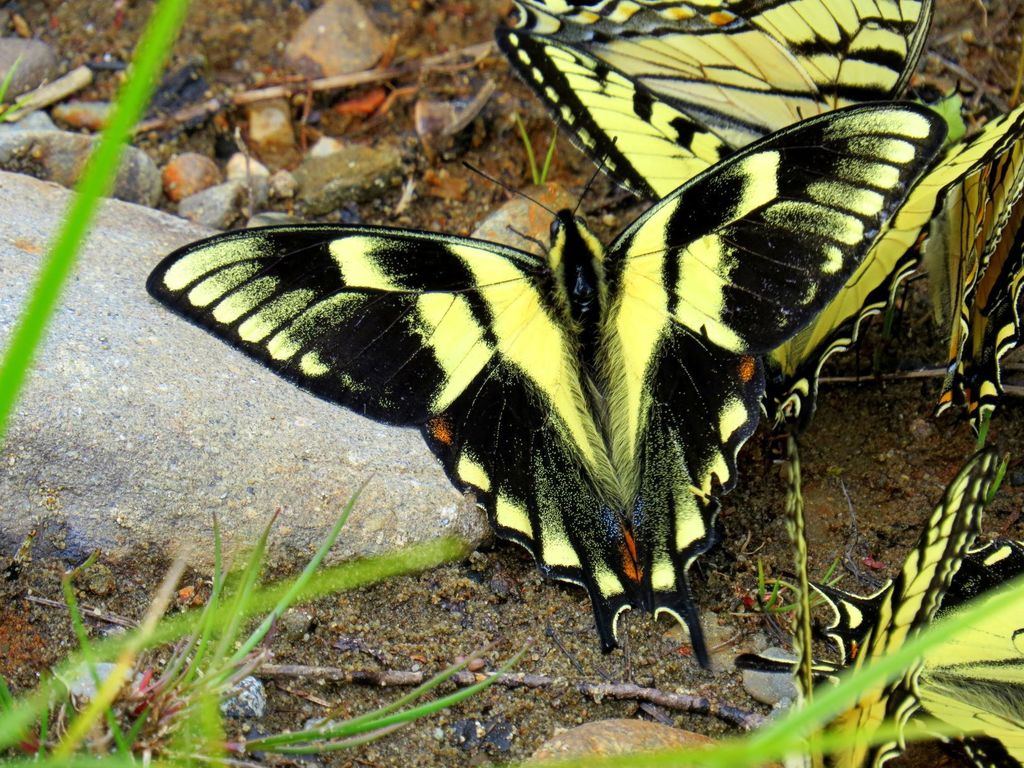
Eastern tiger swallowtail
Papilio glaucus
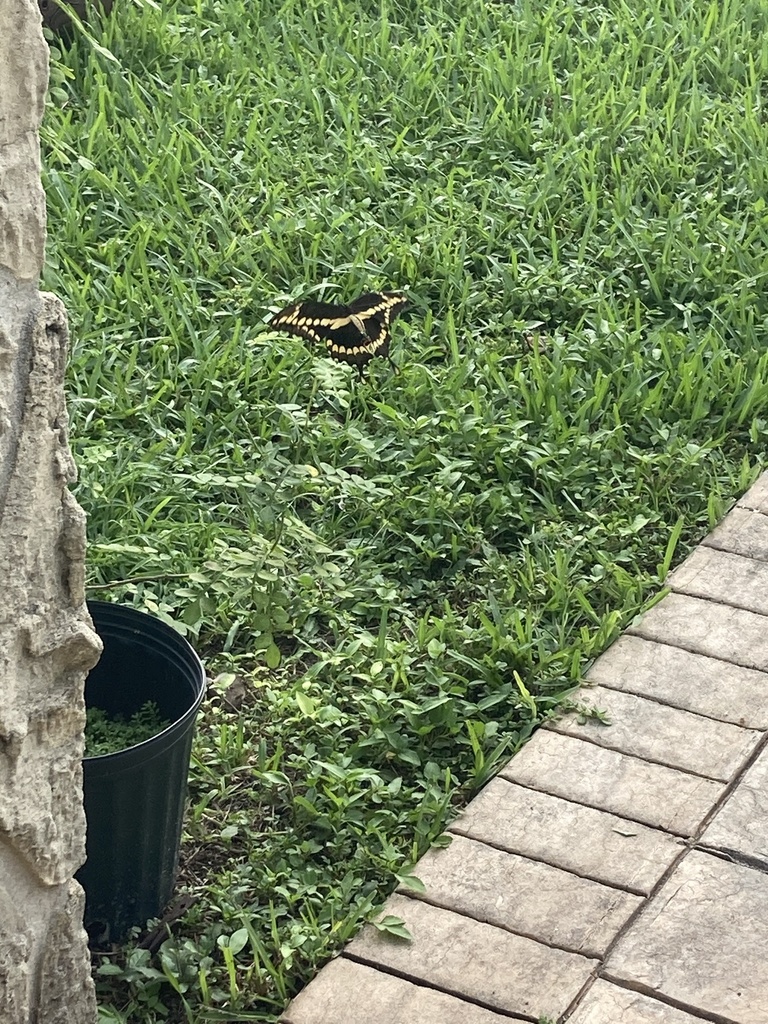
Giant swallowtail
Papilio cresphontes
≠The key differences
Eastern tiger swallowtail is mostly yellow with vertical black tiger stripes, rather than mostly black with broad yellow bands like the giant swallowtail; both have tails.
⚖︎Side by side
| Eastern tiger swallowtail | Giant swallowtail | |
|---|---|---|
| To humans | Non-toxic | Non-toxic |
| Size | 80-140 mm wingspan | 100-160 mm wingspan |
| Colours | Yellow, Black, Blue (hindwing band), Orange (submarginal spot) | Black, Yellow, Brown (larva), Green (pupa/larva) |
| Family | Papilionidae | Papilionidae |
| Habitat | Woodland edges, riversides, suburban gardens, fields and parks throughout eastern North America | Open woodlands, edges, gardens, orchards and suburban areas where host plants (Rutaceae) occur. |
| Range | Eastern North America from Ontario and Maine south to Florida and west to the Great Plains; range overlaps with related tiger swallowtails in northern and western areas | Eastern and central North America, from Florida and the Gulf states north to southern Canada, plus parts of the Caribbean; most common east of the Rocky Mountains and expanding northward. Populations from the southwestern United States south to Central America are now treated as a separate species, the western giant swallowtail (Papilio rumiko). |
| Active | Spring to early autumn (generally March-September; earlier in southern range); active by day, especially sunny periods | Spring to fall in temperate regions (multiple broods in warm areas); adults active during the day, especially in sunny weather. |
| Pest? | No | Yes |
🔍How to spot an eastern tiger swallowtail
- Large yellow wings with bold black 'tiger' stripes across both fore- and hindwings
- Characteristic tail-like extensions on each hindwing
- Blue band and orange submarginal spots on the hindwing; females may be dark melanic form lacking yellow ground color
🔍How to spot a giant swallowtail
- Very large black wings with broad yellow bands and spots; hindwings have long tails.
- Underwing has yellow patterning and a small red/blue spot near the tail on the hindwing.
- Caterpillars are chunky and mimic bird droppings when young; later instars are larger and plain brown or green.
?Frequently asked questions
What is the difference between an eastern tiger swallowtail and a giant swallowtail?
Eastern tiger swallowtail is mostly yellow with vertical black tiger stripes, rather than mostly black with broad yellow bands like the giant swallowtail; both have tails.
Is an eastern tiger swallowtail or a giant swallowtail more dangerous?
Eastern tiger swallowtail: Non-toxic. Giant swallowtail: Non-toxic. Not dangerous. Adults and caterpillars are not dangerous to people.
Identification from photos is never certain: don't handle insects you can't identify, and get medical advice for bites, stings or allergic reactions.