
Giant swallowtail
Papilio cresphontes · Swallowtails
Large yellow-and-black swallowtail butterfly whose caterpillars feed on citrus and related plants and mimic bird droppings as larvae.
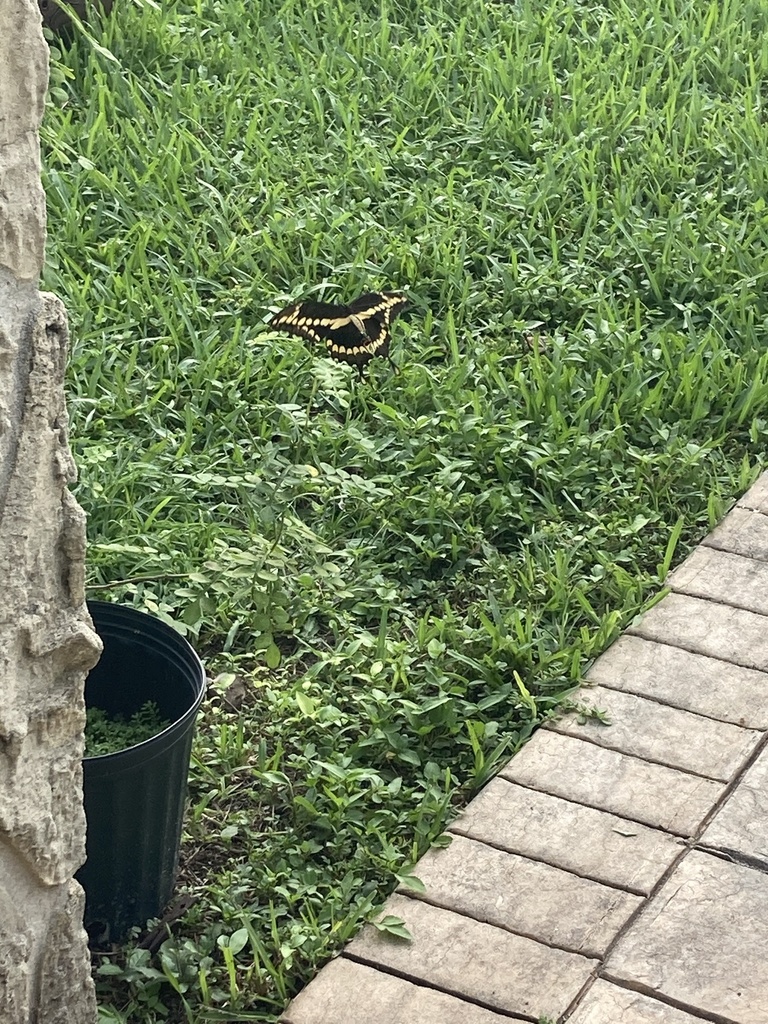
!Is the giant swallowtail dangerous?
No. Adults and caterpillars are not dangerous to people. Caterpillars do not bite or sting. Handle gently if needed; wash hands afterward if you touch a caterpillar because they can carry irritants from plant sap.
Pets
Not toxic to pets; ingestion of many caterpillars could cause mild gastrointestinal upset in dogs or cats but serious poisonings are not reported for this species.
📖Overview
Papilio cresphontes is one of North America's largest and most distinctive swallowtail butterflies. Adults are strong fliers often seen visiting garden flowers for nectar. The caterpillars feed on plants in the citrus family (Rutaceae) and are well known in gardens and orchards because they can defoliate young citrus. The species occurs mainly in eastern and central North America, and in recent decades has expanded northward into more of the United States and southern Canada.
🔍How to identify a giant swallowtail
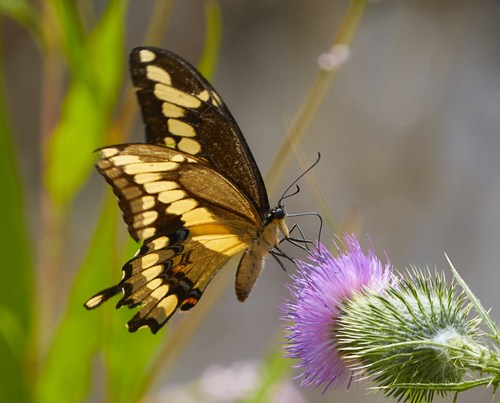
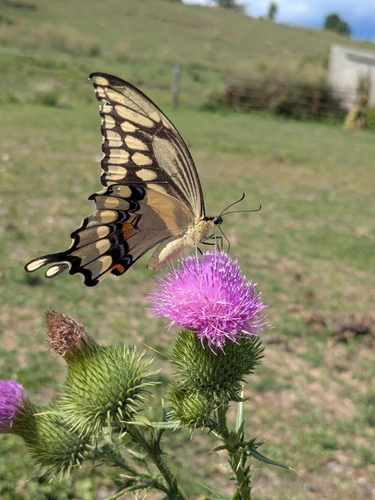
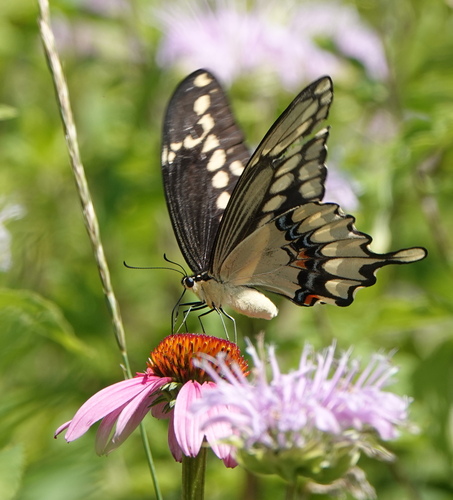
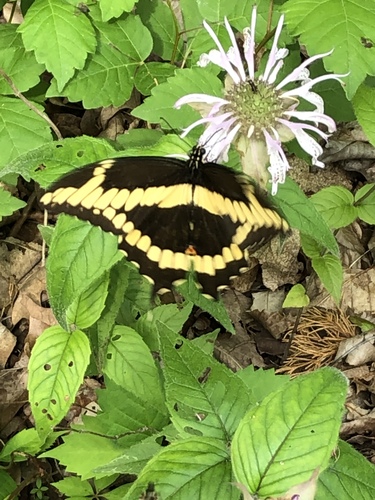
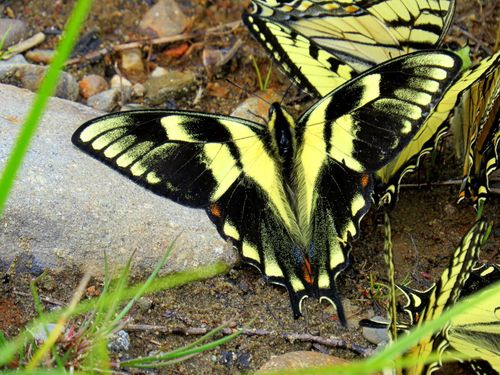
Adults have a broad wingspan with a diagonal yellow band across the black forewings and a second yellow band along the wing edges; the hindwings have long, spoon-shaped tails with a yellow center. The underside is mostly yellow, with a small orange and blue spot near the tail. Females and males are similar but females are often slightly larger. Caterpillars are squat and chunky, mottled brown to olive with white or cream patches, resembling bird droppings at all stages; when disturbed they extend a red, forked scent organ (osmeterium). Pupae (chrysalids) are mottled brown or greenish and resemble a broken twig.
- Very large black wings with broad yellow bands and spots; hindwings have long tails.
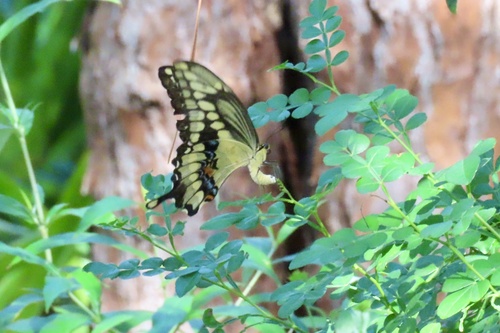
- Underwing has yellow patterning and a small red/blue spot near the tail on the hindwing.
- Caterpillars are chunky and mimic bird droppings when young; later instars are larger and plain brown or green.
Lookalikes
Eastern tiger swallowtail Papilio glaucus
Eastern tiger swallowtail is mostly yellow with vertical black tiger stripes, rather than mostly black with broad yellow bands like the giant swallowtail; both have tails.
Black swallowtail Papilio polyxenes
Black swallowtail is smaller with a more checkered pattern and lacks the large broad yellow banding and larger wing shape of Papilio cresphontes.
Western giant swallowtail Papilio rumiko
Nearly identical sister species of the southwestern United States, Mexico and Central America; separated mainly by range and subtle differences in markings and genitalia.
↻Life cycle
Egg
Small, round, orange-yellow eggs laid singly on new leaves and shoots of host plants; hatch in about 4-10 days depending on temperature.
Larva (caterpillar)
Several instars; caterpillars resemble bird droppings for camouflage throughout their development, growing larger with each molt and consuming foliage for 2-5 weeks.
Pupa (chrysalis)
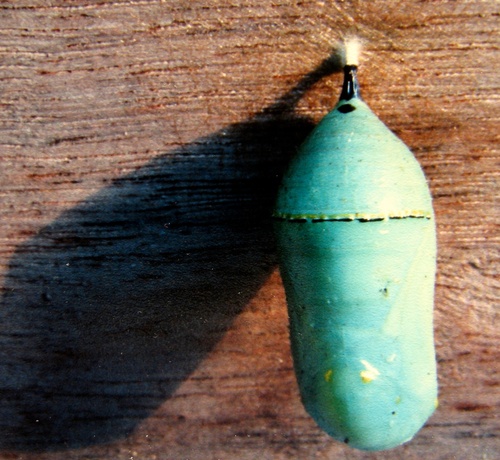
Pupa hangs from a twig or stem, resembling a leaf or twig; pupation lasts about 1-3 weeks in warm weather (longer if overwintering).
Adult (butterfly)
Winged adult feeds on flower nectar, mates, and females lay eggs on host plants; multiple broods per year in warm regions.
🍃Diet and predators
Young eat
Leaves of Rutaceae: citrus trees (Citrus spp.), hoptree (Ptelea trifoliata), prickly ash (Zanthoxylum spp.) and other related plants.
Adults eat
Nectar from a variety of flowering plants (e.g., milkweed, thistles, phlox), also often puddles for minerals.
Predators of the young
Birds, predatory insects and parasitic wasps and flies.
Predators of adults
Birds, dragonflies, spiders and insectivorous bats (occasionally).
🌱Effect on plants and gardens
Larvae feed on leaves of Rutaceae (citrus family), including cultivated citrus (orange, lemon), hoptree and prickly-ash (Ptelea, Zanthoxylum) and related ornamental plants. Heavy feeding can defoliate young trees but established trees usually recover.
How to get rid of giant swallowtails
For minor infestations handpick and destroy caterpillars or drop them into soapy water. Remove eggs (laid singly on new growth) when found on host plants. Protect small or young citrus trees with fine netting. Encourage natural enemies (birds, parasitic wasps) and avoid broad-spectrum insecticides that kill beneficial insects; spot-treating with insecticidal soap or targeted biological controls is preferable. Chemical control may be appropriate for severe commercial infestations—follow local agricultural guidance and product labels.
📍Where and when to find it
Look for adults visiting nectar flowers and along woodland edges. Check undersides of leaves of citrus family plants for eggs and caterpillars.
Best time
Spring to fall; daytime in sunny, warm weather. Peak local months vary with climate.
Observation tips
Photograph resting adults from above to capture wing pattern; for caterpillars approach slowly and look on the undersides of leaves and young shoots.
✨Fun facts
- Caterpillars are called 'orange dogs' by some gardeners because of their habit of feeding on citrus.
- Young caterpillars mimic bird droppings so predators often ignore them.
- Giant swallowtail has expanded its range northward in recent decades, likely aided by warmer temperatures and widespread planting of citrus relatives.
?Frequently asked questions
Are giant swallowtail caterpillars harmful to citrus trees?
They can defoliate young or small citrus trees if many caterpillars are present, but established trees usually tolerate moderate feeding.
Do giant swallowtails bite or sting?
No. Adults do not bite or sting and caterpillars are not venomous. Handle caterpillars gently or avoid handling.
Why is a giant swallowtail in my garden?
If you have host plants in the citrus family or nearby, butterflies will lay eggs there. Adults also visit flowers for nectar.
How do I get rid of giant swallowtail caterpillars on my citrus?
Remove eggs and handpick caterpillars into soapy water or move them to another host plant, protect small trees with netting, and encourage natural predators. Use targeted, approved controls for severe infestations following label instructions.
When can I see giant swallowtails?
In temperate areas adults are seen from spring through fall, with multiple broods in warm regions. They are diurnal and most active on sunny days.
📷Photos of the giant swallowtail
More butterflies & moths
This guide was written with AI assistance and fact-checked, last updated 2026-10-10. Identification from photos is never certain: don't handle insects you can't identify, and get medical advice for bites, stings or allergic reactions. More about the giant swallowtail: iNaturalist, Wikipedia.