
Snowberry clearwing vs Hummingbird clearwing
These two are easy to mix up. Here's how to tell a snowberry clearwing from a hummingbird clearwing, and whether either one bites or stings.
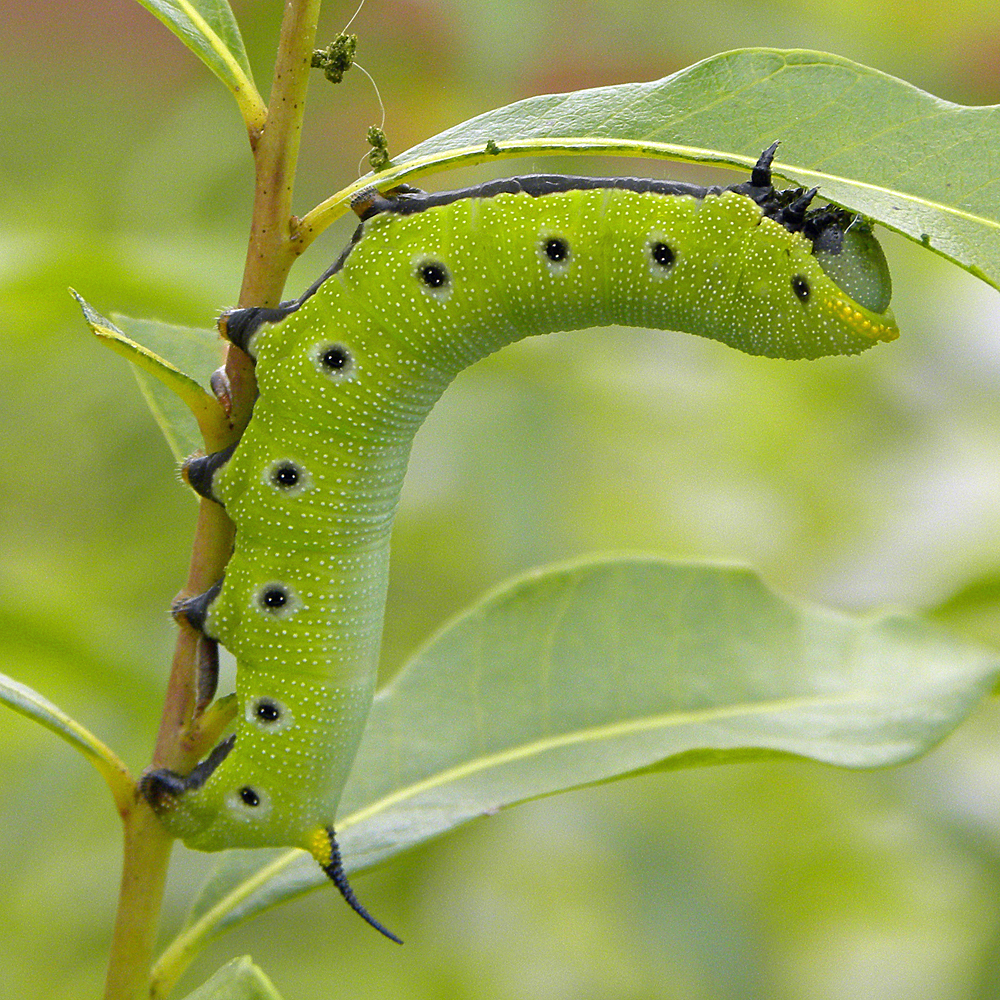
Snowberry clearwing
Hemaris diffinis
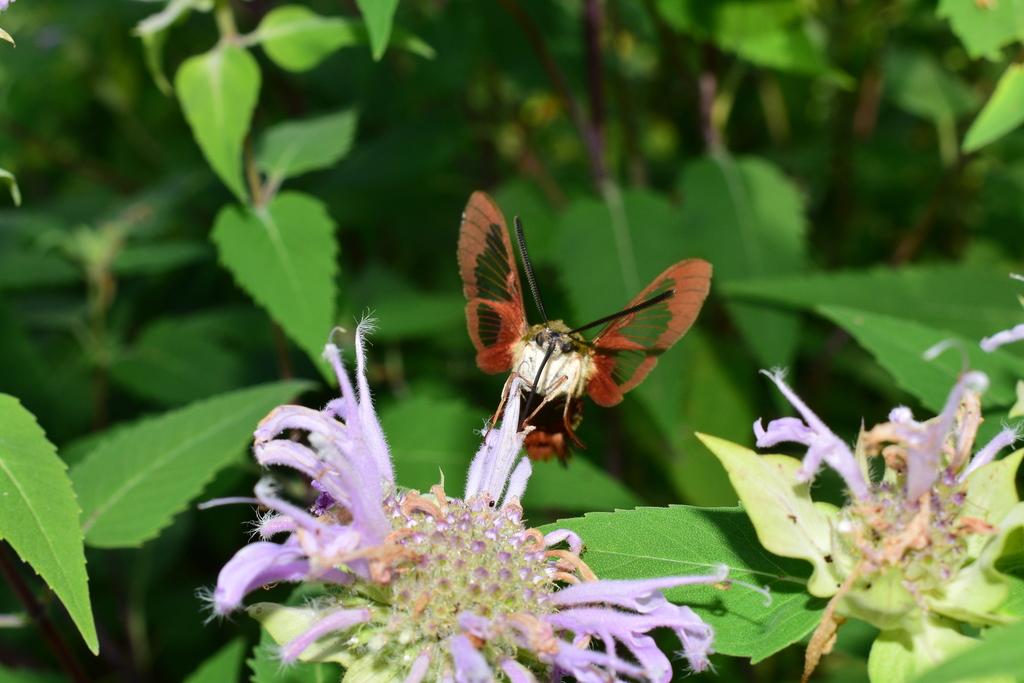
Hummingbird clearwing
Hemaris thysbe
≠The key differences
H. thysbe is very similar but has an olive-green thorax, a dark red-brown abdomen with yellowish patches, and pale (yellowish) legs; H. diffinis has black legs and a black stripe running from the eye along the side of the thorax.
Very similar and often confused; H. diffinis has black legs, a black band across the abdomen and a more yellow-and-black 'bumblebee' look, while H. thysbe has pale legs and an olive-green thorax with a burgundy abdominal band.
⚖︎Side by side
| Snowberry clearwing | Hummingbird clearwing | |
|---|---|---|
| To humans | Non-toxic | Non-toxic |
| Size | Wingspan about 40-50 mm (1.6-2.0 in) | Wingspan 40-50 mm |
| Colours | Golden yellow, Olive yellow, Black, Reddish brown (wing borders) | Olive green, Reddish-brown, Yellow, Clear/transparent |
| Family | Sphingidae | Sphingidae |
| Habitat | Gardens, woodland edges, meadows, riparian scrub and suburban landscapes where host plants and nectar flowers occur | Gardens, meadows, woodland edges, hedgerows and suburban areas where host shrubs and nectar flowers are present |
| Range | Widespread in North America: southern Canada from British Columbia to Nova Scotia, south through most of the United States to Florida, Texas and California | Widespread across much of North America, from Alaska and southern Canada through the eastern and central United States; scarcer in the far southwest; range overlaps with other Hemaris species |
| Active | Late spring to late summer; diurnal (day-active), especially mid-morning to early evening on warm days | Spring to early autumn (two or more broods in warm areas); primarily diurnal (active by day), especially during sunny warm weather |
| Pest? | No | No |
🔍How to spot a snowberry clearwing
- Clear windows on both forewings and hindwings: large transparent panels lacking scales
- Diurnal, fast hovering flight like a small hummingbird while feeding at flowers
- Fuzzy, stout body with a golden-yellow thorax, black-and-yellow banded abdomen and black legs
- Thickened, hooked antennae tips typical of sphinx moths
🔍How to spot a hummingbird clearwing
- Look for a moth that hovers at flowers like a hummingbird and extends a long proboscis while feeding
- Check for partly transparent wing 'windows' where scales are missing, with colored margins on the wings
- Note the olive-green thorax, burgundy band on the abdomen and pale legs
- Caterpillars are green with a pale line along each side and a horn near the rear
?Frequently asked questions
What is the difference between a snowberry clearwing and a hummingbird clearwing?
H. thysbe is very similar but has an olive-green thorax, a dark red-brown abdomen with yellowish patches, and pale (yellowish) legs; H. diffinis has black legs and a black stripe running from the eye along the side of the thorax. Very similar and often confused; H. diffinis has black legs, a black band across the abdomen and a more yellow-and-black 'bumblebee' look, while H. thysbe has pale legs and an olive-green thorax with a burgundy abdominal band.
Is a snowberry clearwing or a hummingbird clearwing more dangerous?
Snowberry clearwing: Non-toxic. Hummingbird clearwing: Non-toxic. Snowberry clearwing moths do not sting or bite in normal situations. Hummingbird clearwings do not bite or sting.
Identification from photos is never certain: don't handle insects you can't identify, and get medical advice for bites, stings or allergic reactions.