
Julia butterfly
Dryas iulia · Brush-footed butterflies
A long-winged, bright orange brush-footed butterfly common in the Americas; larvae feed on passion vines and adults visit nectar and rotting fruit.
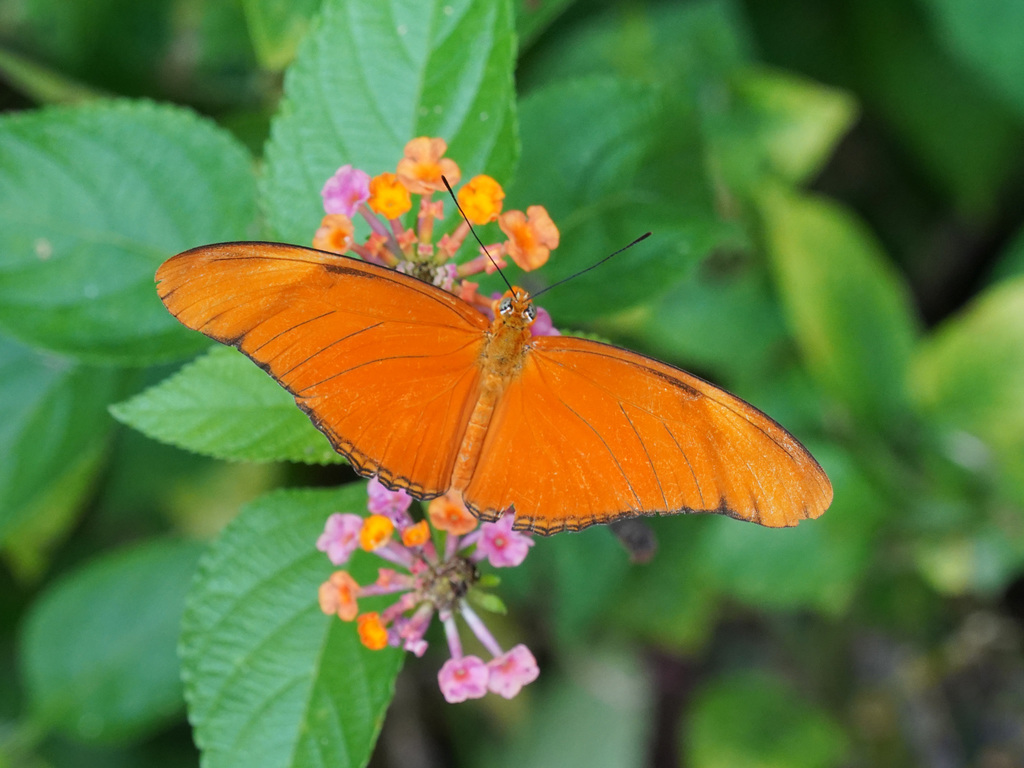
!Is the Julia butterfly dangerous?
No. Julia butterflies are harmless to people. They do not sting or bite. Handle gently if necessary; like other butterflies they can be injured by rough handling.
Pets
Not harmful to pets. Larvae feed on passion vines and are not known to be toxic to dogs or cats, but caterpillars with spines can cause minor skin irritation in sensitive individuals if handled.
📖Overview
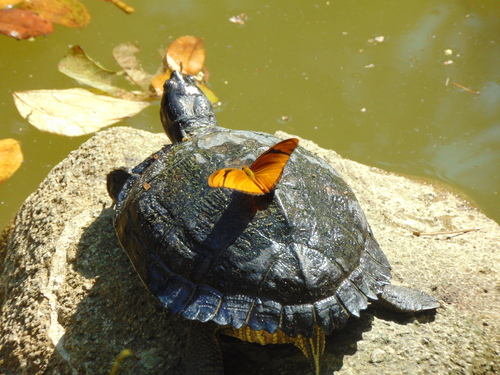
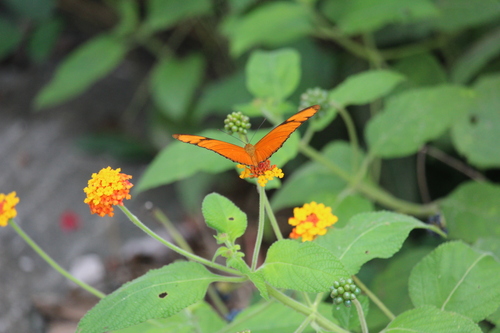
Dryas iulia, the Julia butterfly, is a distinctive long-winged species of the brush-footed butterfly group (family Nymphalidae). It is common across the Neotropics and occurs as far north as southern United States (Florida and Texas) and in the Caribbean. Adults are active by day and are strong, fast fliers. Larvae specialise on plants in the passionflower family (Passifloraceae).
The Julia is not dangerous to people. It is often seen on flowers, on fruit baits, or settling on warm pavement. In tropical areas it can be present year-round; in cooler parts of its range it is most common in warm months or when adults migrate into the area.
🔍How to identify a Julia butterfly
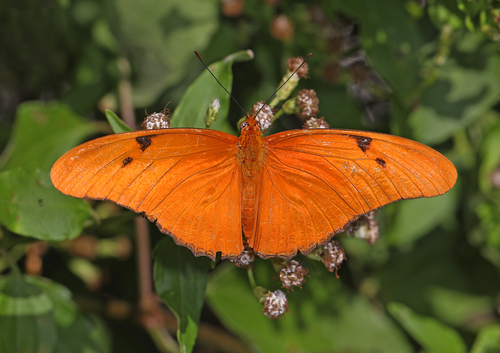
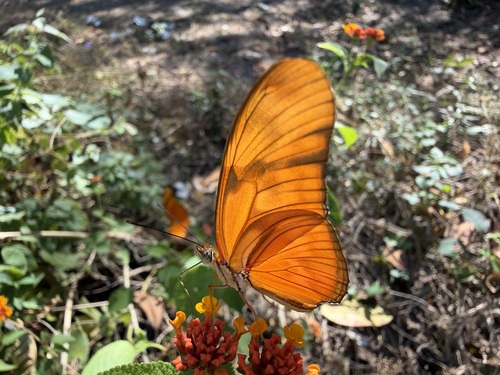
Adult Julia butterflies have an elongated, narrow wing shape and uniform bright orange to reddish-orange upperwings without heavy dark patterning. The forewing tip is somewhat pointed. The underside is paler orange to brownish and may show faint spotting. Males and females are similar in colour, though males often appear slightly brighter. Caterpillars are cylindrical, typically mottled brown or orange with spines or small tubercles and a dark head; pupae are compact and often mottled to blend with dead leaves.
- Uniform bright orange upperwings with elongated, narrow forewings and a pointed forewing tip.
- Lack of heavy dark bands or extensive eyespots on the upper surface (unlike many fritillaries).
- Long, narrow wing shape and swift, direct flight.
- Underside paler orange to brownish, without striking silver spots.
Lookalikes
Gulf fritillary Agraulis vanillae
Gulf fritillary shows prominent silver spots on the underside of the hindwing and has more heavy dark markings on the upper surface; Julia lacks the silver underside spots and is more uniformly orange.
Heliconian species (e.g., Heliconius spp.) Heliconius spp.
Heliconius butterflies typically have bold black patterning and mimicry bands on the wings; Dryas iulia is more uniformly orange with a distinctive narrow-wing shape.
↻Life cycle
Egg
Tiny, spherical to slightly flattened eggs are laid singly on leaves of host passionflower vines.
Larva (caterpillar)
Caterpillars feed on Passiflora leaves. They are typically cylindrical with small tubercles or spines and go through several instars while growing rapidly.
Pupa (chrysalis)
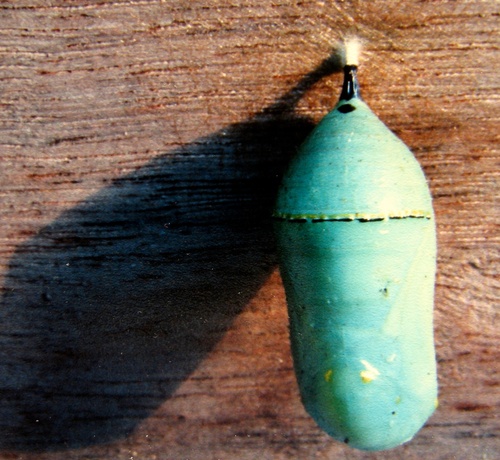
The chrysalis is attached to a stem or leaf and is often mottled to resemble dead plant material; metamorphosis takes about 1-2 weeks depending on temperature.
Adult (butterfly)
Winged adult emerges and feeds on nectar, rotting fruit and other liquid sources; adults mate and females lay eggs on suitable passion vines.
🍃Diet and predators
Young eat
Leaves of passionflower vines (Passiflora spp.) and other related plants in the passionflower family.
Adults eat
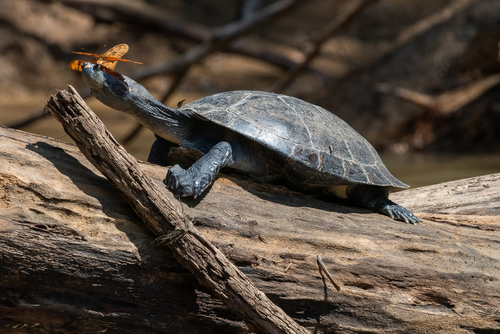
Flower nectar, rotting fruit, tree sap and mineral-rich liquids such as animal droppings or mud puddles.
Predators of the young
Birds, predatory wasps, ants and parasitoid flies or wasps that attack caterpillars.
Predators of adults
Insectivorous birds, spiders, dragonflies and mantids; adults evade predators with fast flight and by resting on vegetation.
🌱Effect on plants and gardens
Larvae feed primarily on passionflower family plants (Passifloraceae), especially Passiflora species. Adults visit flowers for nectar and also feed on rotting fruit, tree sap and animal droppings, helping nutrient recycling and pollination.
📍Where and when to find it
Adults: sunlit edges, gardens, flower clusters, rotting fruit and puddles. Larvae: on leaves of Passiflora vines. Pupae: attached to stems or undersides of leaves.
Best time
In the tropics: year-round. In subtropical/temperate areas: spring through autumn. Best seen mid-morning to mid-afternoon when active.
Observation tips
Use fruit bait (overripe banana or orange) to attract adults to a stationary viewing spot. Photograph from a low angle to capture the long wing shape and underside pattern.
✨Fun facts
- Julia butterflies are fast, direct fliers and are often seen flying low and swiftly along edges and clearings.
- Because their larvae eat passionflower vines, gardeners who cultivate Passiflora often attract this species.
- Adults commonly feed on rotting fruit and are easy to attract with fruit baits in butterfly gardens.
?Frequently asked questions
Do Julia butterflies bite or sting?
No. Julia butterflies do not bite or sting and are harmless to people.
Why is a Julia butterfly in my house?
They can be attracted indoors by bright light, open doors, or ripe/rotting fruit. If you have potted passionflowers nearby it may also be breeding locally.
How can I attract Julia butterflies to my garden?
Plant native Passiflora species for caterpillars, provide nectar flowers, and offer ripe or overripe fruit as bait. Sunny, sheltered spots and shallow water sources help.
Are Julia caterpillars harmful to passionflower plants?
Caterpillars eat leaves and can defoliate small plants, but established passionflower vines usually tolerate moderate feeding and regrow.
How do I get rid of Julia butterflies humanely if they are unwanted?
Remove attractants such as open bowls of fruit and close doors/windows. Gently guide any indoor butterflies outside using a cup and stiff paper; avoid insecticides unless absolutely necessary.
📷Photos of the Julia butterfly
More butterflies & moths
This guide was written with AI assistance and fact-checked, last updated 2026-10-10. Identification from photos is never certain: don't handle insects you can't identify, and get medical advice for bites, stings or allergic reactions. More about the Julia butterfly: iNaturalist, Wikipedia.