
Anise swallowtail
Papilio zelicaon · Swallowtail butterflies
A common western North American swallowtail whose caterpillars feed on plants in the carrot family, often found in gardens and fields.
!Is the anise swallowtail dangerous?
No. Harmless to people. Adults do not bite or sting. Handle butterflies gently if necessary; caterpillars can display an orange forked organ (osmeterium) that emits a disagreeable scent but it is not harmful.
Pets
Not dangerous. Pets may eat caterpillars or adults; occasional ingestion could cause mild stomach upset but there is no known serious toxicity to cats or dogs.
📖Overview
The anise swallowtail (Papilio zelicaon) is a medium to large butterfly found across western North America. Adults are strong fliers and frequent gardens, meadows, roadsides and open woodland edges. Larvae feed mainly on Apiaceae (carrot family) such as fennel, anise, parsley and cultivated carrots and sometimes on other plant families. They have multiple broods in warm areas and are a familiar sight from spring through autumn.
This species is not dangerous to people. Butterflies are harmless and beneficial pollinators; caterpillars can sometimes be noticed on garden herbs but rarely cause serious damage. They are popular with butterfly watchers and gardeners who plant host plants and nectar sources.
🔍How to identify an anise swallowtail
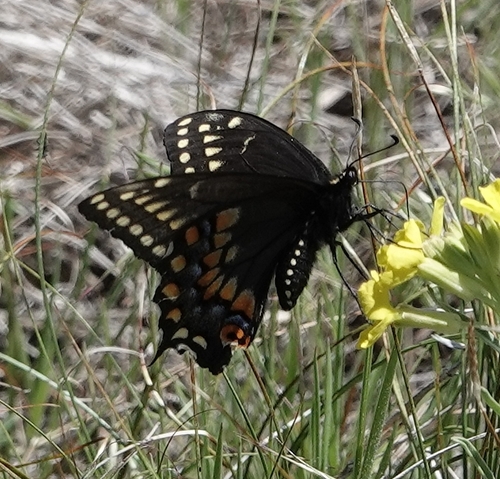
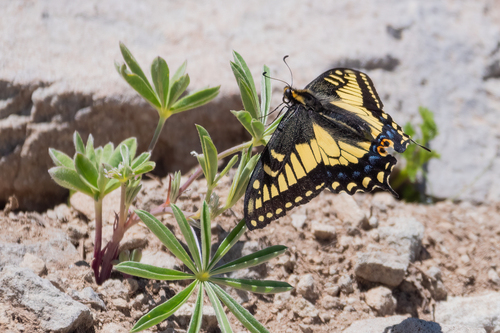
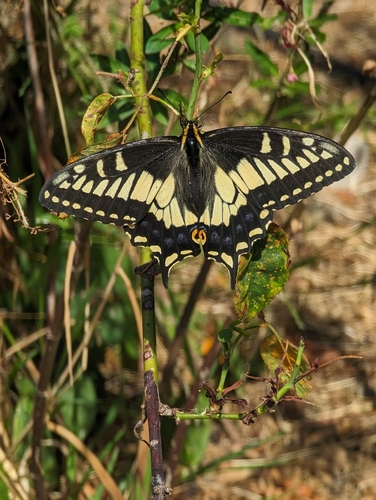
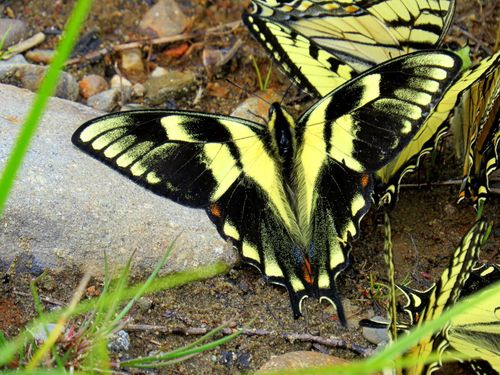
Adults are mostly yellow with broad black bands along the wing bases and outer wing margins, and a wide yellow band crossing the wings; the body is black with yellow side stripes. Each hindwing has a single tail, a row of blue spots inside the black margin, and an orange eyespot with a black center near the inner edge. Wingspan typically ranges about 65-80 mm. Young caterpillars are black with a white saddle (resembling bird droppings); older caterpillars are green with black bands containing orange or yellow spots, and have an orange osmeterium. Chrysalises are green or brown and attached upright to stems or structures with a silk girdle.
- Mostly yellow wings with black bands along the wing bases and margins, not tiger-striped.
- Hindwings with a single tail, blue spots in the black margin and an orange eyespot with a black center near the inner edge.
- Wingspan 65-80 mm; older caterpillars green with black bands and orange spots, and an orange osmeterium when disturbed.
Lookalikes
Western tiger swallowtail Papilio rutulus
Western tiger swallowtail is larger and has bold black vertical tiger stripes across yellow wings; the anise swallowtail lacks these stripes and has a broad yellow band and black wing bases.
Two-tailed swallowtail Papilio multicaudata
Two-tailed swallowtail often has two tails on each hindwing and a different arrangement of black markings and blue scaling; ranges overlap in some areas but size and tail number help separate them.
↻Life cycle
Egg
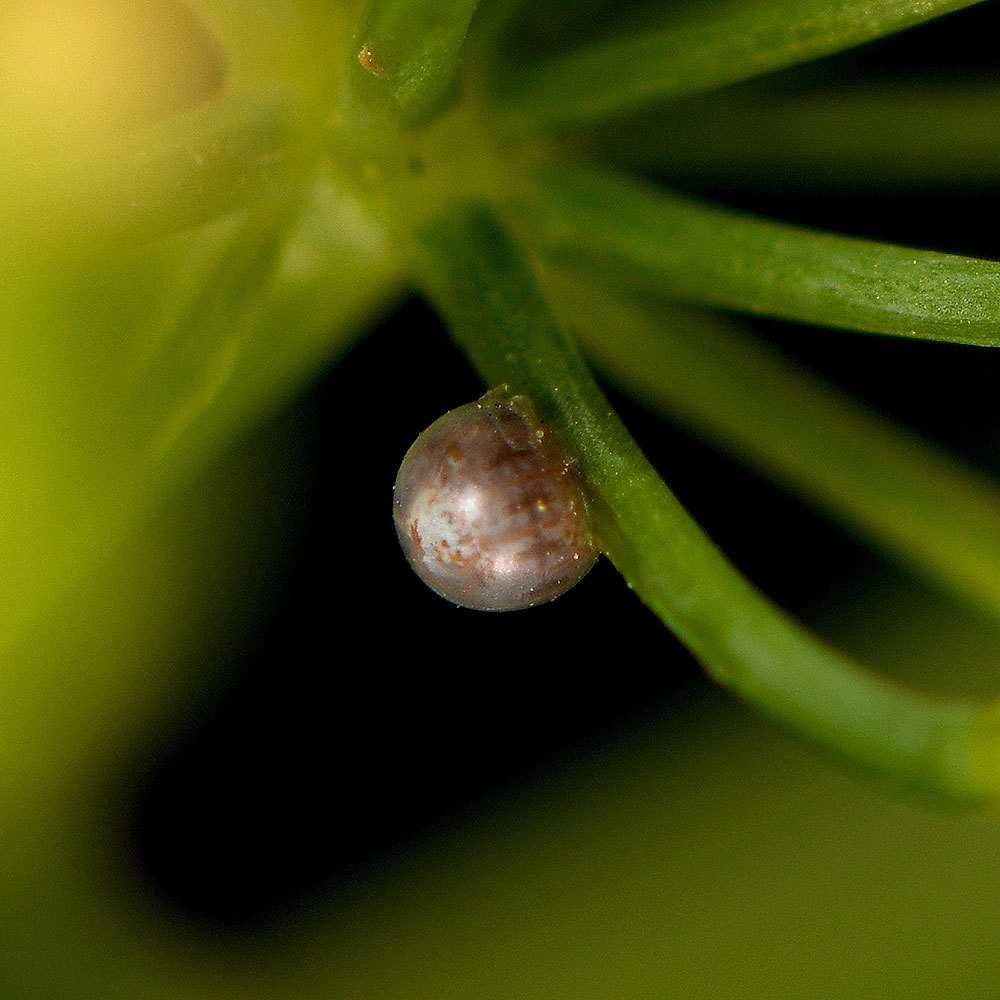
Small, spherical eggs laid singly on leaves of host plants (Apiaceae).
Larva (caterpillar)
Caterpillars pass through several instars; young larvae are black with a white saddle, later green with black bands spotted with orange or yellow. They feed on host leaves and can use the osmeterium (a forked scent gland) when disturbed.
Pupa (chrysalis)
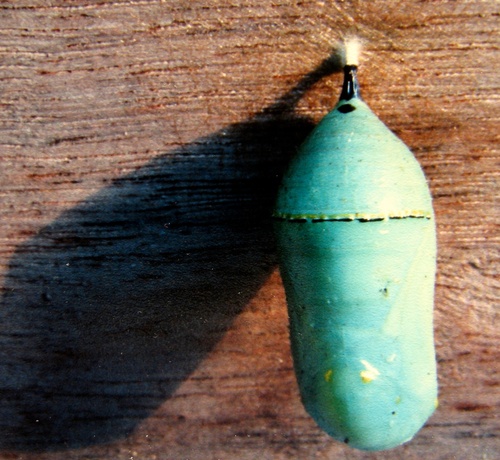
Chrysalis attaches upright to a stem or structure and may be green or brown to blend with surroundings; pupation lasts about 1-2 weeks in warm weather but longer if overwintering.
Adult (butterfly)
Winged stage that feeds on nectar, mates and disperses to lay eggs on host plants; adults are active by day.
🍃Diet and predators
Young eat
Leaves of Apiaceae such as fennel, anise, dill, parsley, and sometimes cultivated carrots; occasional records on other families but Apiaceae are primary hosts.
Adults eat
Nectar from a wide range of flowering plants, including milkweed, thistles, lupine, yarrow and garden flowers.
Predators of the young
Predators include birds, predatory wasps, ants and parasitic flies and wasps.
Predators of adults
Birds, spiders and predatory insects; adults avoid predation using fast flight, warning markings and tails that can deflect attacks away from the body.
🌱Effect on plants and gardens
Caterpillars feed primarily on Apiaceae (carrot family) such as fennel, anise, parsley, dill and cultivated carrots; adults visit a variety of nectar flowers and act as pollinators.
📍Where and when to find it
Look for adults on nectar flowers in gardens, meadows and roadsides. Inspect fennel, dill, parsley and related plants for eggs or caterpillars.
Best time
Spring through autumn; best observed on warm sunny days, mid-morning to late afternoon.
Observation tips
To photograph, approach slowly and wait near nectar patches. Plant host and nectar species to increase local numbers. Photograph caterpillars on host plants at close range with soft natural light.
✨Fun facts
- Despite the common name, the species uses many plants in the carrot family, not just anise.
- Caterpillars have an osmeterium, a forked orange gland they can evert to release a foul smell that deters predators.
- The tails on the hindwings can help divert bird attacks away from the butterfly's body; a damaged tail often doesn't prevent normal flying.
?Frequently asked questions
Are anise swallowtails dangerous?
No. They are harmless to people and pets; adults do not sting or bite and caterpillars are not toxic to humans.
Do anise swallowtail caterpillars eat garden plants?
They feed mainly on carrot-family plants like fennel, parsley and dill. Heavy infestations are uncommon and usually cause only minor cosmetic damage.
Why is an anise swallowtail in my house?
Adults may come inside while attracted to indoor lights or when windows and doors are open. Occasionally chrysalises or caterpillars on potted host plants brought indoors are the cause.
How can I attract anise swallowtails to my garden?
Plant larval host plants from the carrot family (fennel, dill, parsley, anise) and a variety of nectar flowers. Provide sunny spots and shelter from strong winds.
How do I get rid of caterpillars on my herbs?
Handpick caterpillars and relocate them away from vulnerable plants. Use row covers while plants are small. Chemical control is rarely necessary; if used, choose targeted, low-toxicity options and follow label instructions.
When can I see anise swallowtails?
They are visible from spring through autumn, with the best chances on warm sunny days when they visit flowers for nectar.
📷Photos of the anise swallowtail
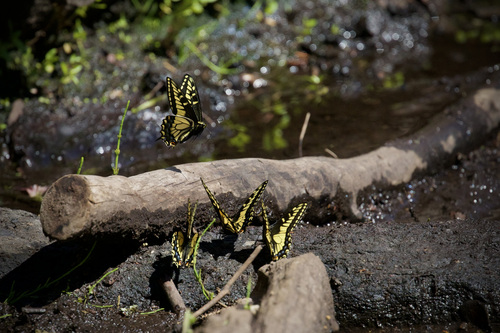
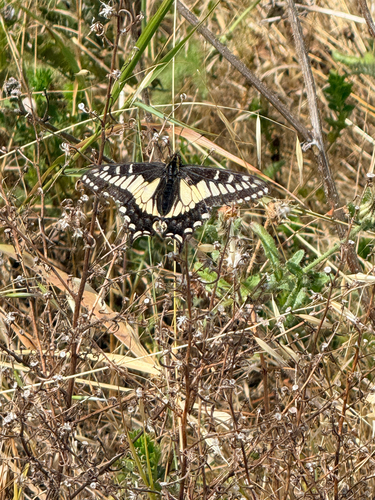
More butterflies & moths
This guide was written with AI assistance and fact-checked, last updated 2026-10-10. Identification from photos is never certain: don't handle insects you can't identify, and get medical advice for bites, stings or allergic reactions. More about the anise swallowtail: iNaturalist, Wikipedia.