
Indian meal moth
Plodia interpunctella · Snout moths
A small, common pantry pest whose larvae infest stored grains, cereals and dried foods worldwide.
!Is the indian meal moth dangerous?
No. Not venomous and do not bite. Adults are a nuisance; larvae contaminate food with webbing and frass which can cause food waste and, rarely, minor allergic reactions in sensitive people. Food contaminated by larvae should be discarded. No first aid is normally needed.
Pets
Generally not harmful to pets. Pets that eat heavily infested food may vomit or have digestive upset; discard contaminated pet food and consult a veterinarian if symptoms continue.
📖Overview
Plodia interpunctella is a small moth whose caterpillars (larvae) are the stage that damages stored food. It is one of the most widespread stored-product pests and thrives where dry foodstuffs are stored. Adults are short-lived and do not feed on foodstuffs; the larvae chew and spin silk, contaminating products with frass and webbing. Infestations are common in homes, grocery stores and food-processing facilities.
🔍How to identify a indian meal moth
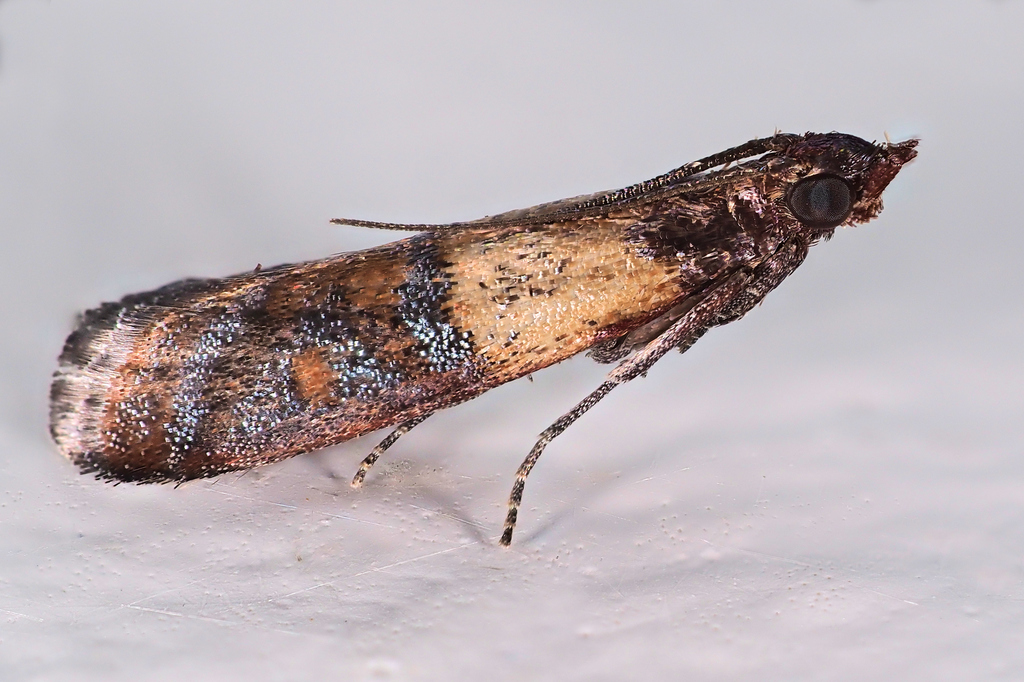
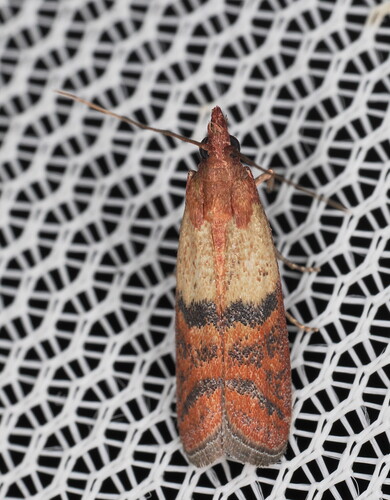
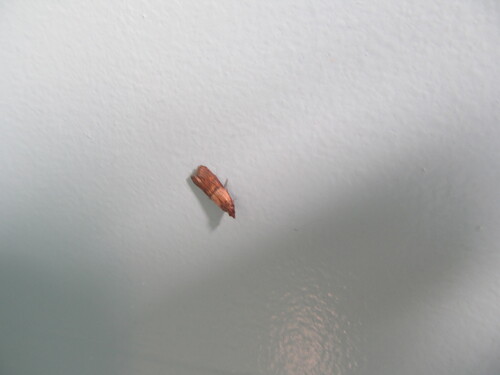
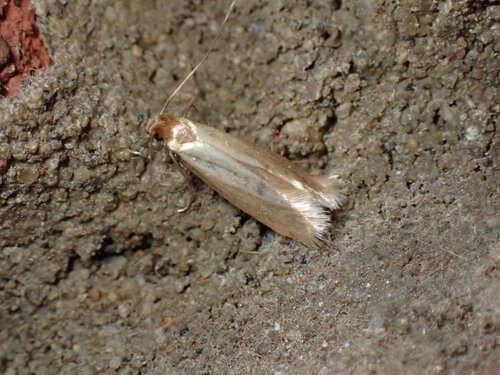
Adult Indian meal moths have a wingspan of about 16-20 mm. Forewings are bi-coloured: the inner two-thirds near the body are pale grey to light tan, while the outer one-third toward the wing tips is reddish-brown to coppery with a metallic sheen, producing a distinct demarcation. When at rest they hold a slender, roof-like posture. Larvae are cream to pinkish with a brown head capsule and reach 12-14 mm when mature; they produce silky webbing in infested food.
- Adults: 16-20 mm wingspan with distinct two-toned forewings — pale grey/tan near the body and reddish-brown or copper at the tips.
- Look for silky webbing and tiny cream-to-pink caterpillars in dry food packages.
- Check corners of pantry shelves, cracks, and crevices for pupae and webbing.
- Infested food often has clumped product, visible frass (tiny dark grains), or moving larvae.
Lookalikes
Mediterranean flour moth Ephestia kuehniella
Mediterranean flour moth has more uniformly grey forewings with faint markings rather than the clear coppery outer band of Plodia interpunctella.
Tobacco moth Ephestia elutella
Tobacco moth is generally darker and greyer and prefers dried tobacco and some stored products; wing pattern is less distinctly bi-coloured.
↻Life cycle
Egg
Females lay 60-400 tiny, whitish eggs directly on or near food; eggs hatch in 2-14 days depending on temperature.
Larva (caterpillar)
Larvae feed on stored foods, producing webbing and frass; they pass through several instars over 2-41 weeks depending on conditions.
Pupa
Full-grown larvae pupate in silk cocoons in food packages, cracks, or nearby protected spots; pupation lasts about 1-2 weeks.
Adult moth
Adults emerge to mate and lay eggs; they do not feed on stored foods and live typically 5-20 days.
🍃Diet and predators
Young eat
A wide range of dry stored products: cereals, flours, nuts, dried fruit, pet food, birdseed, spices, chocolate, and processed dried goods.
Adults eat
Adults do not feed on stored foods; some may drink water or nectar if available, but feeding is minimal.
Predators of the young
Predators and parasitoids include predatory beetles, spiders, and parasitic wasps used in commercial control; birds and rodents may eat infested material.
Predators of adults
Bats, birds, spiders, and insectivorous insects may catch adults; also parasitic wasps.
🌱Effect on plants and gardens
Larvae feed on stored dry plant products (grains, flour, cereals, nuts, dried fruits, spices), processed foods and occasionally dried animal products. They do not attack living plants.
How to get rid of indian meal moths
Remove and discard all infested food; vacuum shelves, cracks and corners and clean them with soap and water; store dry foods, pet food and birdseed in airtight glass or hard plastic containers; use pheromone traps to monitor adults. Freezing suspect dry goods for several days kills all life stages. Chemical sprays are generally unnecessary and should not be used near food.
📍Where and when to find it
Look inside open or damaged packages of cereals, flour, nuts, dried fruit, pet food, birdseed and behind pantry shelves, in cracks, or in stored boxes; larvae are found in the food itself and pupae in nearby crevices.
Best time
Year-round indoors; adults are mainly nocturnal but easily seen during evening and at lights.
Observation tips
Inspect recently purchased dry goods, place susceptible items in sealed containers, and photograph any larvae or adult moths on a plain background for identification.
✨Fun facts
- The name 'Indian meal moth' likely refers to historic association with imported 'Indian meal' (ground corn), not to the moth's origin.
- They spin noticeable silk webbing in infested food, which is often the clearest sign of an infestation.
- Female moths can lay hundreds of eggs over a few days, allowing populations to build quickly in food storage areas.
?Frequently asked questions
Do Indian meal moths bite?
No. Adults and larvae do not bite people. They are a contamination and nuisance problem rather than a biting pest.
Why do I have Indian meal moths in my house?
They arrive because eggs or larvae were already present in purchased dry foods (cereals, flour, nuts, pet food) or because adult moths entered and laid eggs near stored foods.
How do I get rid of Indian meal moths?
Remove and discard all infested food; vacuum shelves and cracks; clean containers with soap; store food in airtight hard plastic or glass containers; use pheromone traps to monitor adults and reduce mating; inspect and clean pet food and birdseed. For heavy infestations, throw out open packages and deep-clean storage areas. Chemical sprays are generally unnecessary and not recommended near food.
Can they damage my pantry or furniture?
They do not eat wood or fabric (except occasionally dried plant materials in woven items); damage is limited to contamination and loss of stored food.
Will moth traps get rid of them?
Pheromone traps attract male adults and help reduce mating and monitor infestation levels, but traps alone rarely eliminate an infestation; they should be used together with removal of infested foods and sanitation.
📷Photos of the indian meal moth

More butterflies & moths
This guide was written with AI assistance and fact-checked, last updated 2026-10-09. Identification from photos is never certain: don't handle insects you can't identify, and get medical advice for bites, stings or allergic reactions.