
Blue morpho
Morpho peleides · Morpho butterflies
A large, showy Neotropical butterfly with iridescent blue upperwings and brown undersides used for startling predators and camouflage.
!Is the blue morpho dangerous?
No. Blue morpho butterflies are harmless to people. They do not bite or sting. Handle with care if necessary: their wing scales are fragile and rubbing them off damages the butterfly.
Pets
Harmless. Pets may catch butterflies and injure them; keep pets away from butterflies to avoid harm to the insect.
📖Overview
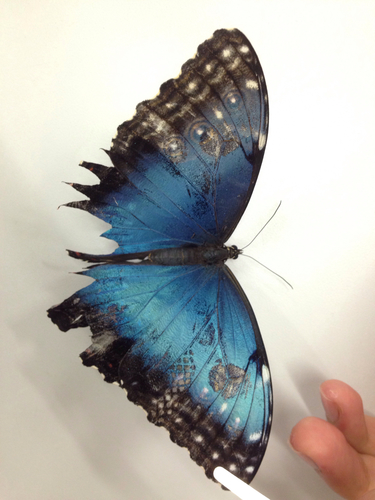
Morpho peleides is a large, diurnal butterfly native to tropical lowland forests of Central and northern South America. Adults are famous for the bright, metallic blue of their upperwing surface produced by microscopic wing scales that reflect light rather than pigment. When at rest they close their wings to show cryptic brown undersides with eye spots that help hide them from predators. They feed mainly on rotting fruit, sap and other non-floral liquids, and their caterpillars eat leaves of various forest plants. Morphos are not harmful to people and are popular subjects in ecotourism and butterfly houses.
🔍How to identify a blue morpho
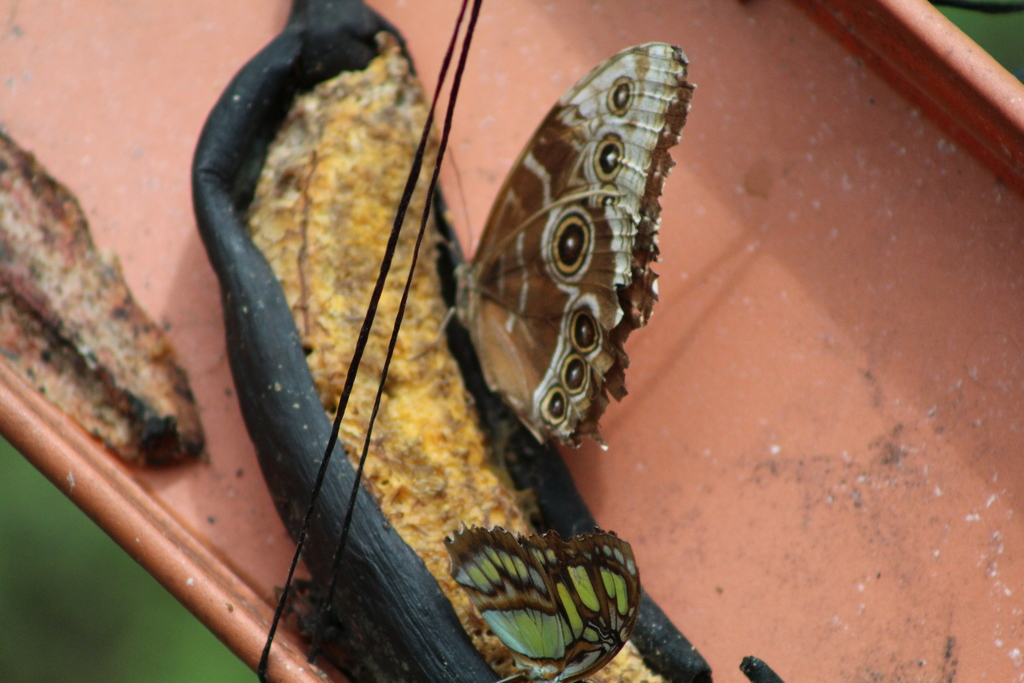
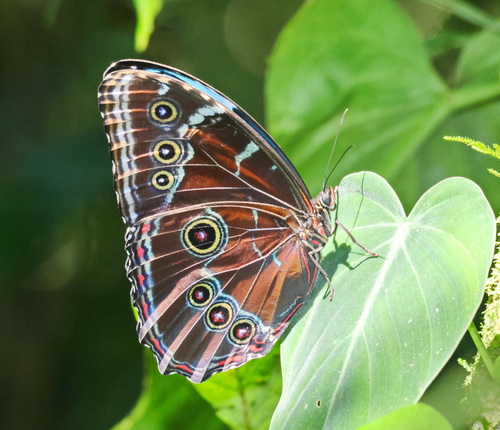
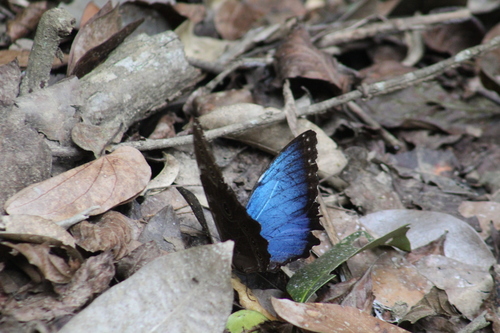
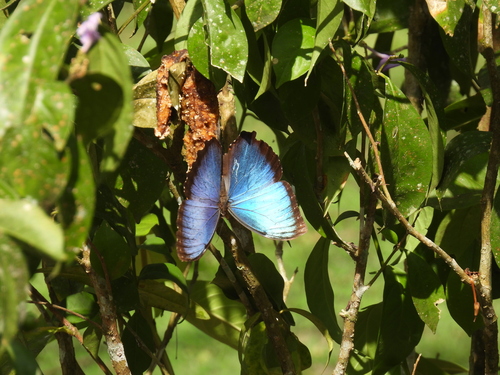
Upperwing surfaces are vivid, iridescent blue that can appear to change with viewing angle; the blue is more intense in males. The underside of both wings is brown to reddish-brown with several rounded eye spots and fine scalloped borders. Wings are broadly rounded; body stout and hairy compared with smaller butterflies. Flight is powerful but somewhat fluttering and often close to the forest understory or along stream edges.
- Vivid, metallic blue upperwings visible in flight or when wings are open
- Brown undersides with rounded eye spots and scalloped wing margins when wings are closed
- Large size with a broad, rounded wing shape (wingspan about 75-120 mm)
- Powerful fluttering flight low in forest understory or along streams
Lookalikes
Menelaus blue morpho Morpho menelaus
Also blue above but tends to have different patterning and intensity of blue; range and subtle wing-spot patterns help distinguish species to specialists.
Rhetenor blue morpho Morpho rhetenor
Males are an even more intense electric blue with more angular, pointed forewings, and the species lives in northern South America (Amazon basin and the Guianas) rather than Central America.
↻Life cycle
Egg
Small, round to slightly barrel-shaped eggs laid singly on the underside of host plant leaves.
Larva (caterpillar)
Chunky, often reddish or greenish caterpillars with spines or tubercles; they feed on host-plant leaves and undergo several molts as they grow.
Pupa (chrysalis)
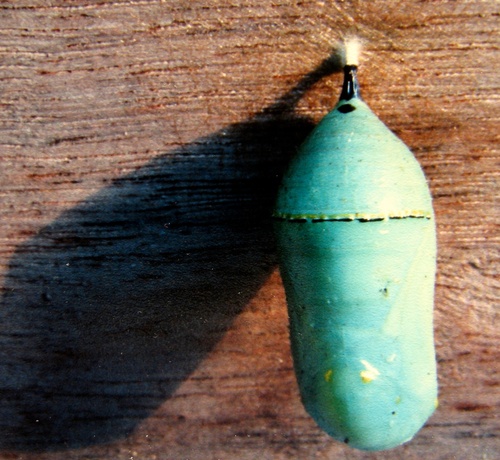
Pupae are attached to leaves or stems; chrysalis is compact and camouflaged, where metamorphosis to the adult occurs.
Adult (butterfly)
The familiar iridescent-blue adult emerges, mates and seeks fermenting fruit, sap or mineral sources to sustain itself and provide nutrients for reproduction.
🍃Diet and predators
Young eat
Leaf tissue of host plants (commonly legumes and other forest shrubs and trees)
Adults eat
Rotting and fermenting fruit, tree sap, fungi fluids and occasionally fluids from animal droppings or carrion; adults are not strong flower nectar feeders compared with many other butterflies
Predators of the young
Parasitic wasps and flies, ants, birds and predatory insects
Predators of adults
Birds, lizards and larger predatory insects; the species uses sudden wing flashes of blue and cryptic undersides to startle or confuse predators
🌱Effect on plants and gardens
Caterpillars feed on leaves of various forest plants (often legumes and other shrubs or trees); adults feed on fermenting fruit, tree sap, fungi and mineral-rich fluids rather than nectar from flowers.
📍Where and when to find it
Look along forest edges, stream banks and trails; adults are often seen feeding on rotting fruit on the forest floor or perched with wings closed on understory vegetation.
Best time
Year-round in suitable tropical locations; most active on warm, sunny days during mid-morning to early afternoon.
Observation tips
To photograph the iridescent blue, capture them with wings open in bright light; to show the cryptic underside, approach slowly while they are at rest with wings closed. Use a long lens and avoid flash which can startle them.
✨Fun facts
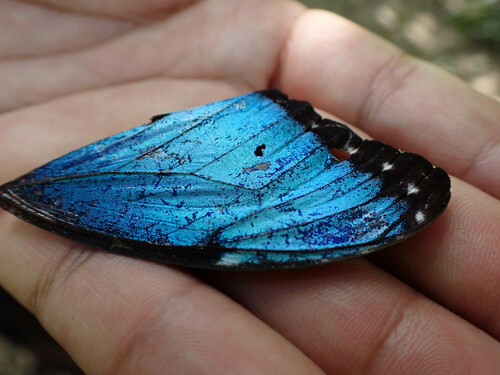
- The blue color is structural: microscopic scales on the wings reflect light to create iridescent blue rather than pigment producing the color.
- When threatened, the butterfly flashes its blue upperwings in flight then closes them to reveal cryptic brown undersides with eye spots, confusing predators.
- Blue morphos are popular in butterfly houses and exhibits because their bright color and large size make them easy for visitors to see.
?Frequently asked questions
Do blue morpho butterflies sting or bite?
No. They are harmless to people and do not have stings or biting mouthparts for attacking; they only sip liquids with a proboscis.
Why is a blue morpho in my house?
If you live near tropical forest or plant nurseries, a butterfly may wander indoors seeking light, moisture or fermenting fruit. It likely entered accidentally through an open door or window.
How can I get rid of a blue morpho without harming it?
Gently guide it to an open window or door using a soft container or sheet. Avoid touching the wings; if you must handle it, cup it gently between your hands with closed wings to prevent scale loss.
Where do blue morphos live?
They inhabit tropical lowland forests, forest edges, and riverbanks from Mexico through Central America into parts of northern South America and nearby islands.
Are blue morpho butterflies endangered?
Morpho peleides is not currently listed as globally endangered, but habitat loss and collecting can affect local populations. Conservation of tropical forest habitat benefits them.
📷Photos of the blue morpho
More butterflies & moths
This guide was written with AI assistance and fact-checked, last updated 2026-10-10. Identification from photos is never certain: don't handle insects you can't identify, and get medical advice for bites, stings or allergic reactions. More about the blue morpho: iNaturalist.