
Ilia underwing
Catocala ilia · Underwing moths
A medium-large nocturnal moth of eastern North American woodlands, cryptic at rest and revealing bright orange-and-black hindwings in flight.
!Is the ilia underwing dangerous?
No. Ilia underwing moths are harmless to people. Adults do not bite or sting. Handle gently if necessary; moth scales can rub off but do not cause harm. No special first aid is required.
Pets
Not toxic to pets. Large moths may startle animals, but they are not poisonous if touched or eaten in small amounts; consult a veterinarian if a pet shows unusual symptoms after ingesting many insects.
📖Overview
Catocala ilia (Ilia underwing) is a nocturnal moth in the underwing group known for cryptic, bark-like forewings and brightly colored hindwings. Adults are most active at night and rest during the day on tree trunks where their forewing pattern provides camouflage. The species occurs mainly in deciduous woodlands and forest edges across eastern North America. Larvae feed on hardwood trees, especially oaks. Adults are harmless to people and are commonly attracted to porch and street lights.
🔍How to identify an ilia underwing
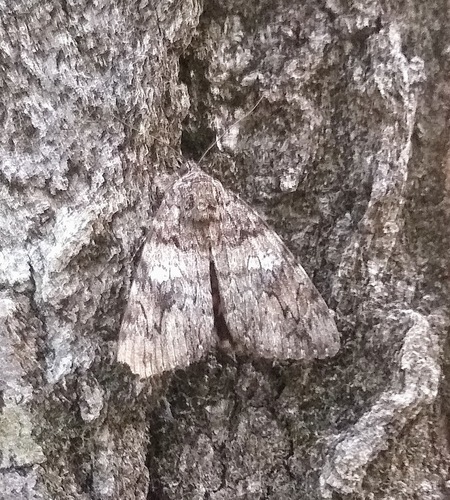
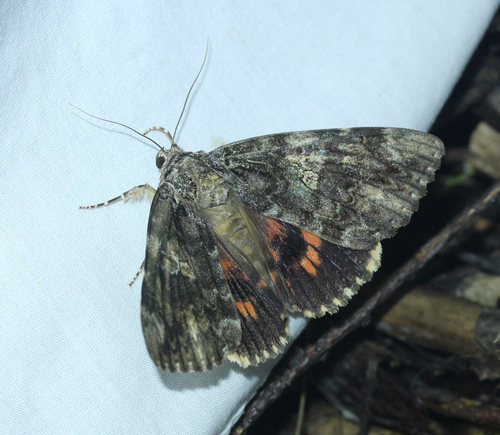
Forewings are mottled gray-brown to blackish with complex wavy lines that resemble tree bark; a white or pale reniform (kidney-shaped) spot is often conspicuous. Hindwings are orange-red with a black median band and a black outer band; the fringe is pale. Wingspan is fairly large for Catocala, and the body is stout and furry like other erebid moths.
- Cryptic gray-brown forewings with bark-like wavy lines and often a conspicuous white kidney-shaped spot.
- Orange-red hindwings with a black median band and a black outer band, visible in flight.
- Medium-large wingspan (about 65-80 mm) and a stout, furry body typical of underwing moths.
- When at rest on tree trunks, forewing pattern provides excellent camouflage—look for sudden flash of orange when disturbed.
Lookalikes
Darling underwing Catocala cara
Hindwings are deeper pink-red to crimson, and the forewings often have an olive or greenish tint without the white kidney spot.
Relict underwing Catocala relicta
Hindwings are white with black bands rather than orange, and the forewings are frosted white and black.
Girlfriend underwing Catocala amica
Much smaller, with yellow-orange hindwings that usually lack a complete black median band.
↻Life cycle
Egg
Laid on tree bark or twigs in late summer or fall; eggs overwinter in many populations.
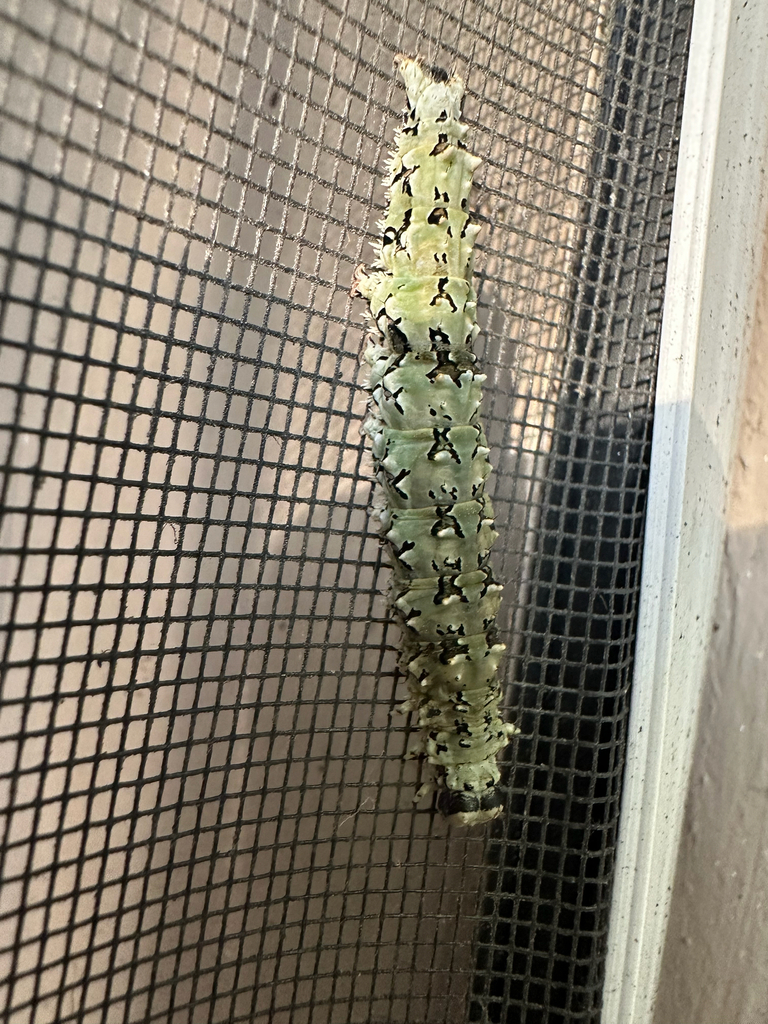
Larva (caterpillar)
Caterpillars hatch in spring and feed on the leaves of host hardwoods, growing through several instars.
Pupa
Caterpillars pupate in leaf litter or shallow soil near the base of host trees; pupation lasts a few weeks to months depending on season.
Adult (moth)
Adults emerge in summer, mate, and are active at night; they do not feed heavily and live a short time focused on reproduction.
🍃Diet and predators
Young eat
Leaves of hardwood trees, especially oak species (Quercus).
Adults eat
Adults feed little; when they do, they use nectar or tree sap and are sometimes attracted to sugary baits and fermenting fruit.
Predators of the young
Birds, small mammals, predatory insects and parasitic wasps.
Predators of adults
Bats, night-flying birds, spiders and predatory insects; adults also fall prey to nocturnal parasitic flies and wasps.
🌱Effect on plants and gardens
Larvae feed primarily on the leaves of hardwood trees, especially oaks (Quercus). Feeding is generally not severe enough to harm healthy trees.
📍Where and when to find it
Adults: at night near lights or resting on tree trunks by day. Larvae: on leaves of oak trees and other hardwoods in spring and early summer.
Best time
Best seen July to September for adults, at night; caterpillars are easiest to find in spring when leaves are fresh.
Observation tips
Search tree trunks in daylight for well-camouflaged resting moths and use light traps or a porch light after dark to attract adults. Photograph from a short distance to avoid losing the moth when it flushes.
✨Fun facts
- Underwing moths hide in plain sight: the forewings mimic tree bark to avoid predators, then a flash of bright hindwing color can startle attackers.
- Catocala ilia is most often noticed at lights or when it flushes from a tree, not while perched during the day.
- Moth scales that rub off when handled are harmless but can reduce wing pattern clarity.
?Frequently asked questions
Do Ilia underwing moths bite?
No. Adults do not bite or sting.
Are Ilia underwing moths poisonous?
No. They are not poisonous to people; they pose no toxic risk.
Why is this moth in my house?
Like many moths, they are attracted to lights at night and may fly into homes through open doors or windows.
How do I get rid of them?
Turn off outdoor lights, close doors and windows at night, and gently coax moths outside with a cup and a sheet of paper. No chemical control is usually necessary.
Where does the Ilia underwing live?
In deciduous woodlands, forest edges and parks across eastern North America where host trees such as oaks are present.
📷Photos of the ilia underwing
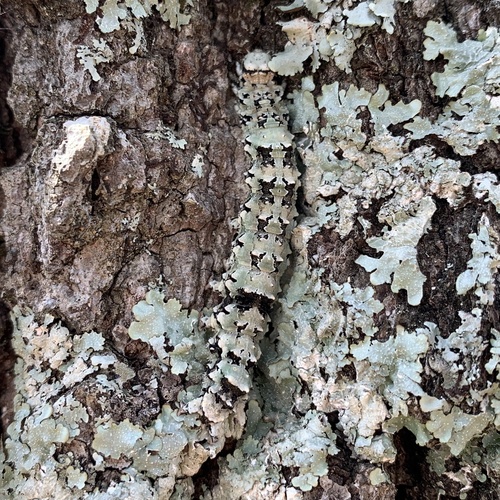
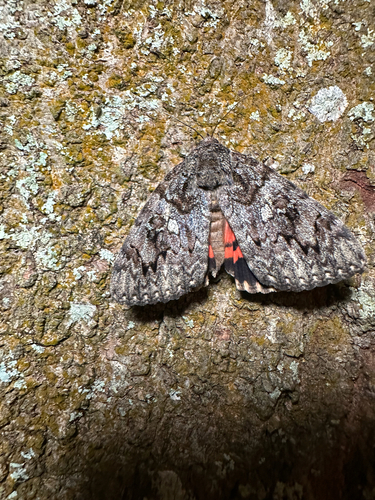
More butterflies & moths
This guide was written with AI assistance and fact-checked, last updated 2026-10-10. Identification from photos is never certain: don't handle insects you can't identify, and get medical advice for bites, stings or allergic reactions. More about the ilia underwing: iNaturalist, Wikipedia.