
Yellow-collared scape moth vs Eight-spotted forester
These two are easy to mix up. Here's how to tell a yellow-collared scape moth from an eight-spotted forester, and whether either one bites or stings.
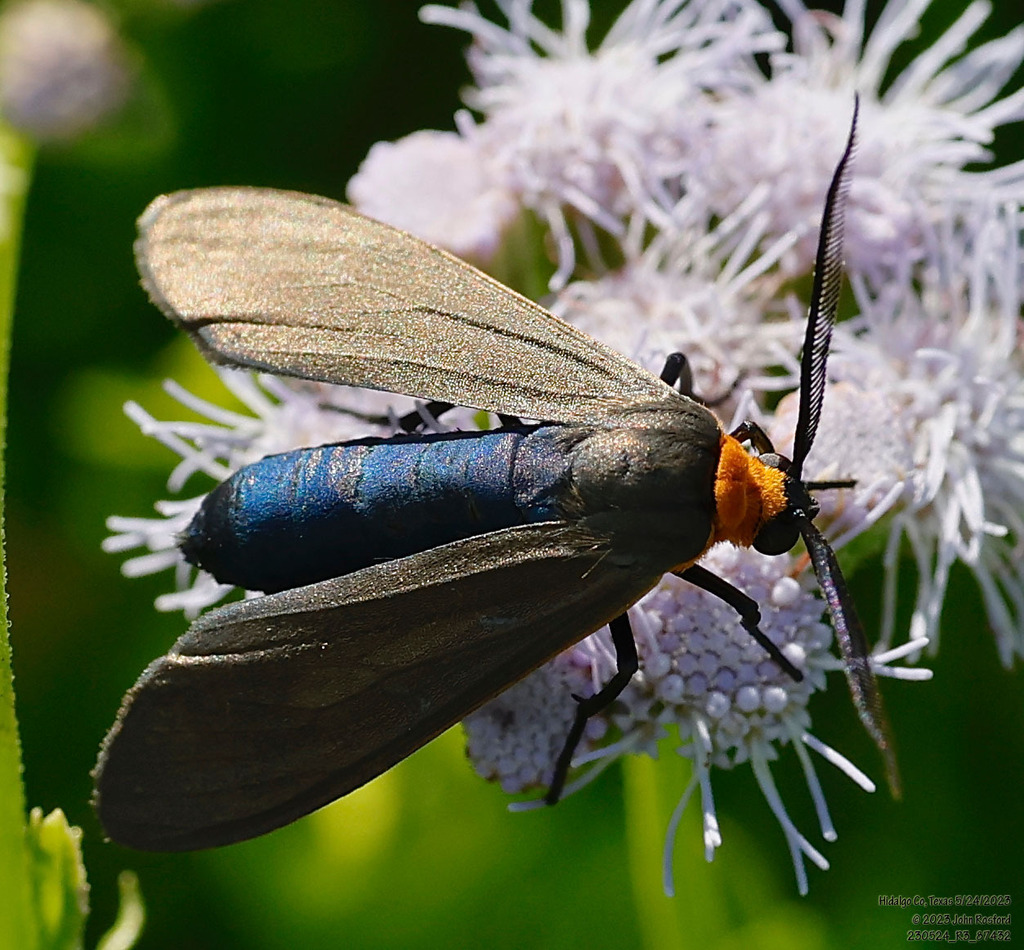
Yellow-collared scape moth
Cisseps fulvicollis
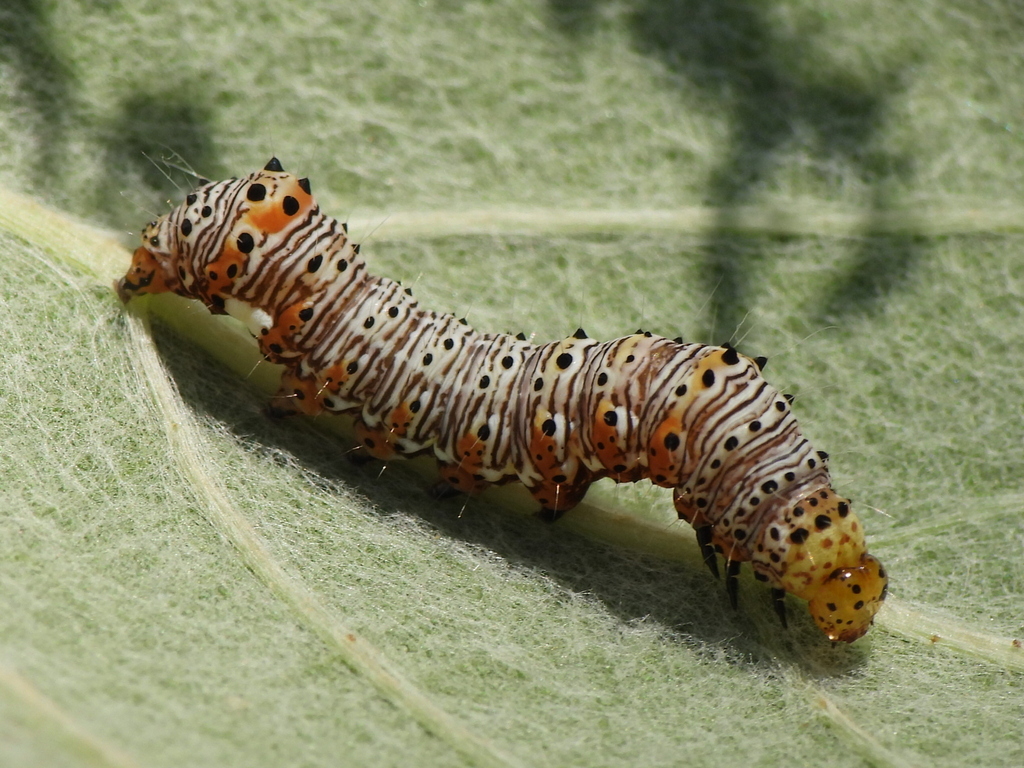
Eight-spotted forester
Alypia octomaculata
≠The key differences
Narrower-winged and plain dark with a yellow-orange collar on the thorax; it lacks the large pale spots on the wings.
⚖︎Side by side
| Yellow-collared scape moth | Eight-spotted forester | |
|---|---|---|
| To humans | Non-toxic | Non-toxic |
| Size | Wingspan 25-35 mm | 30-40 mm wingspan |
| Colours | Black, Yellow, Orange, Metallic blue | Black, Orange, Yellow, White |
| Family | Erebidae | Noctuidae |
| Habitat | Open habitats: meadows, fields, roadsides, gardens, and other grassy areas | Woodland edges, gardens, vineyards, hedgerows and riparian areas where host vines grow |
| Range | Widespread across much of North America, including southern Canada and the United States | Eastern North America: from southern Canada (Ontario, Quebec) through the eastern United States, south into parts of the southeastern US |
| Active | Late spring to autumn (months vary by latitude); primarily day-flying and active at dusk | Day-active; adults fly in spring and summer (one to two broods depending on latitude) |
| Pest? | No | No |
🔍How to spot a yellow-collared scape moth
- Narrow dark brownish-black wings with no bold markings; hindwings pale and translucent at the base
- Distinct yellow to orange collar (thoracic tuft) immediately behind the head
- Slim, dark body, sometimes with a bluish sheen
- Day-flying habit and frequent visits to flowers in sunny grassy areas
🔍How to spot an eight-spotted forester
- Look for a black moth with two pale yellow spots on each forewing and two white spots on each hindwing (eight spots total).
- Day-flying behavior: active in daylight on flowers or resting on leaves.
- Wingspan about 30-40 mm, a stout black body and orange hair tufts on the front and middle legs.
- Caterpillars on grape or Virginia creeper banded in orange, black and white are likely Alypia caterpillars.
?Frequently asked questions
What is the difference between a yellow-collared scape moth and an eight-spotted forester?
Narrower-winged and plain dark with a yellow-orange collar on the thorax; it lacks the large pale spots on the wings.
Is a yellow-collared scape moth or an eight-spotted forester more dangerous?
Yellow-collared scape moth: Non-toxic. Eight-spotted forester: Non-toxic. Adults do not bite or sting. Harmless to people.
Identification from photos is never certain: don't handle insects you can't identify, and get medical advice for bites, stings or allergic reactions.