
Common brimstone vs Brimstone moth
These two are easy to mix up. Here's how to tell a common brimstone from a brimstone moth, and whether either one bites or stings.
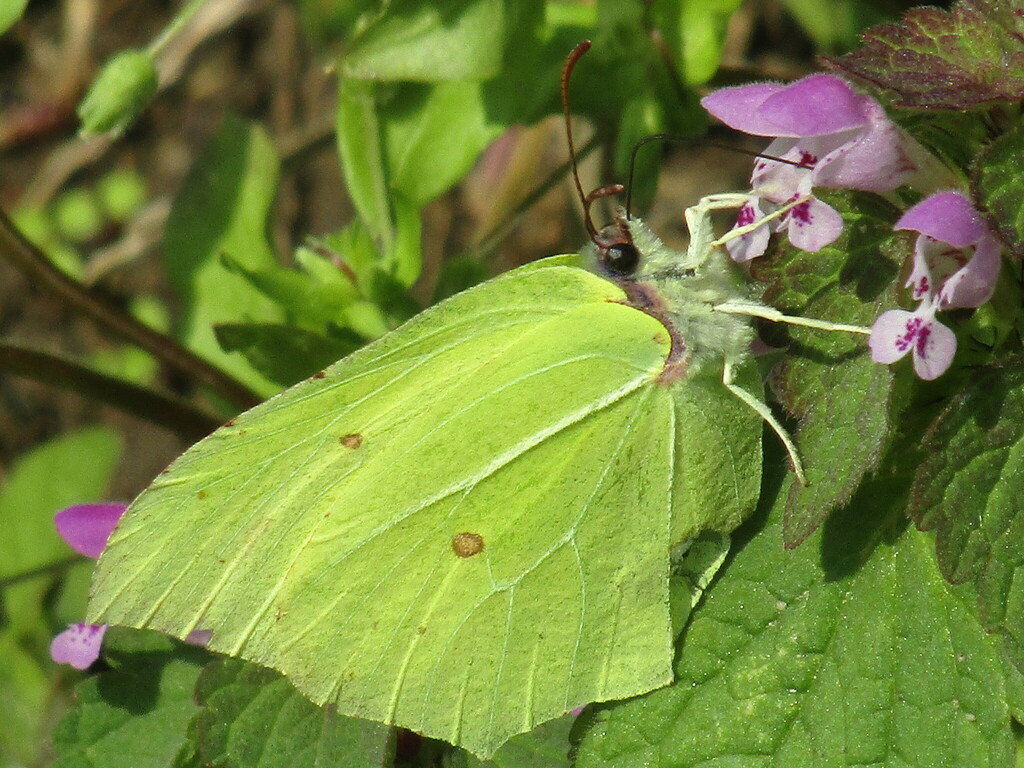
Common brimstone
Gonepteryx rhamni
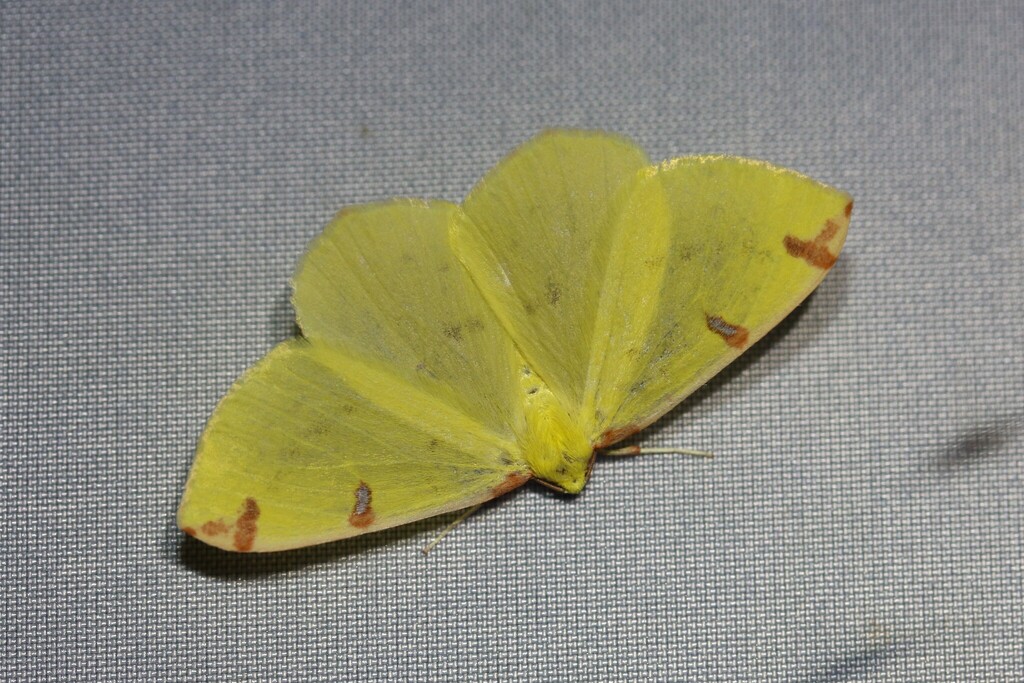
Brimstone moth
Opisthograptis luteolata
≠The key differences
The brimstone butterfly is much larger with leaf-shaped wings (lemon-yellow in males, pale greenish-white in females) and a small orange spot on each wing, and rests with wings closed; the brimstone moth holds its wings flat and has brown blotches on the forewing edge.
⚖︎Side by side
| Common brimstone | Brimstone moth | |
|---|---|---|
| To humans | Non-toxic | Non-toxic |
| Size | 55-70 mm wingspan | 30-45 mm wingspan |
| Colours | Lemon yellow, Pale green, Cream, Orange-brown | Bright yellow, Golden yellow, Brown-orange, Pale green (larva) |
| Family | Pieridae | Geometridae |
| Habitat | Woodland edges, hedgerows, scrub, parks and gardens where buckthorns occur | Woodland edges, hedgerows, gardens, parks and scrub; common in suburban and rural areas. |
| Range | Across much of Europe, North Africa and temperate Asia; common in the UK, continental Europe and parts of western Asia | Widespread across Europe, parts of North Africa and western Asia; common in the British Isles and continental Europe. |
| Active | Early spring through late summer; adults often first seen February-May and again July-September depending on region | Adults from April to October in several overlapping broods; mostly nocturnal but often seen resting or disturbed by day. |
| Pest? | No | No |
🔍How to spot a common brimstone
- Male bright lemon or sulphur yellow, female pale greenish-white; both have a small discal spot on each wing
- Wings strongly scalloped and pointed at the tips, creating a leaf-like outline when closed
- At rest the wings are held closed over the back, appearing very leaf-like and often camouflaged
- Look for larvae on buckthorn (Rhamnus/Frangula) if searching for eggs or caterpillars
🔍How to spot a brimstone moth
- Bright yellow wings with chestnut-brown blotches along the leading edge of the forewing and a small brown-edged white crescent mark.
- Wingspan 30-45 mm; wings held flat at rest showing full yellow surface.
- Brown, twig-like looper caterpillars with a double-pointed hump in the middle of the body.
?Frequently asked questions
What is the difference between a common brimstone and a brimstone moth?
The brimstone butterfly is much larger with leaf-shaped wings (lemon-yellow in males, pale greenish-white in females) and a small orange spot on each wing, and rests with wings closed; the brimstone moth holds its wings flat and has brown blotches on the forewing edge.
Is a common brimstone or a brimstone moth more dangerous?
Common brimstone: Non-toxic. Brimstone moth: Non-toxic. Harmless to people; does not bite or sting. Brimstone moths do not bite or sting and are not poisonous.
Identification from photos is never certain: don't handle insects you can't identify, and get medical advice for bites, stings or allergic reactions.