
Yellow-collared scape moth
Cisseps fulvicollis · Tiger and lichen moths
A small, black day-flying moth with a bright yellow or orange collar that mimics wasps; common in North American meadows and gardens.
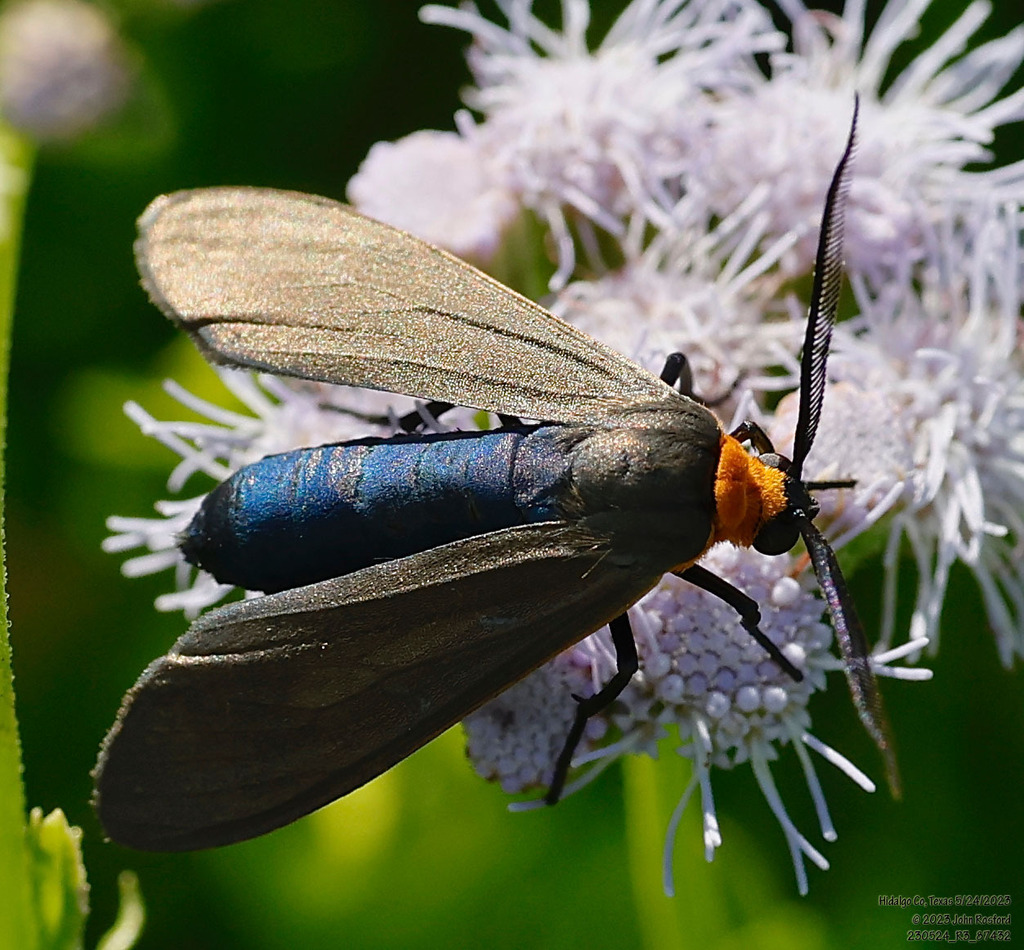
!Is the yellow-collared scape moth dangerous?
No. Adults do not bite or sting. They are harmless to handle, though caterpillar hairs can occasionally cause mild skin irritation in very sensitive people; wash the area and avoid rubbing. No known disease transmission to humans.
Pets
Harmless to pets. Caterpillar hairs could irritate a pet's mouth or skin if chewed, but serious effects are not documented.
📖Overview
Cisseps fulvicollis is a diurnal and crepuscular moth in the tiger-moth group (subfamily Arctiinae). Adults are slender, glossy black to blue-black with a conspicuous yellow to orange collar behind the head. They are frequently seen feeding at flowers in sunny meadows, fields and gardens and are common across much of North America.
Caterpillars are fuzzy, dark-haired and feed on grasses and low herbaceous plants. The species is not considered an agricultural pest and poses no danger to people; adults mimic stinging insects to deter predators but do not sting or bite. They typically have one or more broods per year depending on latitude, with adults appearing from late spring through autumn in many areas.
🔍How to identify a yellow-collared scape moth
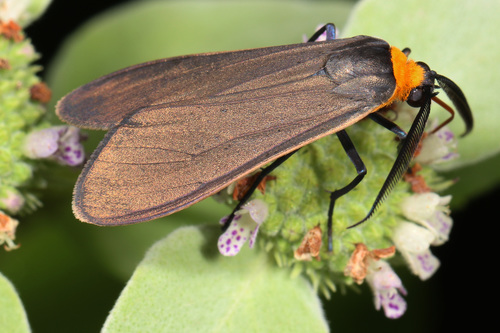
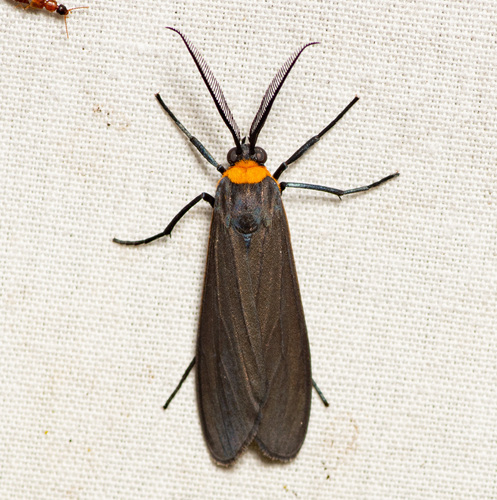
Adults have narrow, dark brownish-black to blue-black wings and a slim body with a distinct yellow to orange collar (the prothorax) immediately behind the head. The hindwings have a translucent, pale base, and the body may show a bluish sheen. Wings otherwise lack the bold spots or stripes seen in many other tiger moths. Caterpillars are covered in tufts of hairs varying from pale gray or yellowish to brown; they are typical 'woolly bear' style larvae.
- Narrow dark brownish-black wings with no bold markings; hindwings pale and translucent at the base
- Distinct yellow to orange collar (thoracic tuft) immediately behind the head
- Slim, dark body, sometimes with a bluish sheen
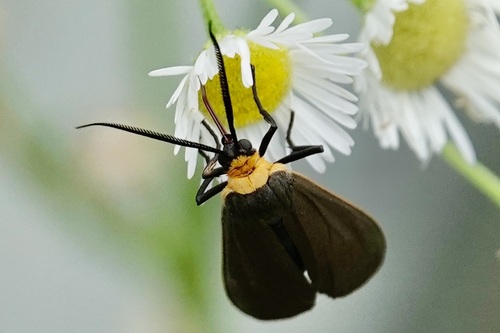
- Day-flying habit and frequent visits to flowers in sunny grassy areas
Lookalikes
Virginia ctenucha Ctenucha virginica
Virginia ctenucha is larger, with an orange head and a metallic blue body, and flies mainly in early summer; Cisseps fulvicollis is smaller and slimmer with a yellow-orange collar and a dark head.
Other wasp-mimic tiger moths Various Arctiinae
Similar wasp-mimic moths differ in collar color intensity, wing sheen, and body proportions; check the narrow unmarked wings and the exact collar hue to separate species.
↻Life cycle
Egg
Females lay small clusters of eggs on host plants or nearby vegetation.
Larva (caterpillar)
Fuzzy, hairy caterpillars feed on grasses and low plants. They grow through several instars while feeding.
Pupa
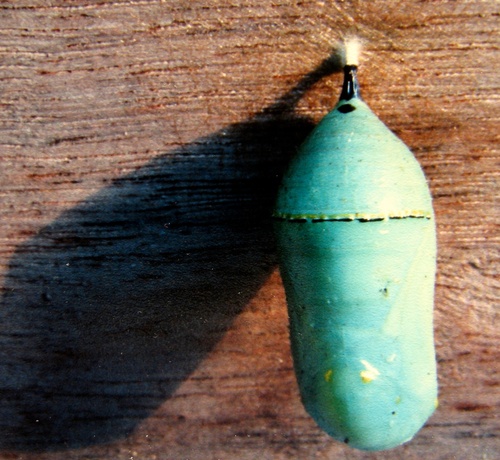
Pupation occurs in a cocoon mixed with larval hairs, usually in leaf litter or soil near host plants.
Adult (moth)
Adults are day-flying and visit flowers for nectar; they mate and females lay eggs to start the next generation.
🍃Diet and predators
Young eat
Grasses and low herbaceous plants (various wild grasses and weeds)
Adults eat
Nectar from flowers; adults feed on floral nectar and sometimes on sap or other sugar sources
Predators of the young
Birds, small mammals, predatory insects, and parasitic wasps or flies
Predators of adults
Birds, bats, and predatory insects; adults rely on wasp-like coloration to reduce attacks
🌱Effect on plants and gardens
Larvae feed on grasses and low herbaceous plants (wild grasses, sedges and common lawn weeds). They do not usually cause significant damage.
📍Where and when to find it
Adults: on flowers, nectar sources, and around sunny meadow edges. Larvae: in grasses, lawns and low vegetation, or among leaf litter near host plants.
Best time
Late spring through autumn; daytime and dusk are best for observing adults.
Observation tips
Look in sunny, flower-rich meadows and edges of fields. Photograph resting adults from above to capture the unmarked wings and the yellow collar for identification.
✨Fun facts
- Despite their wasp-like appearance, yellow-collared scape moths are harmless and cannot sting.
- They are often seen in daylight visiting flowers, unlike many moths that are strictly nocturnal.
?Frequently asked questions
Do yellow-collared scape moths bite or sting?
No. Adults do not bite or sting; they only mimic wasps for protection.
Why is this moth in my house?
Adults are attracted to lights and may fly into houses at dusk. Caterpillars may be present in nearby lawns or vegetation and occasionally wander indoors.
Are they harmful to my garden or lawn?
No. Larvae feed on grasses and low plants but rarely cause noticeable damage; they are not considered garden pests.
How can I get rid of them?
Control is rarely necessary. To reduce indoor visits, turn off outdoor lights at night or use yellow 'bug' lights. If you must remove an individual inside, gently capture it in a jar and release outdoors.
When will I see these moths?
Expect adults from late spring through autumn depending on your region; they are most visible on sunny days and at dusk.
📷Photos of the yellow-collared scape moth
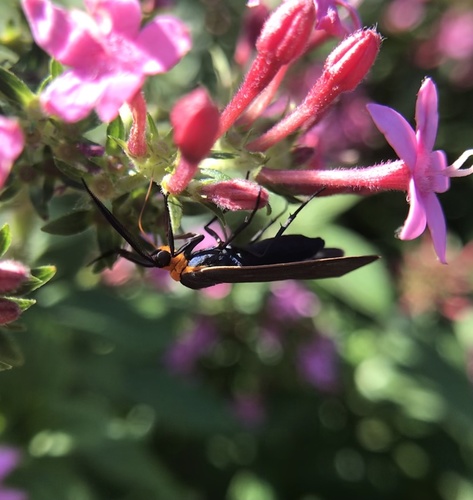
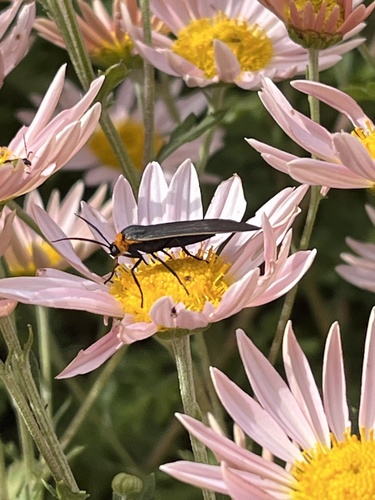
More butterflies & moths
This guide was written with AI assistance and fact-checked, last updated 2026-10-10. Identification from photos is never certain: don't handle insects you can't identify, and get medical advice for bites, stings or allergic reactions. More about the yellow-collared scape moth: iNaturalist, Wikipedia.