
Virginia ctenucha moth
Ctenucha virginica · Tiger and lichen moths
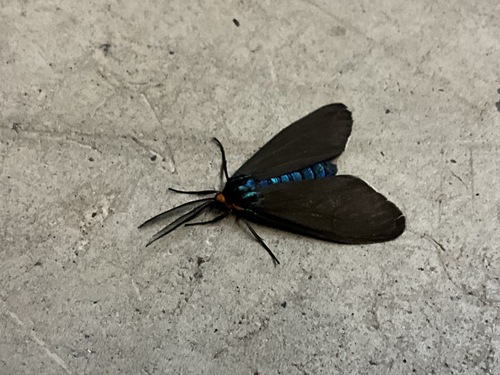
A day-flying, metallic blue-black moth with a bright orange head and collar; common in eastern North American meadows and gardens.
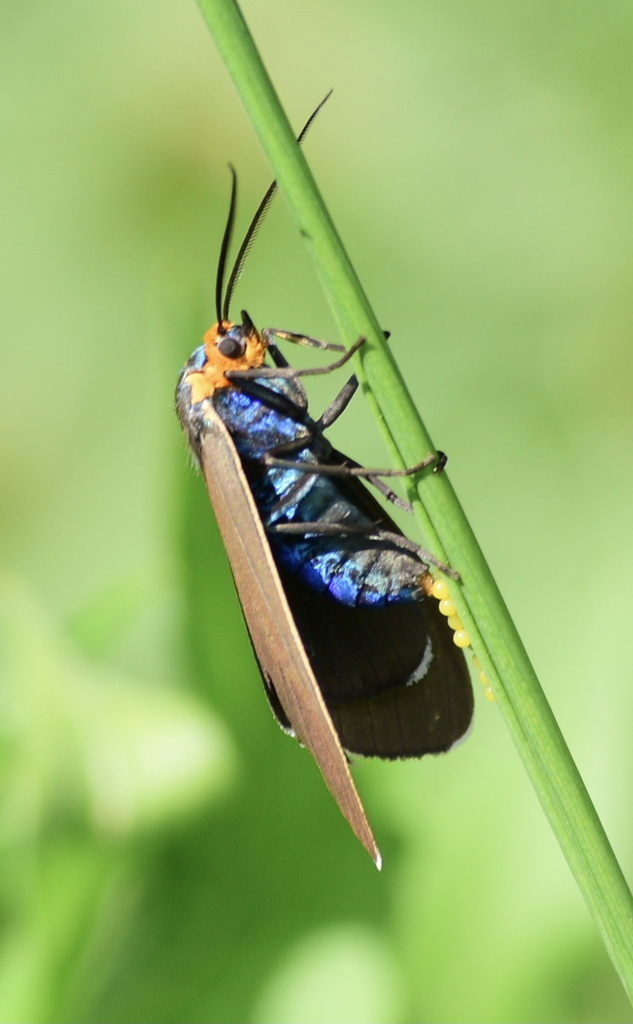
!Is the Virginia ctenucha moth dangerous?
No. Virginia ctenucha moths do not bite or sting. The caterpillars are hairy but not known to cause significant skin irritation; very sensitive individuals might experience minor itching if they handle caterpillars roughly. No medically significant venom is associated with this species.
Pets
Not toxic to pets. As with any hairy caterpillar, ingestion by dogs or cats could cause mild gastrointestinal upset or oral irritation; monitor pets and contact a veterinarian if concerned.
📖Overview
Ctenucha virginica is a medium-sized, day-flying moth in the tiger/lichen moth group. Adults are often seen visiting flowers during sunny warm days in summer. The species is widespread in eastern North America and typically occurs in open habitats where larval food plants (mainly grasses and sedges) are available. Larvae are hairy caterpillars that feed on grasses and other low plants. This species is not dangerous to people and is not considered an agricultural pest.
🔍How to identify a Virginia ctenucha moth
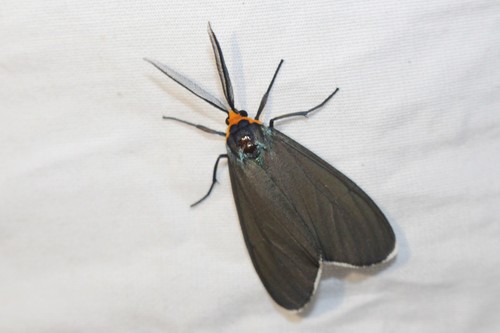
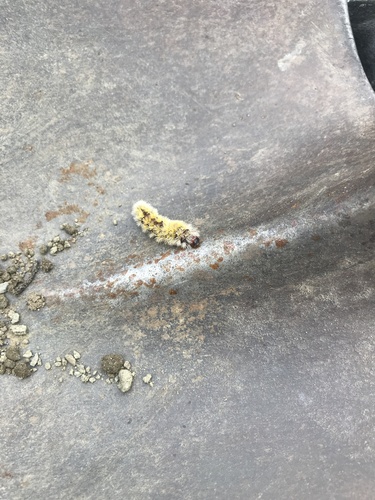
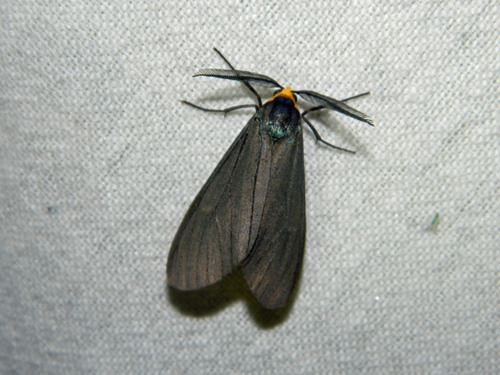
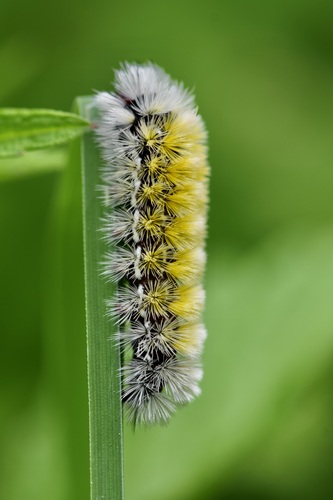
Adults have dark olive-brown to blackish forewings and a glossy, metallic blue body (thorax and abdomen), with a conspicuous orange head and orange-yellow sides to the collar. Wings are relatively narrow and held flat or tent-like when perched. The antennae are comb-like (bipectinate), more strongly feathered in males. Under close view the body shows a bluish iridescence. Caterpillars are densely hairy, with tufts of black, yellowish or whitish hairs that vary between individuals.
- Look for dark olive-brown to blackish wings, a metallic blue body and a bright orange head with orange-yellow collar.
- Active in daylight on flowers; holds wings flat and is relatively fast-moving compared with many nocturnal moths.
- Wingspan about 40-50 mm; caterpillars are densely hairy with tufts of black, yellowish or whitish hairs.
Lookalikes
Yellow-collared scape moth Cisseps fulvicollis
Smaller and slimmer, with a narrower orange or yellow collar and more uniformly dark wings; less metallic blue sheen than Ctenucha virginica.
Other Ctenucha species Ctenucha spp.
Related species may differ in the shade of the head/collar and regional range; careful comparison of size and the intensity of metallic blue is helpful.
↻Life cycle
Egg
Small eggs are laid on or near host plants (grasses and sedges).
Larva (caterpillar)
A densely hairy, dark caterpillar that feeds on grasses, sedges and other low vegetation through the growing season.
Pupa
Pupation occurs in a cocoon made of silk and larval hairs, usually hidden in leaf litter or close to the ground.
Adult moth
Day-flying, nectar-feeding moth with dark wings, a metallic blue body and a bright orange head/collar; adults fly in summer to mate and lay eggs.
🍃Diet and predators
Young eat
Grasses, sedges and other low herbaceous plants
Adults eat
Nectar from flowers (various nectar-producing plants)
Predators of the young
Parasitoid wasps and flies, ground predators, birds
Predators of adults
Birds, predatory insects and bats (though daytime activity reduces bat predation)
🌱Effect on plants and gardens
Larvae feed mainly on grasses and sedges; adults visit a variety of flowering plants for nectar and can act as pollinators.
📍Where and when to find it
Adults on nectar flowers in meadows, marsh edges, roadsides and gardens; caterpillars on grasses and sedges or in nearby leaf litter.
Best time
Summer months (June-August); daytime, especially late morning to afternoon on sunny days.
Observation tips
Use a telephoto or macro lens to avoid disturbing the moth; photograph on flowers at eye level. Check grassy edges and low vegetation for caterpillars, but avoid handling them if you have sensitive skin.
✨Fun facts
- Unlike many moths, Virginia ctenucha is primarily active in daylight and is often seen on flowers like a butterfly.
- Its bright orange head and metallic body are thought to help warn or mimic distasteful insects to predators.
- Caterpillars are hairy but are not the same 'woolly bear' species that indicate winter severity; they still attract interest for their fuzzy appearance.
?Frequently asked questions
Do Virginia ctenucha moths bite or sting?
No. Adults do not bite or sting. Caterpillars are hairy but are not known to cause significant stings; sensitive people might get mild skin irritation if they handle them roughly.
Why is this moth in my garden?
Adults come to gardens for nectar from flowers. If your yard has grasses or sedges nearby for larvae, it provides habitat for the species.
How can I get rid of Virginia ctenucha moths?
They are harmless and not a pest; removal is unnecessary. If you must reduce numbers, remove nearby dense grass or sedge stands where caterpillars feed, but consider encouraging natural predators instead.
Where do Virginia ctenucha caterpillars live and what do they eat?
Caterpillars live on or near the ground in grassy or sedge-rich habitats and feed on grasses, sedges and other low herbaceous plants.
When am I most likely to see these moths?
In summer (June to August) on warm, sunny days when adults visit flowers during daylight.
📷Photos of the Virginia ctenucha moth
More butterflies & moths
This guide was written with AI assistance and fact-checked, last updated 2026-10-10. Identification from photos is never certain: don't handle insects you can't identify, and get medical advice for bites, stings or allergic reactions. More about the Virginia ctenucha moth: iNaturalist, Wikipedia.