
Black cutworm
Agrotis ipsilon · Owlet moths
A widespread noctuid moth whose caterpillars (cutworms) feed on seedlings and young stems, causing patchy losses in many crops and lawns.
!Is the black cutworm dangerous?
No. Black cutworm moths and caterpillars are not dangerous to people. They do not bite, sting or transmit disease, and the smooth caterpillars have no irritating hairs.
Pets
Not toxic to pets. Pets may eat caterpillars or moths without lasting harm, though eating large numbers could cause temporary stomach upset.
📖Overview
Agrotis ipsilon is a cosmopolitan noctuid moth whose larvae are known as black cutworms. Adults are nocturnal, attracted to light, and migrate in some regions. Females lay eggs on vegetation and debris; the larvae feed at night on leaves and often sever young seedlings at or just below soil level, causing the characteristic ‘cut’ damage. It is an agricultural pest of vegetables, corn, cereals, turf and many other crops. Multiple generations occur annually in warmer areas; populations fluctuate and may migrate seasonally.
🔍How to identify a black cutworm
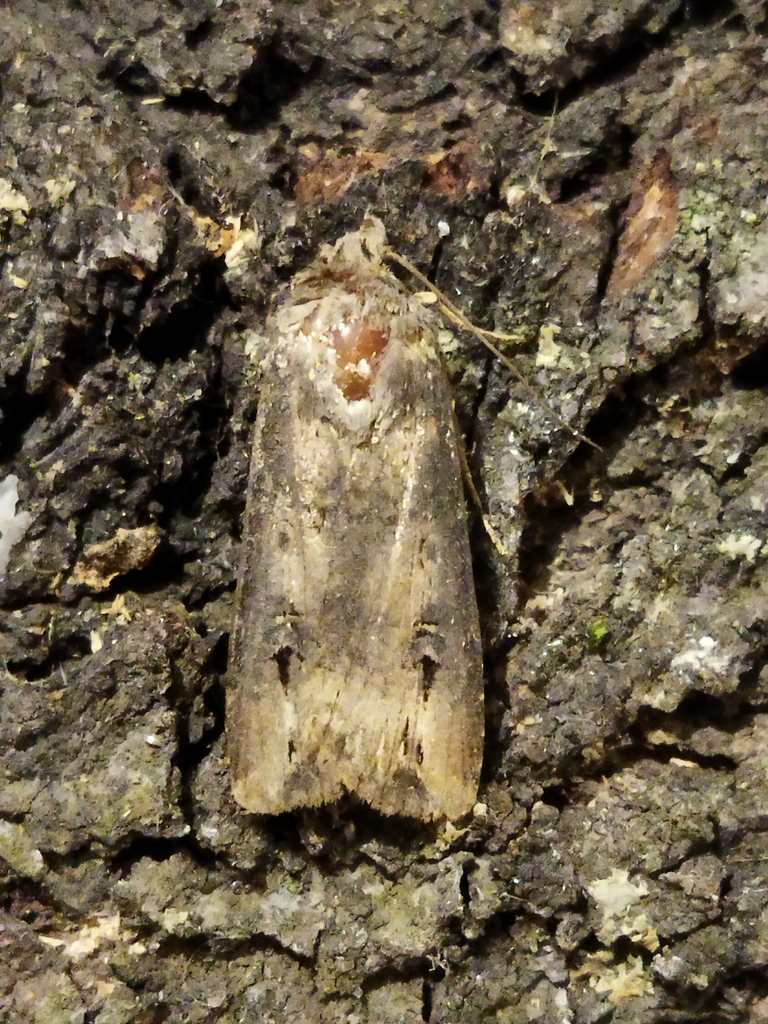
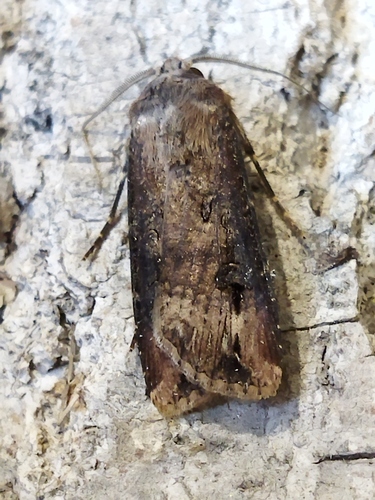
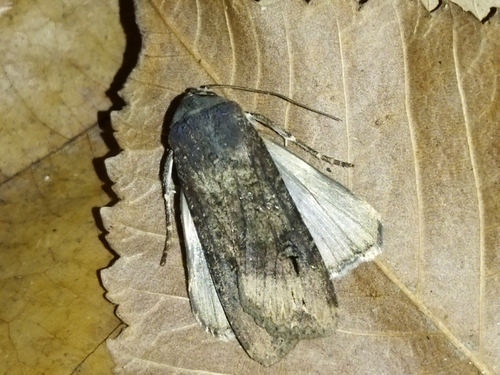
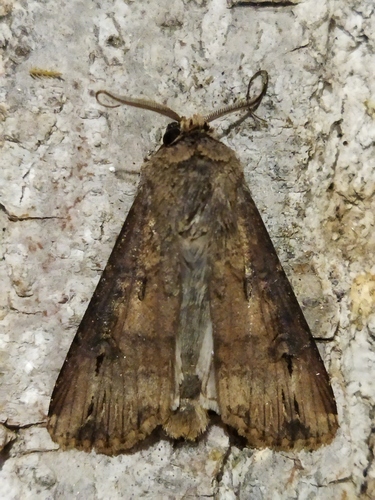
Adult black cutworm moths are medium-sized, stout-bodied noctuid moths with relatively plain forewings varying from dark gray-brown to blackish, with a kidney-shaped (reniform) spot from which a distinctive black dagger-shaped dash extends toward the wing edge. Hindwings are paler, usually gray to buff. Larvae (cutworms) are smooth, cylindrical caterpillars that are typically slate-gray to nearly black when mature, 25-40 mm long, with a darker head and few distinct markings. Young larvae are lighter and more uniformly colored.
- Moths: medium-sized noctuid with dark gray-brown forewings and paler hindwings; look for the black dagger-shaped dash extending outward from the kidney-shaped (reniform) mark on the forewing.
- Larvae: smooth, cylindrical cutworms slate-gray to nearly black when mature, 25-40 mm long.
- Behavior: larvae cut seedlings at or just below soil level and hide in soil or debris by day; damage appears as scattered dead plants in patches.
Lookalikes
Turnip moth Agrotis segetum
Turnip moth adults often show warmer brown tones and different forewing markings; larvae (cutworms) are similar but A. segetum prefers different crops and regional ranges — identification to species often requires close examination or rearing.
Variegated cutworm Peridroma saucia
Variegated cutworm larvae usually show a row of pale yellow dots along the middle of the back, and the moths have browner, often reddish-tinged forewings without the black dagger-shaped dash.
↻Life cycle
Egg
Females lay clusters of small eggs on low vegetation, plant debris or soil. Eggs hatch in about 3-7 days depending on temperature.
Larva (cutworm)
Larvae go through several instars over 2-6 weeks, feeding at night on leaves and cutting seedlings at the base. They hide during the day in soil, plant debris or clods.
Pupa
Mature larvae pupate in an earthen cell in the soil; pupation lasts about 1-3 weeks depending on temperature.
Adult (moth)
Adults are nocturnal moths that mate and disperse; in temperate regions they produce multiple generations per year and some populations migrate.
🍃Diet and predators
Young eat
Generalist herbivore: seedlings, leaves, and stems of a wide variety of crops and grasses; will sever young plants at soil level.
Adults eat
Adults feed weakly on nectar and are mostly focused on reproduction and dispersal.
Predators of the young
Ground beetles, spiders, birds, parasitic wasps and flies (tachinids), nematodes and pathogens (baculoviruses, fungi).
Predators of adults
Bats, night-flying insectivorous birds, spiders and predatory insects.
🌱Effect on plants and gardens
Larvae feed on a wide range of crops and plants: maize (corn), vegetables (lettuce, cabbage, beans), cereals, sugar beet, tobacco, ornamentals and turf. Young plants and seedlings are at greatest risk when larvae sever stems at or just below soil level.
How to get rid of black cutworms
Remove weeds and crop residue before planting, since moths lay eggs on low vegetation. Hand-pick larvae at night with a flashlight or dig around freshly cut seedlings to find them. Protect transplants with cardboard or plastic collars pushed into the soil around the stem. Bacillus thuringiensis kurstaki (Bt) or beneficial nematodes can help against young larvae. Use approved insecticides only when monitoring shows damaging numbers, following label directions.
📍Where and when to find it
Look for adults at night around lights and field margins. Search for larvae at night near damaged seedlings and check soil surface, clods and plant debris during the day.
Best time
Spring through fall in temperate regions; nights are best for finding active larvae and adults. After warm rains and during crop emergence are high-risk times.
Observation tips
Inspect patches of wilting or cut seedlings early morning. Use a flashlight at night to find feeding larvae. For accurate species ID, rear larvae to adults.
✨Fun facts
- Black cutworm populations can include migratory adults that fly long distances and re-establish pest populations each season.
- Damage often appears in patches, especially in low, wet or weedy parts of a field where moths prefer to lay eggs.
- Pheromone traps are used by growers to monitor adult flights and predict larval outbreaks.
?Frequently asked questions
Do black cutworms bite people?
No. Black cutworms do not bite or sting people; they are agricultural pests but not harmful to humans.
Why are there dead seedlings in my garden overnight?
Young plants severed at soil level are typical black cutworm damage; larvae feed at night and hide in soil during the day.
How do I get rid of black cutworms in my lawn or garden?
Use integrated methods: remove plant debris, till or expose soil to reduce hiding sites, hand-pick larvae at night, use Bacillus thuringiensis kurstaki (Bt) on small larvae, encourage natural predators, and apply approved insecticides only when monitoring shows damaging larval thresholds.
Are black cutworms found worldwide?
Yes. Agrotis ipsilon is cosmopolitan and occurs across most temperate and tropical regions where host plants are available.
Can pheromone traps help control them?
Pheromone traps do not control populations but are useful for monitoring adult flights to time scouting and interventions for larvae.
📷Photos of the black cutworm
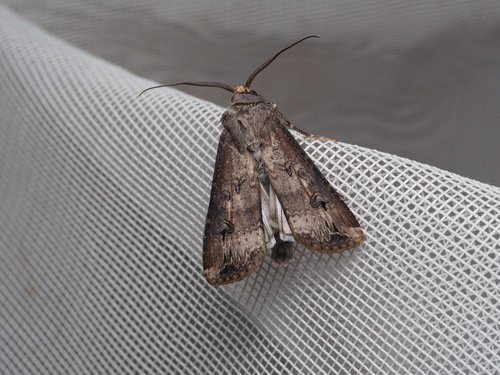
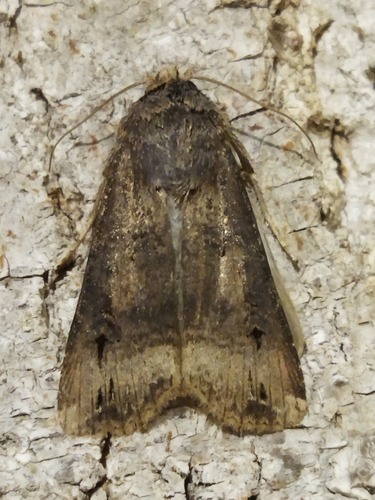
More butterflies & moths
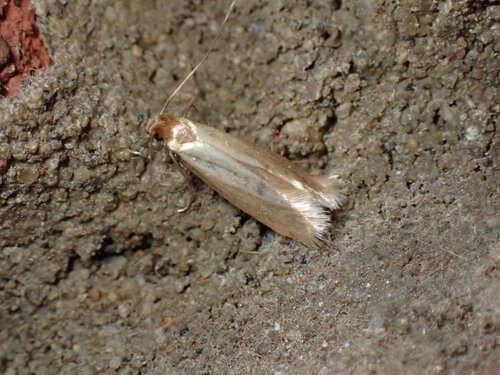
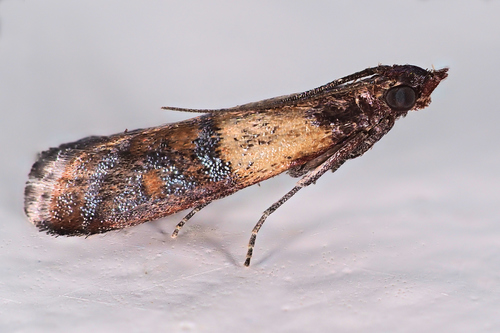
This guide was written with AI assistance and fact-checked, last updated 2026-10-10. Identification from photos is never certain: don't handle insects you can't identify, and get medical advice for bites, stings or allergic reactions. More about the black cutworm: iNaturalist, Wikipedia.