
Meadow brown
Maniola jurtina · Browns and satyrs
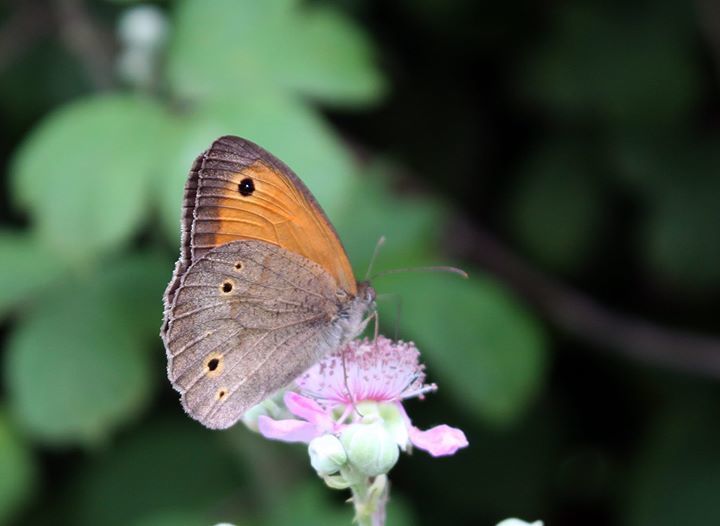
A widespread, common brown and orange European grassland butterfly with a black, white-pupilled eyespot on each forewing.
!Is the meadow brown dangerous?
No. Meadow browns are harmless to people. They do not bite or sting. Handle gently if necessary; like all butterflies their wings are delicate and can be damaged by rough handling.
Pets
Not dangerous to pets. Dogs or cats might catch individuals, which can injure the butterfly but poses no toxicity risk to the pet.
📖Overview
Maniola jurtina is a familiar, widespread butterfly of temperate Europe and parts of North Africa and west Asia, most abundant in meadows, pasture, roadside verges and other grassy habitats. Adults are relatively slow-flying and often rest with wings closed, showing the dull brown underside that camouflages them on grass. Males are more active and patrol small territories; females tend to fly more slowly and visit flowers to feed and lay eggs. The species is not harmful to people or structures and is considered ecologically beneficial as a pollinator and a component of grassland food webs.
🔍How to identify a meadow brown
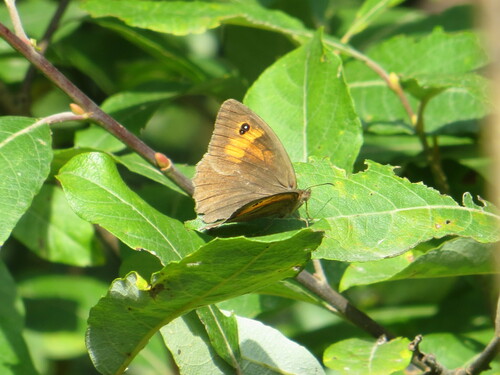
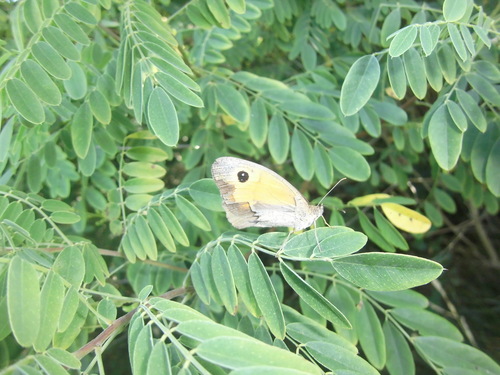
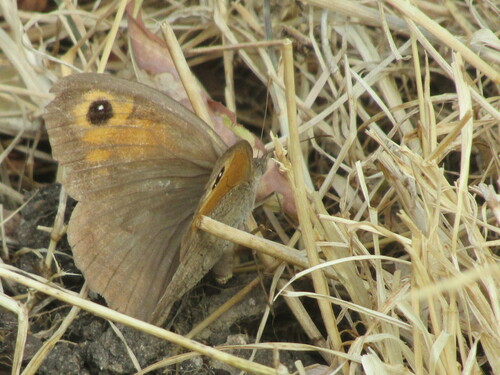
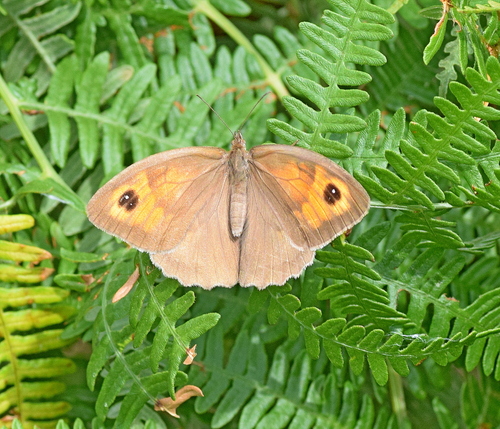
Wingspan about 45-50 mm. Upper side: predominant brown with an orange patch on the forewing that usually contains one distinct black eyespot (with one white pupil) on each forewing; hindwings are plain brown. Females often have a larger orange patch and can be darker overall; there is seasonal and regional variation in the size and intensity of the orange. Under side of hindwing (visible at rest) is mottled brown and pale, providing excellent camouflage among dead grass.
- Look for a brown butterfly with an orange patch on each forewing that usually contains one black eyespot with a white pupil.
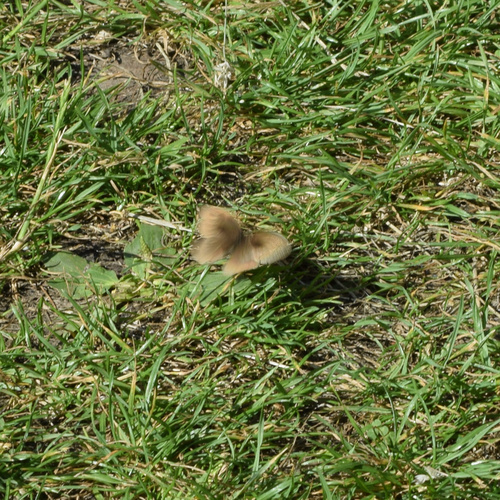
- Wings closed: check the undersides of the hindwing for mottled brown and pale patterns that blend with dry grass.
- Note sex differences: females often have a larger orange patch and can appear darker than males.
- Compare size: meadow brown is medium-sized, larger than Small Heath but similar to some gatekeepers.
Lookalikes
Gatekeeper Pyronia tithonus
Gatekeeper is smaller and brighter, with orange on both the forewing and hindwing, a forewing eyespot with two white pupils, and small white dots on the hindwing underside; usually found along hedgerows.
Ringlet Aphantopus hyperantus
Ringlet has multiple small eyespots on the underside of all wings and a more uniformly dark brown appearance without the distinct orange forewing patch.
Small Heath Coenonympha pamphilus
Smaller and has a more rounded wing shape and a less conspicuous orange patch; underside is more yellowish.
↻Life cycle
Egg
Females lay single eggs or small groups on grass blades or stems. Eggs hatch after about 7-14 days depending on temperature.
Larva (caterpillar)
Green to brown caterpillars that feed on grasses. They overwinter as larvae in many regions and resume feeding in spring before pupating.
Pupa (chrysalis)
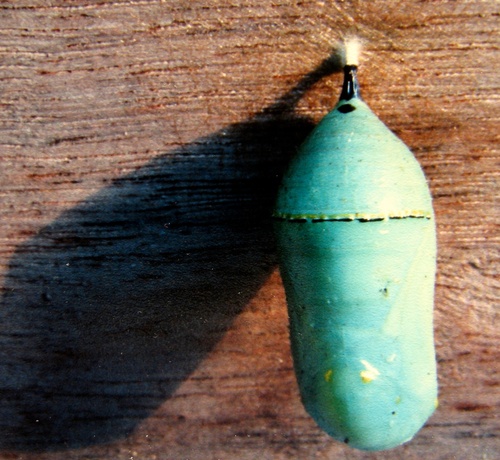
Pupation occurs attached to grass stems or low vegetation; the chrysalis is cryptic and lasts around 10-20 days in favourable conditions.
Adult (butterfly)
Adults emerge, mate and fly through the warmer months. Typical adult lifespan is a few weeks during which they feed and reproduce.
🍃Diet and predators
Young eat
Leaves of various grasses (Poaceae), including fescues, bents and other common grass species.
Adults eat
Nectar from flowers such as thistles, knapweeds, brambles, scabious and other common meadow plants.
Predators of the young
Predators include parasitic wasps, ground beetles, spiders and small birds.
Predators of adults
Birds, dragonflies, spiders and insectivorous mammals may catch adults; eggs and pupae are also vulnerable to predators and parasitoids.
🌱Effect on plants and gardens
Larvae feed on a variety of grasses (Poaceae) such as fescues and bents; adults visit a range of nectar-bearing wildflowers, providing pollination services.
📍Where and when to find it
Adults: flying and resting on grasses and low flowers in meadows, pastures, roadside verges and parks. Eggs and larvae: on grass blades and stems; pupae attached to stems or low vegetation.
Best time
May to September in most of its range; warm, calm days around mid-morning to late afternoon are best for observing adults.
Observation tips
Walk slowly through grassy areas, approach quietly and photograph with wings closed for the characteristic underside pattern; leave patches of longer grass to increase chances of finding larvae.
✨Fun facts
- Meadow browns often keep flying in dull, overcast weather when most other butterflies are inactive.
- Variation in the number of small spots on the hindwing underside was studied for decades by geneticists, notably E. B. Ford on the Isles of Scilly.
- Caterpillars commonly overwinter, which helps populations survive cool northern winters.
?Frequently asked questions
Are meadow brown butterflies dangerous?
No. Meadow browns are harmless to people and pets. They do not bite or sting.
Do meadow browns eat crops or harm gardens?
No. Their caterpillars feed on wild and cultivated grasses rather than ornamental plants, and adults help pollinate flowers.
Why is a meadow brown in my garden?
If your garden has lawns, wildflower patches or long grass, it provides food plants and nectar sources that attract meadow browns for feeding, mating and egg-laying.
How can I attract meadow browns to my garden?
Leave or create patches of grass (including native grasses), plant nectar-rich flowers like knapweed and thistles, and avoid mowing small areas during the flight season to provide shelter and larval food.
How do I tell a meadow brown from similar brown butterflies?
Check for the orange forewing patch with a single black eyespot (usually with a white pupil) and the mottled brown underside of the hindwing when wings are closed.
What should I do if I find a damaged meadow brown?
Place it in a sheltered spot with some flowers and low grass if outdoors. If it cannot fly, contact a local wildlife rescue or butterfly conservation group for advice; avoid feeding it — adults live on nectar.
📷Photos of the meadow brown
More butterflies & moths
This guide was written with AI assistance and fact-checked, last updated 2026-10-10. Identification from photos is never certain: don't handle insects you can't identify, and get medical advice for bites, stings or allergic reactions. More about the meadow brown: iNaturalist, Wikipedia.