
Small heath
Coenonympha pamphilus · Satyrines
A small, orange-brown grassland butterfly with a single eyespot on the underside of the forewing, common across much of Europe and temperate Asia.
!Is the small heath dangerous?
No. Harmless to people — does not bite or sting. Handle gently if necessary; butterflies can be easily damaged by rough handling.
Pets
Harmless to pets. Not poisonous if eaten, though dogs or cats might upset their stomachs if they eat insects.
📖Overview
The Small heath is a small, delicate butterfly that favours grassy habitats from coastal dunes and meadowland to heath and roadside verges. It is behaviourally distinctive for flying low and rapidly in short bursts close to the ground, often settling with wings closed. It feeds on nectar as an adult and its caterpillars eat a variety of grasses. The species is widespread but can show local fluctuations in abundance depending on habitat quality and management.
🔍How to identify a small heath
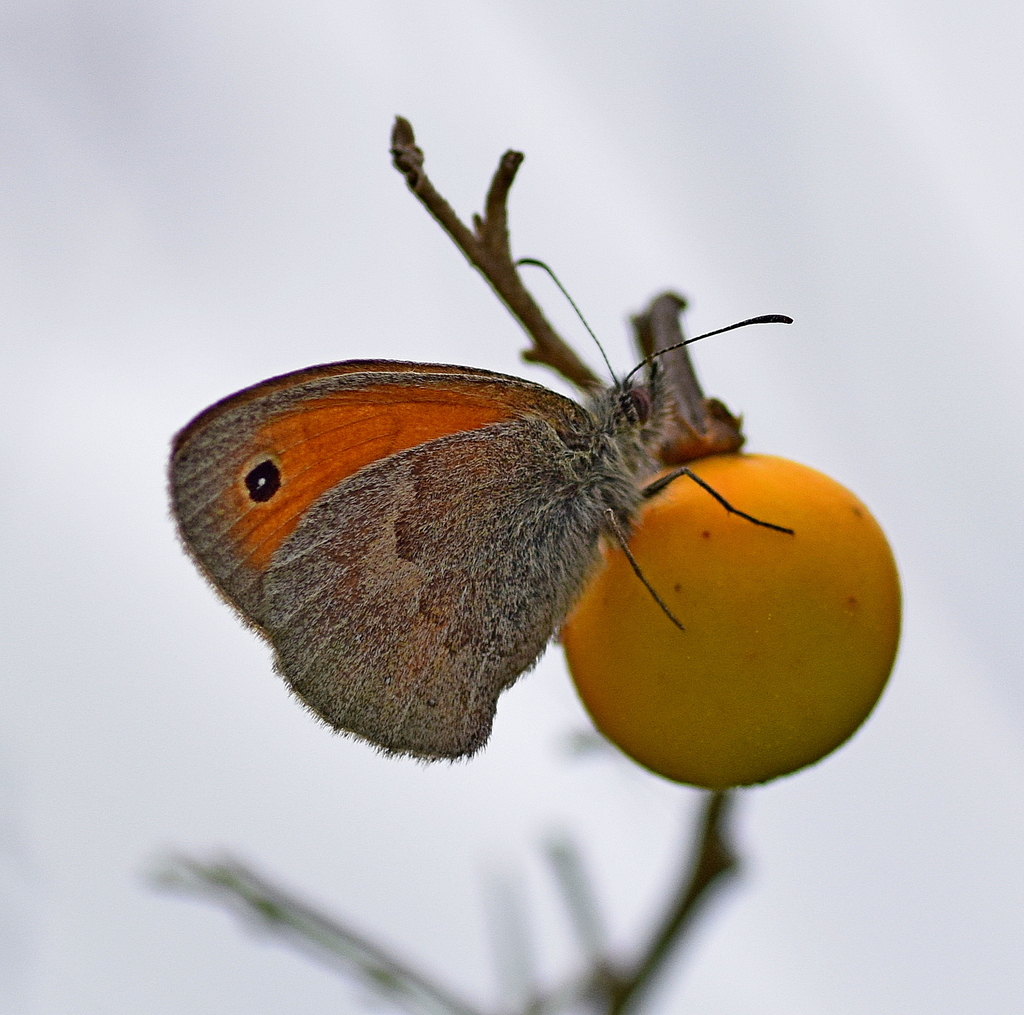
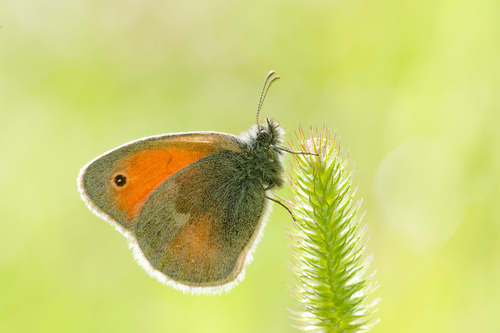
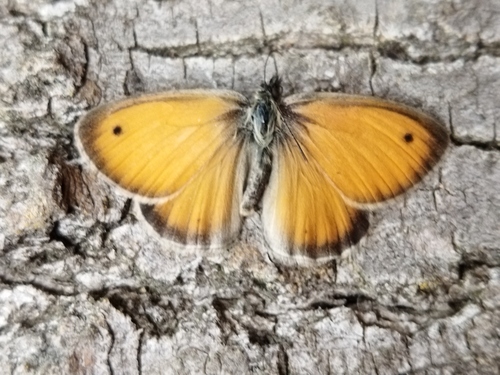
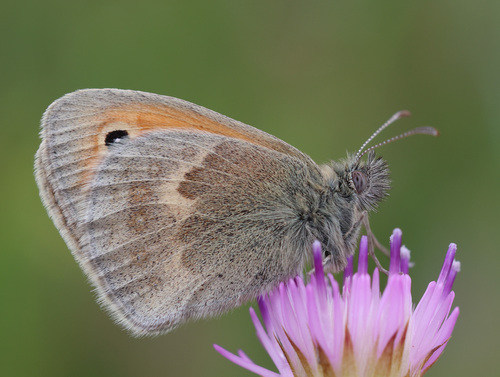
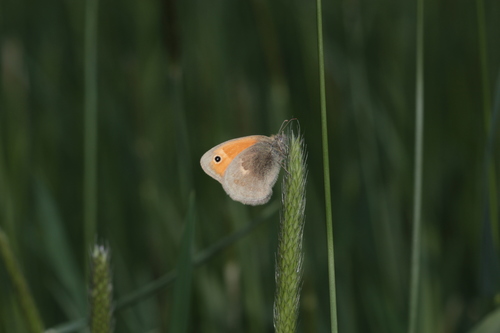
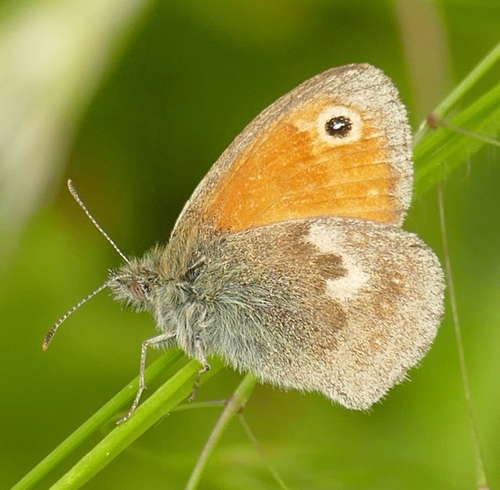
Wings are compact and rounded. Upper side is plain orange-brown (males slightly paler) with a narrow dark border on the forewing; hindwing is darker brown. The underside is pale orange to buff on the forewing with a single small black eyespot ringed pale yellow, and the hindwing is greyish-brown with subtle darker marginal bands. Sexes look similar; males may be marginally smaller and paler. When at rest the wings are usually closed, showing the distinctive underside eyespot.
- Small size with wingspan about 32-38 mm and rounded wing shape.
- Single small black eyespot on the underside of the forewing, ringed pale yellow.
- Upper side plain orange-brown without strong markings; underside hindwing greyish-brown with subtle bands.
- Flies low and fast close to the ground in short bursts; often seen settling with wings closed.
Lookalikes
Meadow Brown Maniola jurtina
Meadow Brown is larger with a more conspicuous upper-side eyespot and darker hindwings; Small heath is smaller, paler and has a single small spot on the forewing underside.
Large Heath Coenonympha tullia
Large Heath is paler on the underside hindwing with broader markings and usually occupies boggy habitats; Small heath is more orange and favours drier grassland.
Ringlet Aphantopus hyperantus
Ringlet has multiple prominent eyespots on the underside hindwing and a darker overall colour; Small heath has a single small forewing spot and lighter hindwing.
↻Life cycle
Egg
Females lay single eggs on grass blades or nearby vegetation. Eggs are small and pale.
Larva (caterpillar)
Green-brown caterpillars feed on various grasses; they grow through several instars and overwinter in some parts of their range as late-instar larvae.
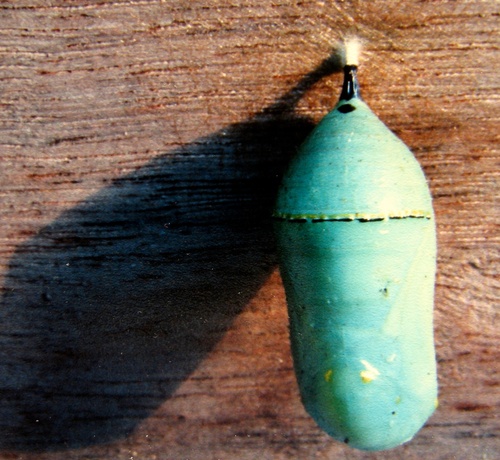
Pupa (chrysalis)
Pupates among grass stems or low vegetation; pupal stage lasts around 2-3 weeks depending on temperature.
Adult (butterfly)
Emerges from the pupa to fly, feed on nectar and reproduce; typically lives a few weeks.
🍃Diet and predators
Young eat
Caterpillars feed on various grasses, including fescues (Festuca), bents (Agrostis) and brome grasses (Bromus).
Adults eat
Adults feed on nectar from small, low flowers such as bird's-foot-trefoil, clover and knapweed, and will also take honeydew.
Predators of the young
Small birds, parasitic wasps and predatory insects.
Predators of adults
Birds, spiders and larger flying insect predators (e.g. robber flies); also vulnerable to habitat loss and mowing.
🌱Effect on plants and gardens
Larvae feed on a range of common grasses (see Diet). Adults visit small nectar-bearing flowers and can act as incidental pollinators.
📍Where and when to find it
Adults: flying low over grassy places, nectar flowers, path edges and dune slacks. Eggs and larvae: on blades of grass or close to the base of grass tussocks.
Best time
Best seen May to September on warm, sunny days; most active in the warmest hours of the day.
Observation tips
Watch low over short grass and flower-rich edges; use a telephoto or a close-focus lens and approach slowly as they fly low and fast then settle quickly with wings closed.
✨Fun facts
- Despite its name, the Small heath is not restricted to heathland and is common in many types of grassy habitat.
- It often basks with wings partly open when perched, but more commonly rests with wings closed showing the underside pattern.
- Populations can respond quickly to changes in grassland management — both positively and negatively.
?Frequently asked questions
Is the Small heath dangerous?
No. It is a harmless butterfly that does not bite or sting.
Why is a Small heath in my garden?
If you have patches of grass, nectar flowers and sunny sheltered spots, your garden can provide suitable feeding and breeding habitat.
Do Small heath caterpillars eat garden plants?
They feed on grasses rather than garden flowers or vegetables, so they are not harmful to most garden plants.
How can I attract Small heaths to my garden?
Leave some rough grass areas, sow or keep native nectar plants (clovers, bird's-foot-trefoil) and avoid over-frequent mowing.
How do I tell Small heath from similar small brown butterflies?
Look for the single small eyespot on the underside forewing and the small size with orange-brown upper wings; behaviour (low, rapid flight) also helps.
📷Photos of the small heath
More butterflies & moths
This guide was written with AI assistance and fact-checked, last updated 2026-10-10. Identification from photos is never certain: don't handle insects you can't identify, and get medical advice for bites, stings or allergic reactions. More about the small heath: iNaturalist, Wikipedia.