
Common blue
Polyommatus icarus · Gossamer-winged butterflies
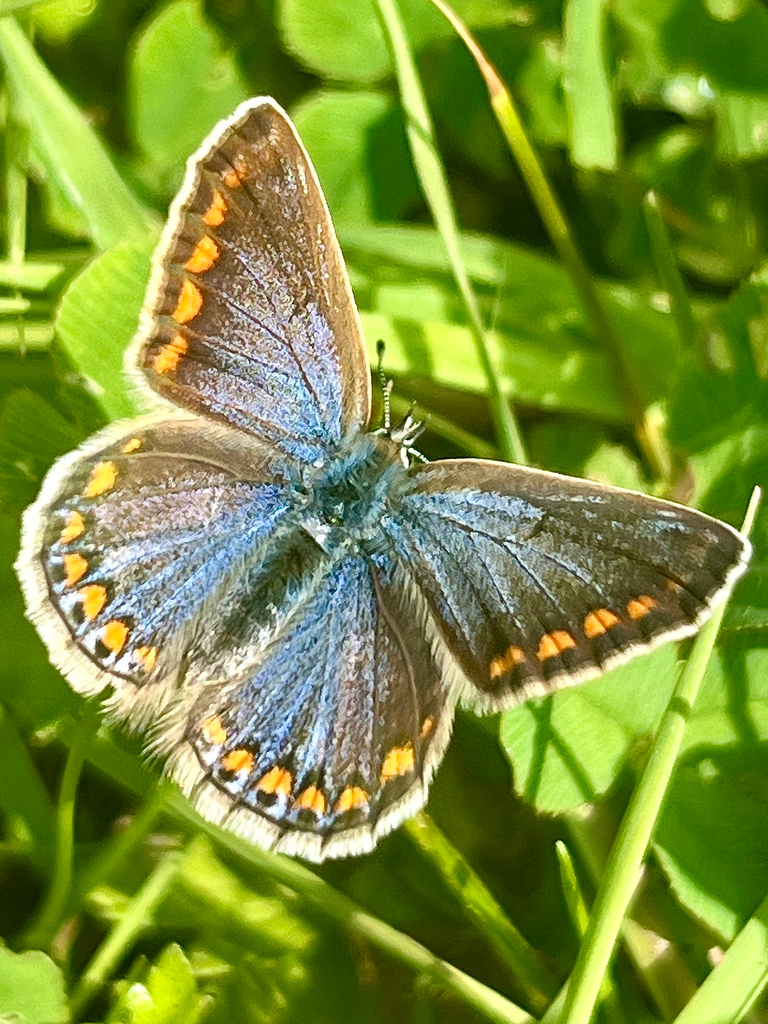
A small, widespread blue butterfly of grasslands and gardens; males are bright blue, females brown with orange spots.
!Is the common blue dangerous?
No. Not dangerous; does not bite or sting. Handle gently if necessary — like many small butterflies it is fragile and can lose scales or damage wings.
Pets
Harmless to pets. Dogs or cats might catch a butterfly but there is no venom or toxin risk; avoid encouraging pets to hunt wildlife.
📖Overview
The Common blue (Polyommatus icarus) is a small lycaenid butterfly widespread across Europe, North Africa and much of temperate Asia, and recently introduced to eastern Canada. It prefers open, flower-rich habitats such as meadows, roadside verges, coastal dunes and gardens. Males are unmistakably blue on the upper side, while females are usually brown with varying degrees of blue scaling. The species has one to three broods per year depending on climate and is often common where its foodplants grow.
Adults visit many kinds of flowers for nectar. Larvae feed on several leguminous plants, often developing in association with ants (myrmecophily) that tend the caterpillars for sugary secretions. Populations are generally stable, though local declines can occur where grassland habitat is lost or heavily managed.
🔍How to identify a common blue
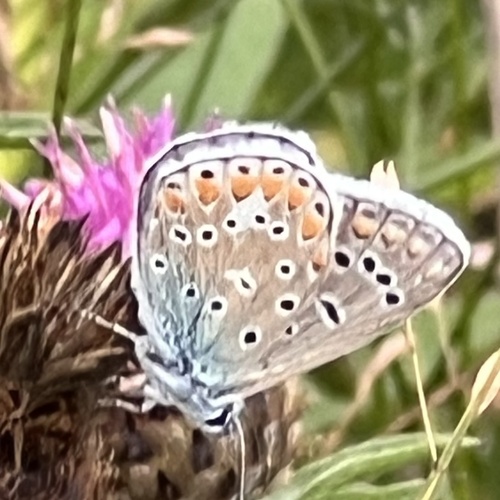
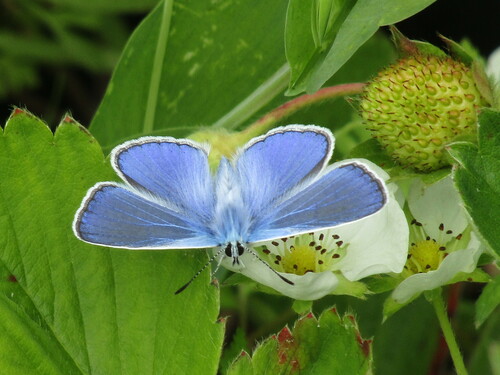
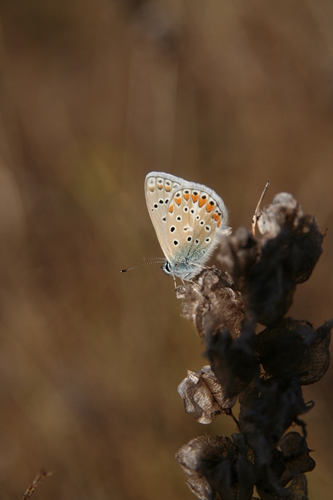
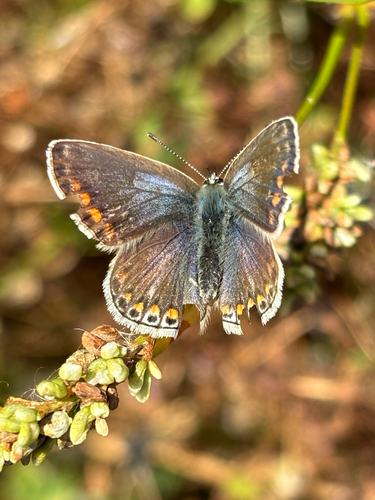
Wingspan 28-36 mm. Male upperwings bright sky-blue with a narrow black margin and a white fringe. Female upperwings usually brown, often with blue dusting and orange submarginal spots on the hindwing; some females can be almost as blue as males. Underwings (both sexes) are pale brown-grey with small black spots circled in white on both fore- and hindwings and a row of orange lunules along the hindwing margin. Antennae are dark with white rings.
- Males: bright sky-blue upperwings with narrow black margin and white fringe.
- Females: brown upperwings with orange submarginal spots on the hindwing; may show some blue scaling.
- Underside: pale grey-brown with small black spots surrounded by white and a row of orange lunules on the hindwing.
- Wingspan 28-36 mm; compare size and underwing pattern to similar local blues.
Lookalikes
Adonis blue Polyommatus bellargus
Adonis blue males are a more intense electric blue and have black lines crossing the white wing fringes (a chequered fringe); common blue has plain white fringes. Adonis blue is mostly restricted to chalk and limestone grassland.
Holly blue Celastrina argiolus
Holly blue has a pale silvery-blue underside with small black dots and no orange spots; it usually flies higher, around hedges, shrubs and trees, rather than low over grassland.
Small blue Cupido minimus
Small blue is noticeably smaller, the male's upperside is dark brown with only a dusting of blue, and the underside has no orange spots; hostplants (kidney vetch) and habitat are more specialised.
↻Life cycle
Egg
Small, pale eggs laid singly on or near the foodplant leaves or stems. Incubation lasts about 1-2 weeks depending on temperature.
Larva (caterpillar)
Greenish, slug-shaped caterpillars that feed on leaves and flowers of legume hostplants. Caterpillars often attract and are tended by ants which feed on their sugary secretions.
Pupa (chrysalis)
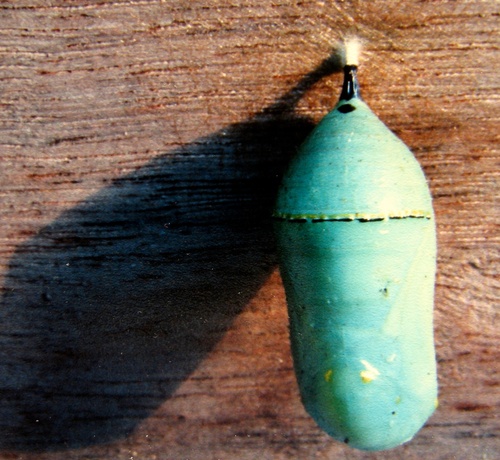
A small greenish-brown chrysalis formed on or near the ground at the base of plants, often tended by ants; pupation lasts one to a few weeks depending on generation and temperature.
Adult (butterfly)
Winged adults emerge, feed on nectar, mate, and the females lay eggs on hostplants to start the next generation.
🍃Diet and predators
Young eat
Leaves and flowers of legume plants (Fabaceae) such as bird's-foot-trefoil, clovers and vetches
Adults eat
Nectar from a wide range of flowers: knapweeds, thistles, clovers, dandelions and many others
Predators of the young
Predatory insects, spiders, parasitoid wasps and ants may prey on or parasitise eggs and caterpillars
Predators of adults
Birds, spiders and dragonflies; adults are preyed on in flight or when resting
🌱Effect on plants and gardens
Larvae feed on leguminous plants such as bird's-foot-trefoil (Lotus corniculatus), clovers (Trifolium spp.), horseshoe vetch and other Fabaceae. Adults pollinate flowers while feeding on nectar but are not major crop pollinators.
📍Where and when to find it
Look in sunny, flower-rich grassland, meadows, roadside verges, coastal dunes and gardens. Adults visit flowers; eggs are on hostplant leaves and stems; caterpillars are on legume plants.
Best time
April to September (region-dependent); during warm, sunny hours of the day when butterflies are active.
Observation tips
Walk slowly near patches of nectar flowers and legume hostplants. Use a telephoto or zoom lens rather than approaching too closely; sit quietly in a sunny spot to watch males patrol and females oviposit.
✨Fun facts
- Caterpillars of Common blue commonly have mutually beneficial interactions with ants that 'milk' sugary secretions from the larvae.
- Males spend a lot of time patrolling territories on warm days to find females, while females search for suitable hostplants to lay eggs.
- Colour differences between males and females (sexual dimorphism) are pronounced: males blue, females usually brown with orange spots.
?Frequently asked questions
Are Common blue butterflies poisonous or dangerous?
No. They are harmless to people and pets and do not sting or bite.
Do Common blue butterflies damage garden plants?
Not usually. Caterpillars feed on certain wild legumes; they rarely cause noticeable damage in gardens and are generally considered harmless or beneficial as pollinators.
Why are Common blues in my garden?
They visit gardens that have nectar flowers and legume hostplants (bird's-foot-trefoil, clover). Leaving patches of native legumes and nectar-rich flowers attracts them.
How can I attract Common blues to my garden?
Plant or allow areas of wildflowers including bird's-foot-trefoil, clovers and vetches for caterpillars and provide nectar sources like knapweeds, clover and thistles. Avoid over-frequent mowing and pesticide use.
When can I see Common blue butterflies?
They fly from spring to autumn (typically April to September). Peak activity is on warm, sunny days when adults are feeding or courting.
📷Photos of the common blue
More butterflies & moths
This guide was written with AI assistance and fact-checked, last updated 2026-10-10. Identification from photos is never certain: don't handle insects you can't identify, and get medical advice for bites, stings or allergic reactions. More about the common blue: iNaturalist, Wikipedia.