
Red-spotted purple
Limenitis arthemis · Brush-footed butterflies
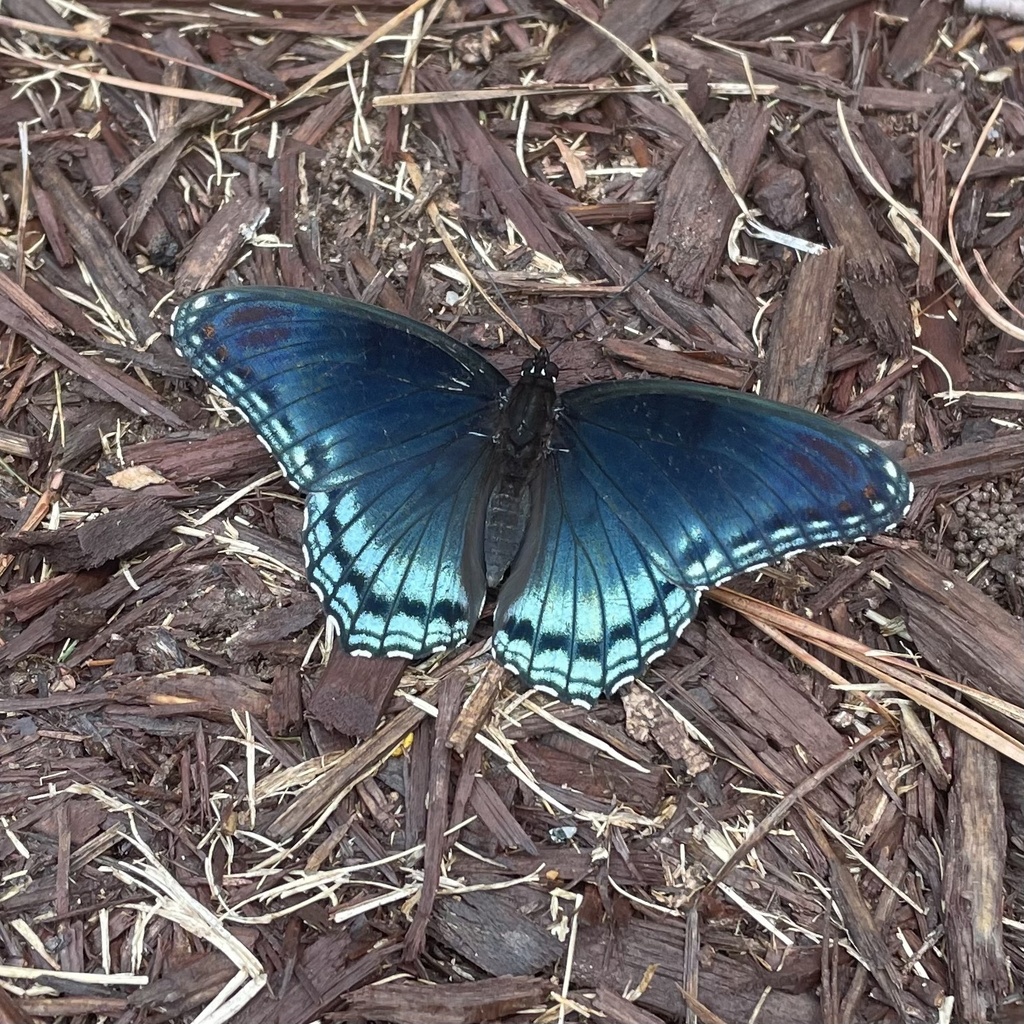
A glossy blue-black North American butterfly that feeds on rotting fruit and tree sap and mimics toxic species as protection from predators.
!Is the red-spotted purple dangerous?
No. Harmless to people. Adults do not sting or bite. Handle butterflies gently; scales rub off easily and can damage wings.
Pets
Not harmful to pets. As with other butterflies, accidental ingestion of a single individual is unlikely to cause problems, though large quantities of any insect could upset a pet's stomach.
📖Overview
Limenitis arthemis is a common temperate North American butterfly in the brush-footed family (Nymphalidae). It occurs in two well-known forms: the red-spotted purple form (often called L. a. astyanax) with iridescent blue on the hindwings and red-orange spots near the wing margins, and the white-banded form (commonly called the white admiral) which displays a broad white band across the wings. Adults are most often seen feeding on fermenting fruit, tree sap, carrion and occasionally nectar. The species uses several deciduous trees as host plants for its caterpillars and is familiar in woodlands, edges, parks and suburban areas.
🔍How to identify a red-spotted purple
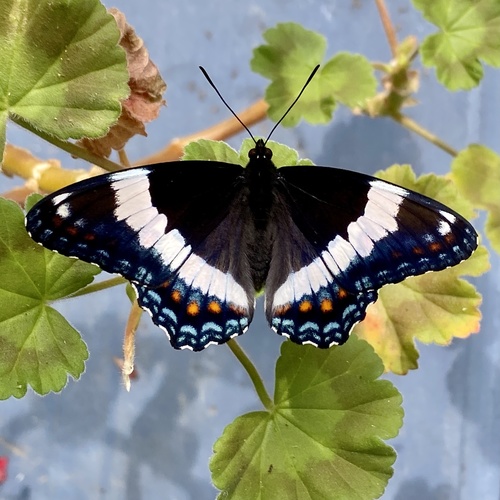
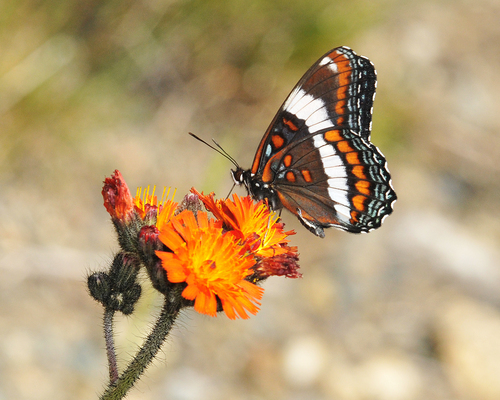
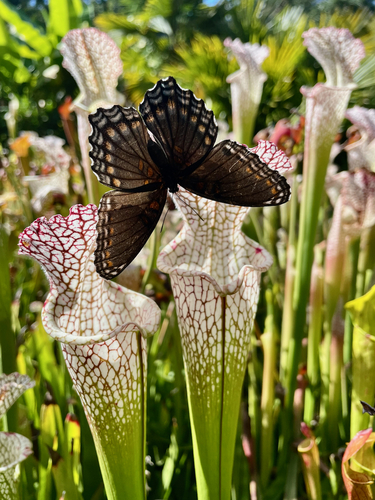
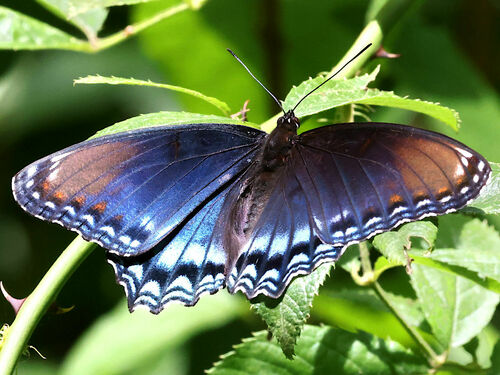
Adults have a glossy, dark (almost black) ground colour with a blue to bluish-violet iridescence across the upper surface in the red-spotted purple form. The red-spotted purple shows small red-orange spots along the outer edge of the hindwing and sometimes the forewing; the white-banded form instead has a conspicuous white median band across both wings. The undersides are mottled brown with pale markings and the red-spotted purple retains reddish marginal spots on the underside. Wingspan typically about 60-80 mm.
- Look for glossy blue-violet sheen on the upper wings with small red-orange marginal spots (red-spotted purple form).
- Note absence of tails (distinguishes from many swallowtails) and the overall dark, glossy ground colour.
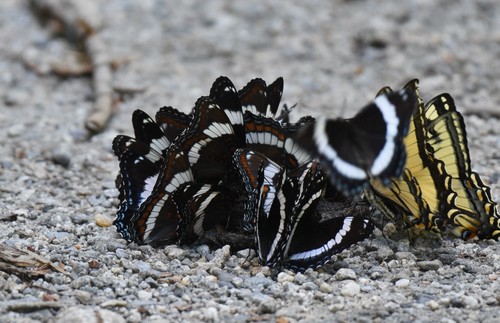
- Compare the white-banded form (white admiral) which has a broad white band across both wings; both forms belong to the same species.
- Underside is mottled brown and camouflaged; check for reddish marginal spots on the underside in the red-spotted purple form.
Lookalikes
White admiral Limenitis arthemis arthemis
A different form of the same species with a broad white band across the wings instead of the blue-black iridescent upper surface and red spots.
Pipevine swallowtail Battus philenor
Also dark and iridescent-blue from certain angles, but has distinctive tail-like hindwing extensions and different underside patterning; pipevine is a toxic model that red-spotted purple mimics.
Eastern tiger swallowtail (dark form) Papilio glaucus
Dark female tiger swallowtails may look superficially similar at a distance but have characteristic swallowtail tails and different wing shape and markings.
↻Life cycle
Egg
Females lay single eggs on the leaves or stems of host trees. Eggs hatch in about 1 week depending on temperature.
Larva (caterpillar)
Caterpillars are cryptic and may mimic bird droppings when young; later instars become more textured and brownish. They feed on host tree leaves for several weeks.
Pupa (chrysalis)
The caterpillar pupates attached to stems or leaf undersides; the chrysalis is angular and cryptic, remaining for 1-2 weeks or longer depending on season.
Adult (butterfly)
Winged adults emerge, mate, and seek sap, rotting fruit, carrion or flowers. There is typically one to two broods per year depending on latitude.
🍃Diet and predators
Young eat
Leaves of host trees: willow, poplar, aspen, birch, cherry and other deciduous trees.
Adults eat
Fermenting/rotting fruit, tree sap, nectar occasionally, carrion and mineral-rich liquids (mud puddles).
Predators of the young
Birds, predatory insects, spiders and parasitic wasps.
Predators of adults
Birds and spiders; adult mimicry and coloration help reduce bird predation.
🌱Effect on plants and gardens
Caterpillars feed on leaves of trees such as willow (Salix), poplar and aspen (Populus), birch (Betula), cherry and other native deciduous trees. Adults do not damage plants; they feed on sap, rotting fruit and other non-vegetative sources.
📍Where and when to find it
Adults: feeding on rotting fruit, tree sap, carrion, puddles and occasionally flowers in woodlands, edges and parks. Eggs and caterpillars: on leaves and twigs of host trees such as willow, poplar, aspen and birch.
Best time
Late spring through summer into early autumn; warm daylight hours are best for observing adults.
Observation tips
Look for them on fallen fruit or on tree trunks with sap. A long lens and patience work well because adults often perch on shaded trunks or fly quickly along woodland edges.
✨Fun facts
- The red-spotted purple is an example of Batesian mimicry: it resembles the distasteful pipevine swallowtail to fool predators.
- This species shows striking regional variation; the two different-looking forms belong to the same species and interbreed where their ranges meet.
- Adults are more often attracted to fermenting fruit, sap and carrion than to flowers, so you might find them on fallen fruit or tree wounds.
?Frequently asked questions
Are red-spotted purple butterflies poisonous?
No. They are harmless. Their resemblance to toxic species is mimicry, not because they are toxic themselves.
Do red-spotted purple butterflies bite or sting?
No. Adults do not bite or sting and are harmless to people.
Why is a red-spotted purple in my yard?
They are attracted to areas with host trees (willow, poplar, birch, cherry), fermenting fruit, tree sap or puddles. Gardens near woods or with fruit trees often attract them.
How can I attract red-spotted purple butterflies?
Provide host trees for caterpillars (willow, poplar, aspens), leave some fallen fruit or put out overripe fruit or a shallow dish of fermenting fruit and water to attract adults.
Is the red-spotted purple the same species as the white admiral?
Yes. They are forms of the same species, Limenitis arthemis. The red-spotted purple form lacks the white band seen in the white admiral form.
📷Photos of the red-spotted purple
More butterflies & moths
This guide was written with AI assistance and fact-checked, last updated 2026-10-10. Identification from photos is never certain: don't handle insects you can't identify, and get medical advice for bites, stings or allergic reactions. More about the red-spotted purple: iNaturalist, Wikipedia.