
Cecropia moth
Hyalophora cecropia · Giant silk moths
A very large, showy North American silk moth; adults do not feed and live only long enough to mate and lay eggs.
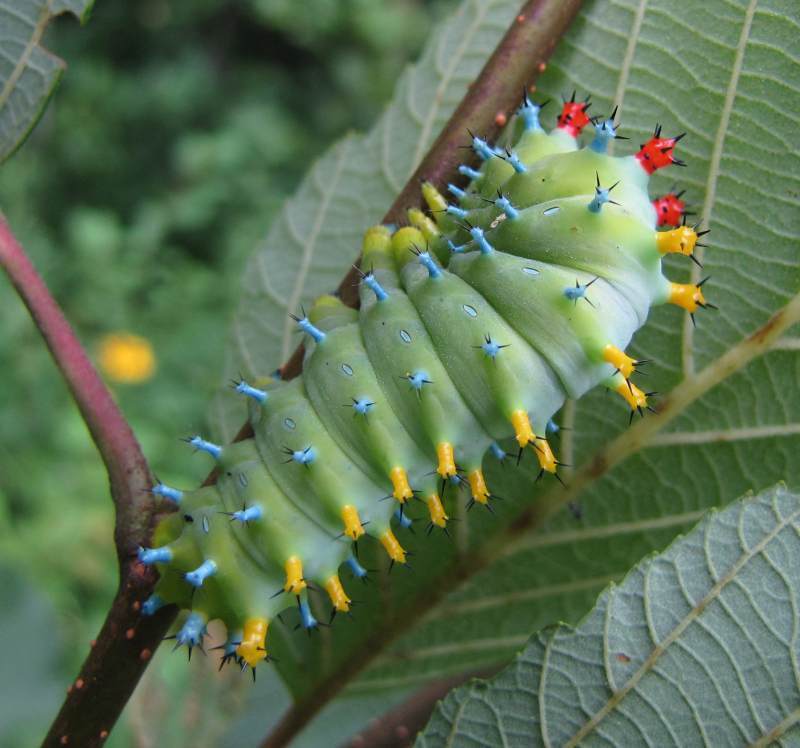
!Is the cecropia moth dangerous?
No. Adults and caterpillars are not poisonous and do not sting. Larvae have smooth skin with small tubercles and do not normally irritate skin; handle gently if necessary. Standard first aid for any skin irritation (wash with soap and water) is sufficient.
Pets
Not toxic to pets. Large caterpillars could be a choking hazard if a pet attempts to eat one; prevent pets from swallowing large insects.
📖Overview
The Cecropia moth is one of the largest moths native to North America and a member of the giant silk moth family (Saturniidae). Caterpillars feed on a wide range of hardwood trees and shrubs; after growing through several instars they spin a silken cocoon and pupate. Adults emerge in late spring or summer, have large striking wings used for mating displays, and live about 1-2 weeks because they lack functional mouthparts.
Cecropia moths are harmless to humans. They are not venomous, do not bite or sting, and are often encountered in gardens, woodland edges and suburban areas where host trees are present. They are an appealing species for naturalists and are sometimes reared by hobbyists from caterpillars collected on host plants.
🔍How to identify a cecropia moth
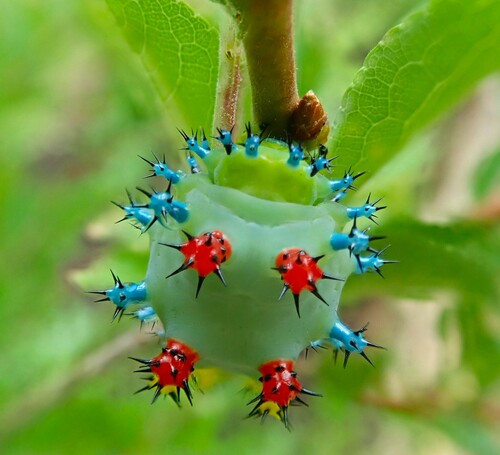
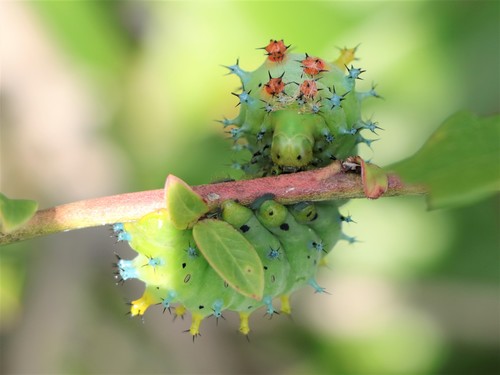
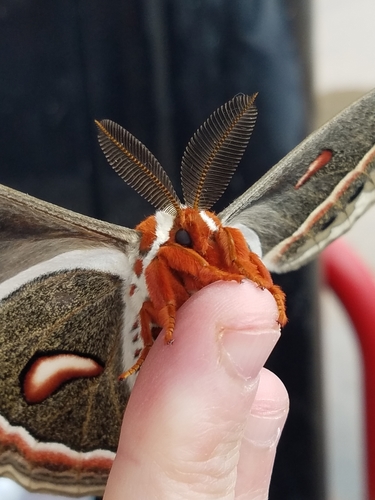
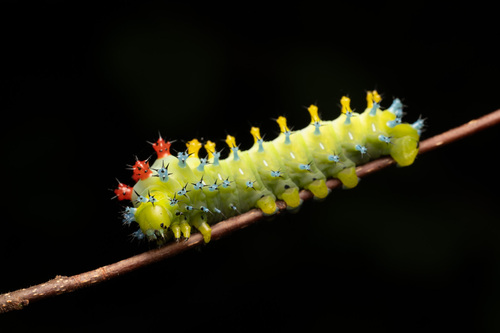
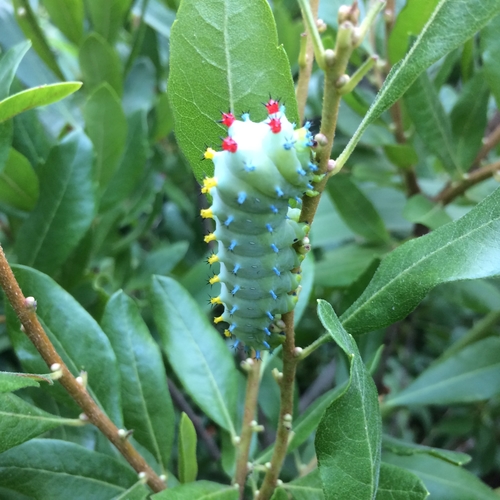
Adults are very large with broad, rounded wings. Forewings and hindwings are reddish-brown to dark brown with bands of white and black, and crescent-shaped pale spots near the wing margins; each wing bears a small crescent-shaped eyespot bordered in black and pale lines. The body is robust and hairy; males have large, feathery antennae for detecting female pheromones. Caterpillars are large, green when mature, with rows of tubercles (knobs) that are yellow, blue and red depending on instar; late-instar caterpillars can reach about 10-11 cm in length. Pupation occurs inside a tough, papery silken cocoon attached to twigs or bark.
- Very large wingspan (12-16 cm) with rounded wings and bold bands of white, black and reddish-brown.
- Crescent-shaped pale spots and small crescent eyespots on each wing.
- Males with large feathered antennae; females with somewhat less plumose antennae.
- Large green caterpillars with rows of colored tubercles; pupae inside a brown, papery silken cocoon.
Lookalikes
Polyphemus moth Antheraea polyphemus
Polyphemus has large, round transparent eyespots on the hindwings and lacks the same banded reddish-brown pattern of Cecropia.
Luna moth Actias luna
Luna moth is pale green with long hindwing tails and different wing shape; it is usually smaller and more slender.
Promethea moth Callosamia promethea
Promethea is smaller and darker with less contrasting white bands; wing shape and size are noticeably different.
↻Life cycle
Egg
Females lay clusters of small, oval eggs on the undersides of leaves or on twigs. Eggs hatch in about 1-3 weeks depending on temperature.
Larva (caterpillar)
Caterpillars pass through several instars, growing rapidly while feeding on host leaves. Late-instar caterpillars are large, green, and covered with rows of colored tubercles.
Pupa (in cocoon)
Mature caterpillars spin a tough silken cocoon attached to branches or bark and pupate inside. They overwinter as pupae in much of their range.
Adult moth
Adults emerge from the cocoon, mate, and females lay eggs. Adults lack functional mouthparts and survive on stored energy for about 1-2 weeks.
🍃Diet and predators
Young eat
Leaves of a wide variety of deciduous trees and shrubs (maple, birch, willow, cherry, apple, boxelder, etc.)
Adults eat
None — adults do not feed (no functional mouthparts)
Predators of the young
Birds, parasitic wasps and flies, predatory insects and small mammals
Predators of adults
Bats, nocturnal birds, and sometimes spiders or predatory insects
🌱Effect on plants and gardens
Caterpillars feed on many deciduous trees and shrubs including maple, birch, willow, cherry, apple, hawthorn, boxelder, plum and elder. Heavy local infestations can defoliate small trees but populations are usually low and not long-lasting.
📍Where and when to find it
Look for caterpillars on leaves of maples, birch, willow, cherry, apple and other hardwoods; cocoons are often attached to twigs, fences or the underside of eaves. Adults are attracted to porch and security lights at night.
Best time
Late spring through summer (exact months depend on latitude). Nighttime is best for seeing adults; daytime for finding resting cocoons and late-instar caterpillars.
Observation tips
Use a flashlight and watch tree trunks and branches after dusk to see adults. If photographing, approach slowly and use a longer lens to avoid disturbing them.
✨Fun facts
- Cecropia moths are among the largest moths in North America; their wingspans can exceed 15 cm.
- Adult Cecropia moths do not eat: they emerge, mate and lay eggs using only energy stored from the caterpillar stage.
- The tough, double-layered silken cocoon protects the pupa through the winter.
?Frequently asked questions
Are Cecropia moths dangerous?
No. They are harmless to people and do not sting or bite. Caterpillars are not known to be poisonous or to cause skin rashes under normal handling.
Do Cecropia moth caterpillars bite?
No. They lack biting mouthparts capable of harming humans; they feed on plant leaves.
Why is a Cecropia moth in my house?
Adults are nocturnal and attracted to lights, so they can fly toward windows and occasionally enter houses. Cocoons may also be attached to outdoor structures near homes.
How do I get rid of Cecropia moths?
Because they are harmless and short-lived, removal by gently capturing and releasing outdoors is best. For caterpillars lightly defoliating small trees, handpicking or encouraging natural predators is usually sufficient. Use Bacillus thuringiensis (Bt) if control is necessary on ornamental trees.
Where do Cecropia moths live?
They live wherever suitable host trees and shrubs occur: deciduous woods, hedgerows, parks and suburban areas across much of North America.
Can I rear Cecropia moths from caterpillars?
Yes. Hobbyists successfully rear them by providing fresh host leaves, keeping caterpillars on a clean enclosure, and allowing them to spin cocoons; check local regulations and avoid collecting large numbers from the wild.
📷Photos of the cecropia moth
More butterflies & moths
This guide was written with AI assistance and fact-checked, last updated 2026-10-09. Identification from photos is never certain: don't handle insects you can't identify, and get medical advice for bites, stings or allergic reactions.