
Luna moth vs Cecropia moth
These two are easy to mix up. Here's how to tell a luna moth from a cecropia moth, and whether either one bites or stings.
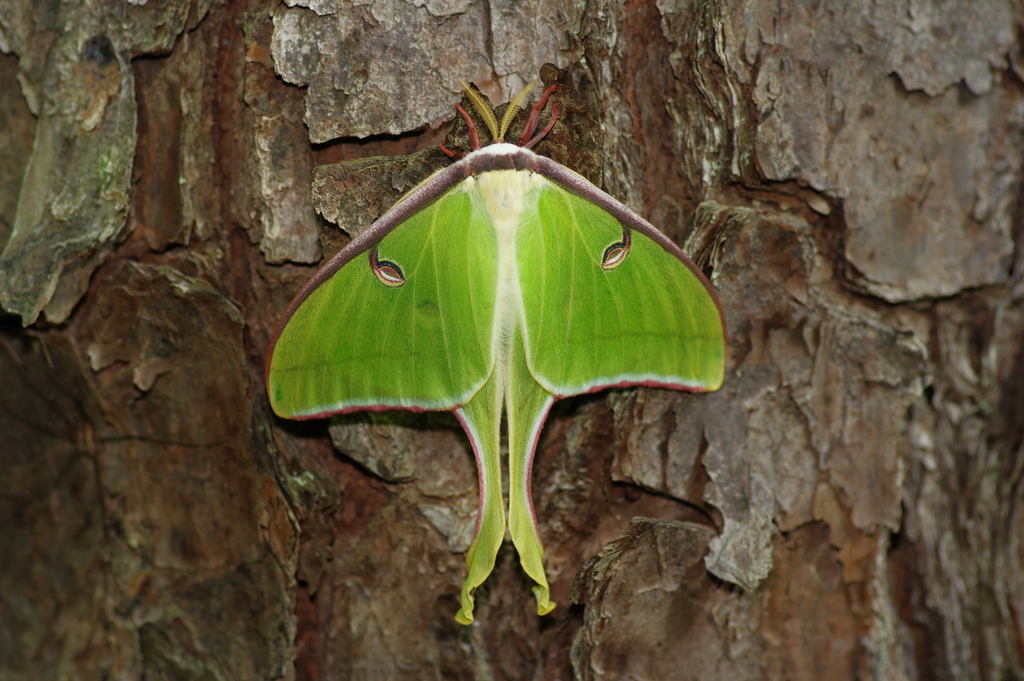
Luna moth
Actias luna
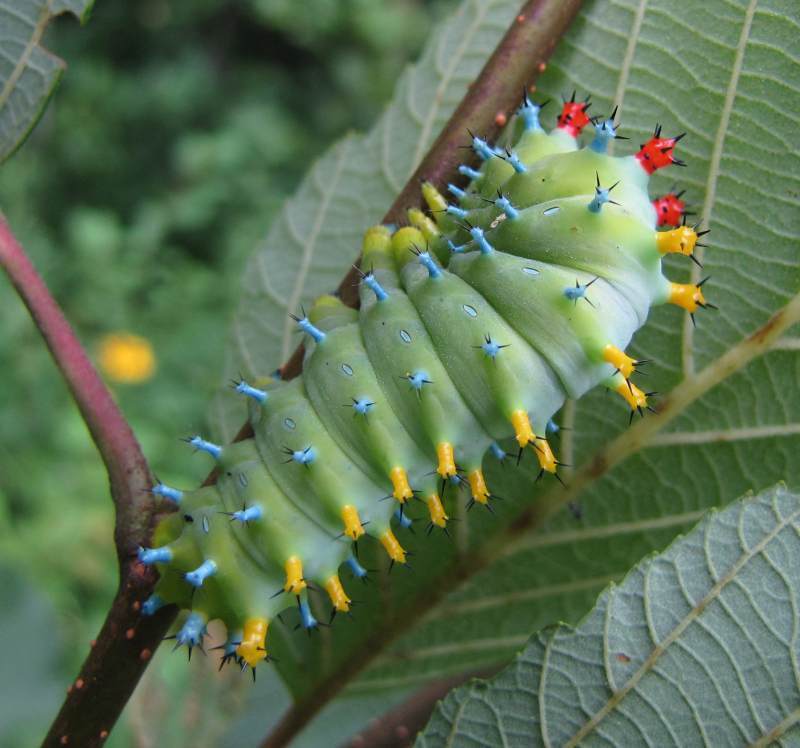
Cecropia moth
Hyalophora cecropia
≠The key differences
Cecropia is reddish-brown with white bands and large wing lobes; it lacks Luna's pale-green color and long tails.
Luna moth is pale green with long hindwing tails and different wing shape; it is usually smaller and more slender.
⚖︎Side by side
| Luna moth | Cecropia moth | |
|---|---|---|
| To humans | Non-toxic | Non-toxic |
| Size | Wingspan 90-114 mm (3.5-4.5 inches), body length 30-40 mm | Wingspan 120-160 mm (12-16 cm) |
| Colours | Pale green, Creamy yellow, Brown (wing margins and body markings), Black (eyespot centers and markings) | Reddish-brown, Cream, Black, Orange, Green (larva) |
| Family | Saturniidae | Saturniidae |
| Habitat | Deciduous and mixed woodlands, suburban areas, parks and riparian zones where host trees are present | Deciduous woods, woodland edges, parks, suburbs and gardens where host trees grow |
| Range | Eastern North America: from Canada (southern Ontario, Quebec) south to Florida and west to Texas and parts of the Great Plains | Widespread across much of North America: from southern Canada through much of the United States (ranges vary by local populations) |
| Active | Adults nocturnal; typically one to two broods per year depending on latitude (spring-summer to midsummer) | Adults on wing late spring through summer (timing varies by latitude); mostly night-active (nocturnal) |
| Pest? | No | No |
🔍How to spot a luna moth
- Pale green wings with translucent eyespots on each wing
- Long, tapering tail streamers on the hindwings
- Powdery, slightly scalloped wing margins and creamy-yellow body
- Males have feathery (bipectinate) antennae; females have thinner, less feathery antennae
🔍How to spot a cecropia moth
- Very large wingspan (12-16 cm) with rounded wings and bold bands of white, black and reddish-brown.
- Crescent-shaped pale spots and small crescent eyespots on each wing.
- Males with large feathered antennae; females with somewhat less plumose antennae.
- Large green caterpillars with rows of colored tubercles; pupae inside a brown, papery silken cocoon.
?Frequently asked questions
What is the difference between a luna moth and a cecropia moth?
Cecropia is reddish-brown with white bands and large wing lobes; it lacks Luna's pale-green color and long tails. Luna moth is pale green with long hindwing tails and different wing shape; it is usually smaller and more slender.
Is a luna moth or a cecropia moth more dangerous?
Luna moth: Non-toxic. Cecropia moth: Non-toxic. Adults do not bite or sting and are harmless to people. Adults and caterpillars are not poisonous and do not sting.
Identification from photos is never certain: don't handle insects you can't identify, and get medical advice for bites, stings or allergic reactions.