
Rosy maple moth vs Imperial moth
These two are easy to mix up. Here's how to tell a rosy maple moth from an imperial moth, and whether either one bites or stings.
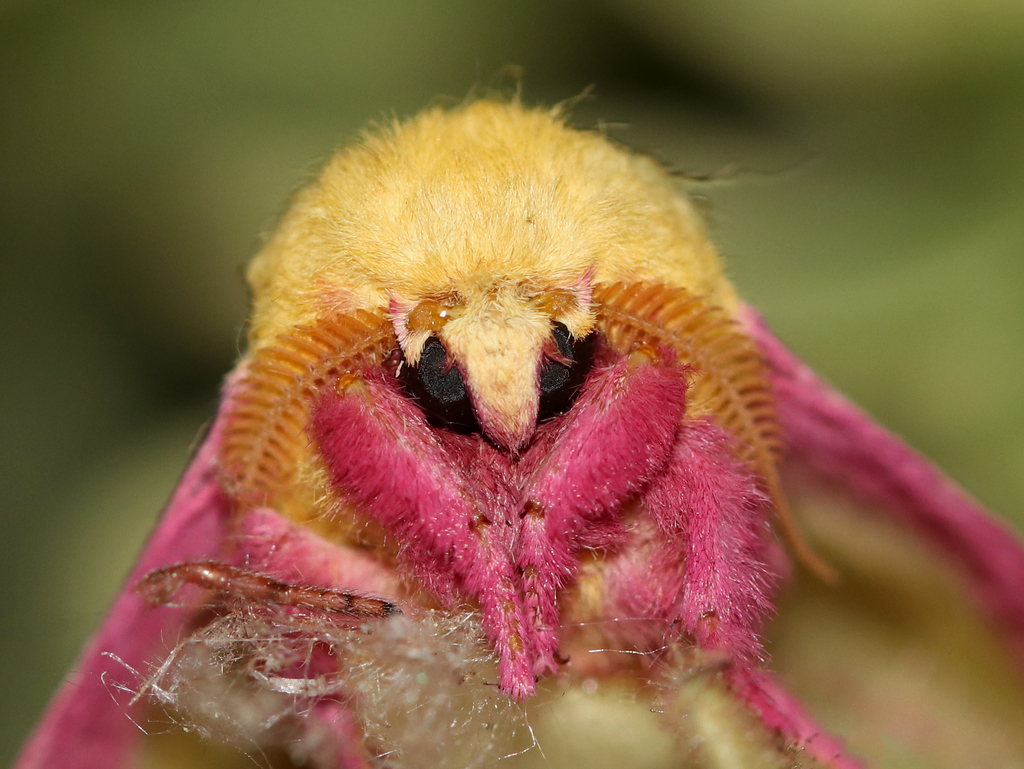
Rosy maple moth
Dryocampa rubicunda
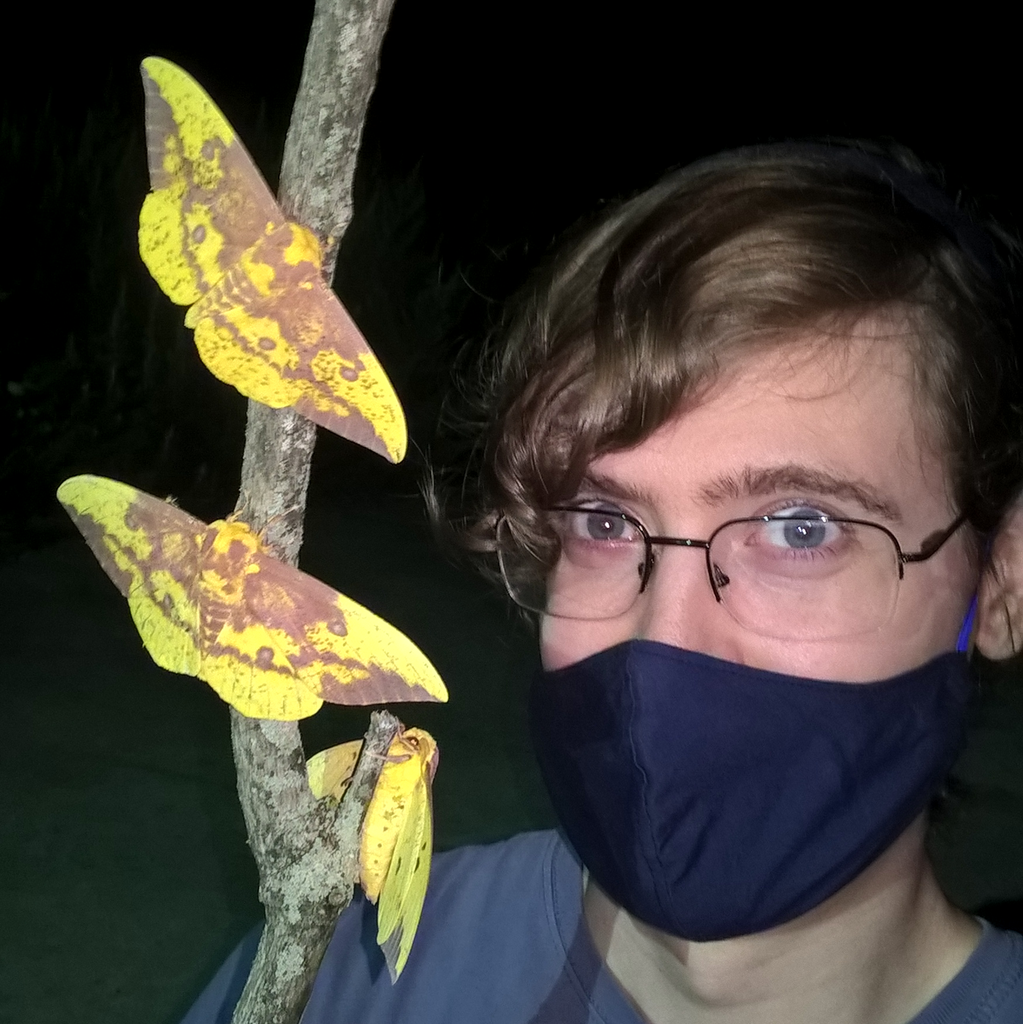
Imperial moth
Eacles imperialis
≠The key differences
Much larger (wingspan about 8-17 cm), yellow with purplish-brown spotting; not pink-and-yellow like Dryocampa rubicunda
⚖︎Side by side
| Rosy maple moth | Imperial moth | |
|---|---|---|
| To humans | Non-toxic | Non-toxic |
| Size | 3-5 cm wingspan | Wingspan 80-175 mm (3-7 inches), typically 90-150 mm in many populations |
| Colours | Pink, Pale yellow, Green (larva) | Yellow, Orange, Rusty brown, Purple-brown markings |
| Family | Saturniidae | Saturniidae |
| Habitat | Deciduous forests, suburban and urban areas with maple trees, parks and roadside plantings | Deciduous and mixed woodlands, forest edges, suburban yards with host trees |
| Range | Eastern North America from southern Canada through eastern United States; absent from the far western states | Eastern and central North America from Canada (southern Ontario, Quebec) south through the eastern United States to Mexico; exact range and form vary regionally |
| Active | Adults mainly spring and summer (one to two generations per year depending on latitude); nocturnal, attracted to lights | Mostly spring to early autumn depending on location; adults are nocturnal and fly at night |
| Pest? | Yes | No |
🔍How to spot a rosy maple moth
- Adults: small, rounded wings with vivid pink and pale yellow patterning; fuzzy, stout body
- Males smaller with feathery antennae; females have broader abdomens
- Caterpillars are greenish with lighter longitudinal stripes; found feeding on maple leaves
- No functional mouthparts in adults means you will not see feeding behavior
🔍How to spot an imperial moth
- Large wingspan (typically 90-150 mm) with rounded fore- and hindwings.
- Ground colour yellow to orange with distinct purple-brown blotches and wavy crosslines.
- Small dark discal spot on each wing and males with feathery antennae.
- Caterpillars large, green or brown/orange, with long whitish hairs and short horns behind the head.
?Frequently asked questions
What is the difference between a rosy maple moth and an imperial moth?
Much larger (wingspan about 8-17 cm), yellow with purplish-brown spotting; not pink-and-yellow like Dryocampa rubicunda
Is a rosy maple moth or an imperial moth more dangerous?
Rosy maple moth: Non-toxic. Imperial moth: Non-toxic. Adults do not bite or sting and are harmless to people. Imperial moths and their caterpillars are not venomous.
Identification from photos is never certain: don't handle insects you can't identify, and get medical advice for bites, stings or allergic reactions.