
Isabella tiger moth vs Garden tiger moth
These two are easy to mix up. Here's how to tell an Isabella tiger moth from a garden tiger moth, and whether either one bites or stings.
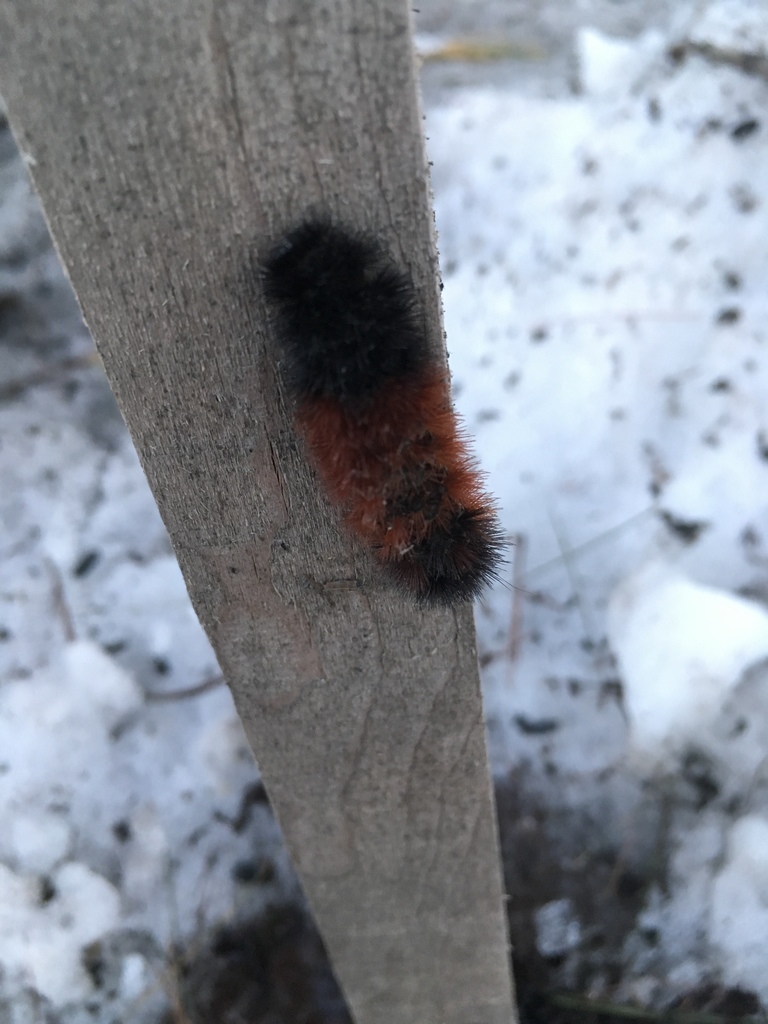
Isabella tiger moth
Pyrrharctia isabella
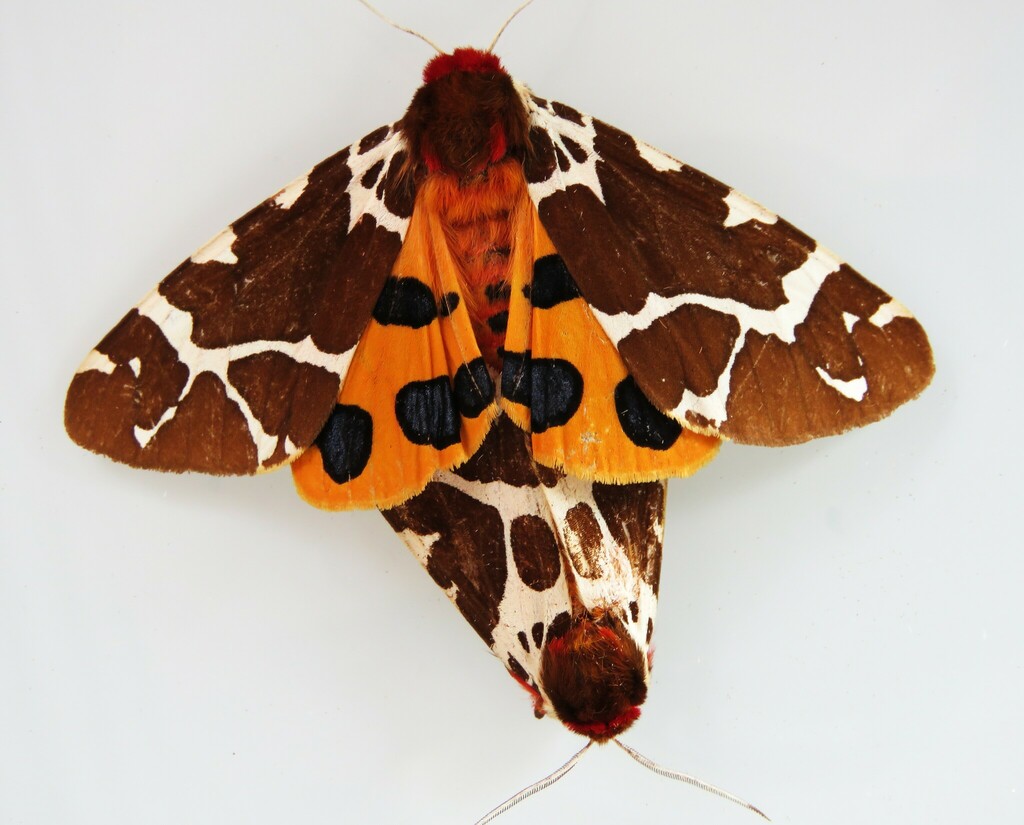
Garden tiger moth
Arctia caja
≠The key differences
Adult Arctia caja is boldly patterned with chocolate-brown and white forewings and orange hindwings with blue-black spots; its caterpillar is a long-haired, mostly black woolly bear without the neat black-brown-black banding.
⚖︎Side by side
| Isabella tiger moth | Garden tiger moth | |
|---|---|---|
| To humans | Irritating hairs | Irritating hairs |
| Size | 45-65 mm wingspan | 45-65 mm wingspan |
| Colours | Orange, Reddish-brown, Black | Brown, Cream/Off-white, Orange-red, Blue-black |
| Family | Erebidae | Erebidae |
| Habitat | Open areas, fields, meadows, roadsides, gardens and edges of woodlands throughout towns and countryside | Gardens, meadows, marsh edges, hedgerows and other herb-rich, moderately damp places |
| Range | Widespread across North America: most of the United States and southern Canada; also reported in parts of northern Mexico. | Temperate Europe and northern Asia, and across much of northern North America; absent from the coldest arctic zones |
| Active | Adults: late spring to late summer (two broods in the south). Larvae commonly seen in late summer and autumn; they overwinter and pupate the next spring. | Adults fly in summer (usually June-August in temperate Europe and North America); crepuscular to nocturnal |
| Pest? | No | No |
🔍How to spot an Isabella tiger moth
- Woolly bear caterpillar: dense bristly hairs with black ends and a reddish-brown middle band.
- Adult moth: pale orange forewings with variable darker markings and orange hindwings; wingspan about 45-65 mm.
- Location and season: common in North America, especially late summer and autumn for caterpillars.
🔍How to spot a garden tiger moth
- Forewings strongly patterned brown with cream/white patches and wavy lines
- Hindwings bright orange-red with several large round dark blue-black spots
- Medium-large wingspan (about 45-65 mm) and a hairy robust body
- Larvae are densely hairy 'woolly bears' typically dark with reddish-orange bands or tufts
?Frequently asked questions
What is the difference between an Isabella tiger moth and a garden tiger moth?
Adult Arctia caja is boldly patterned with chocolate-brown and white forewings and orange hindwings with blue-black spots; its caterpillar is a long-haired, mostly black woolly bear without the neat black-brown-black banding.
Is an Isabella tiger moth or a garden tiger moth more dangerous?
Isabella tiger moth: Irritating hairs. Garden tiger moth: Irritating hairs. Adults are harmless. Adults do not bite or sting and are not dangerous.
Identification from photos is never certain: don't handle insects you can't identify, and get medical advice for bites, stings or allergic reactions.