
American snout
Libytheana carinenta · Snout butterflies
A small, distinctive butterfly with a long 'snout' projection from its face; larvae feed on hackberry and adults often feed on sap and rotting fruit.
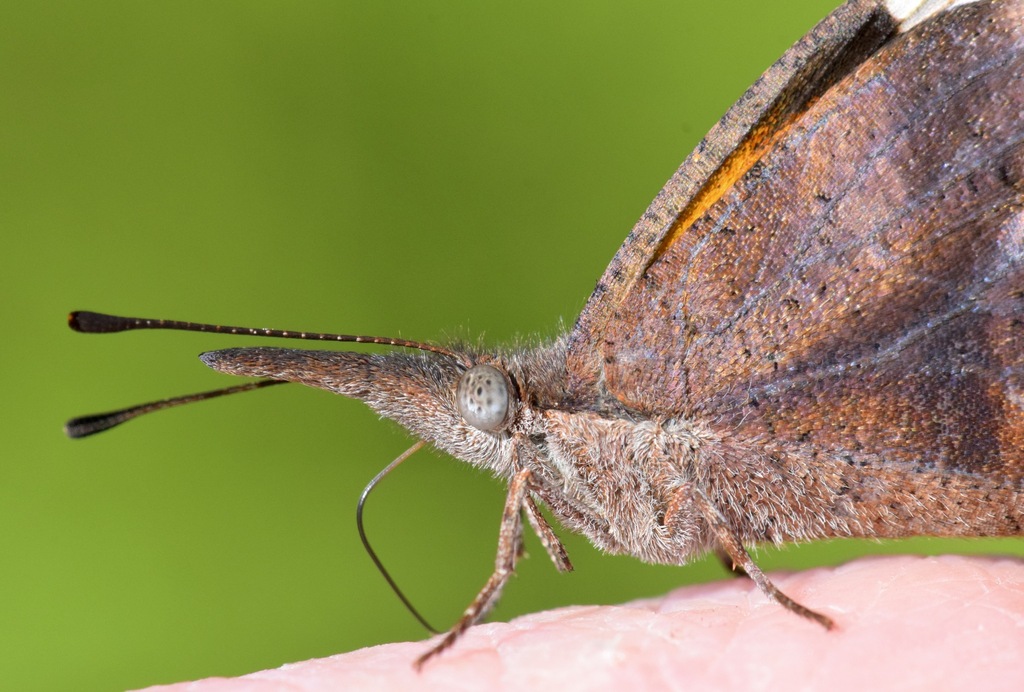
!Is the American snout dangerous?
No. Harmless to people: does not bite or sting and has no venom. Handle gently; crushed scales can cause minor skin staining but no medical risk.
Pets
Not dangerous to pets. Large numbers occasionally resting on surfaces are a nuisance but cause no harm.
📖Overview
Libytheana carinenta is a North and Central American butterfly notable for the elongated labial palpi that form a pronounced 'snout' on the face. Adults are active in warm months and often appear in large numbers during outbreak years. The species uses hackberry trees (Celtis spp.) as the larval host plant. Adults feed on nectar, sap flows, and fermenting fruit rather than living plants and pose no threat to people.
🔍How to identify an American snout
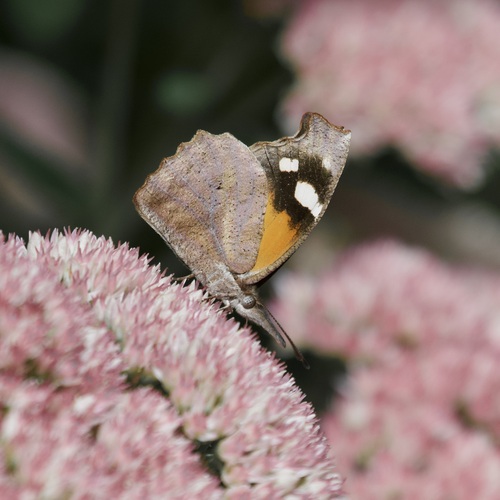
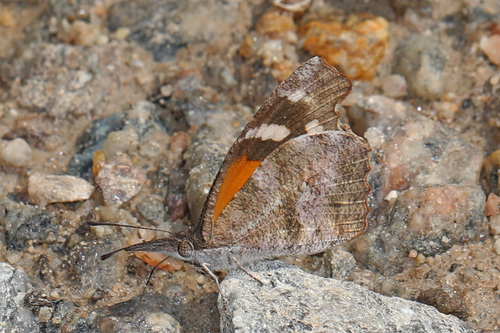
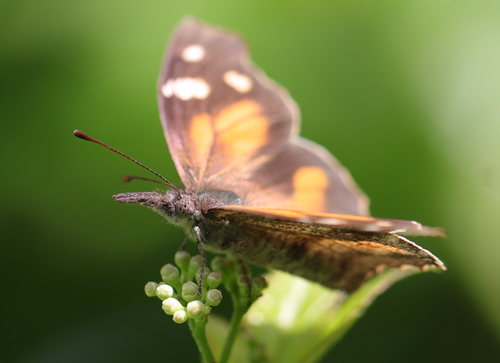
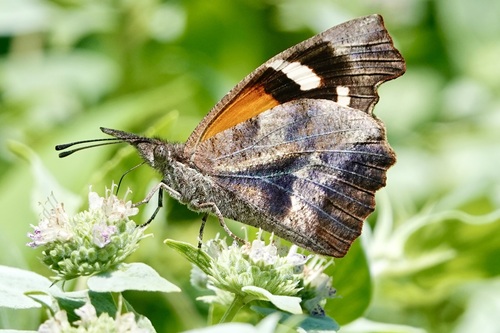
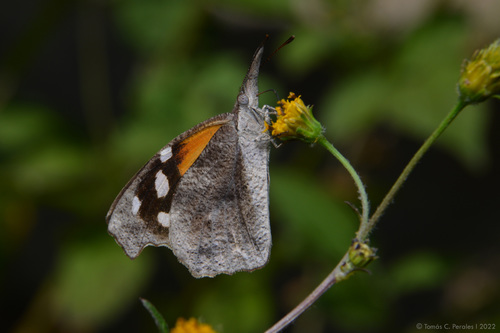
Forewings are dark brown with orange patches toward the base and several white spots near the squared-off tips; hindwings are dark brown with an orange central area. At rest the butterfly holds its wings closed over its back, accentuating the long, forward-projecting labial palpi that look like a snout. Wingspan about 3.5-5 cm; the underside is mottled gray-brown and helps the butterfly resemble a dead leaf when closed.
- Long forward-projecting labial palpi (the 'snout') visible from head-on
- Dark brown forewings with orange basal patches and white spots near the squared-off tips
- At rest wings are held closed over the back, giving a dead-leaf appearance
- Smaller than many common butterflies; wingspan about 35-50 mm
Lookalikes
European snout Libythea celtis
Similar snout shape but differs in range (Old World) and subtle wing pattern; not normally found in the Americas.
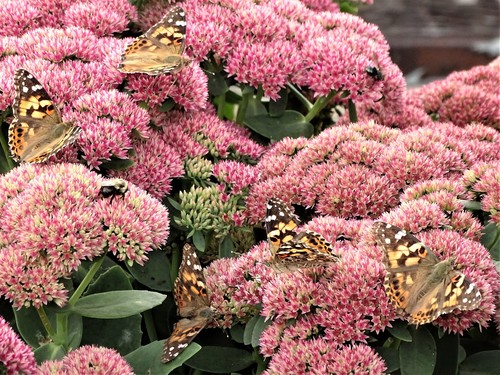
American lady Vanessa virginiensis
Also orange-brown but lacks the snout; wing pattern and size differ and Vanessa holds wings more flat at rest.
↻Life cycle
Egg
Small, pale eggs are laid singly or in small groups on hackberry leaves or twigs.
Larva (caterpillar)
Green to brown caterpillars that feed on hackberry foliage; they pass through several instars before pupating.
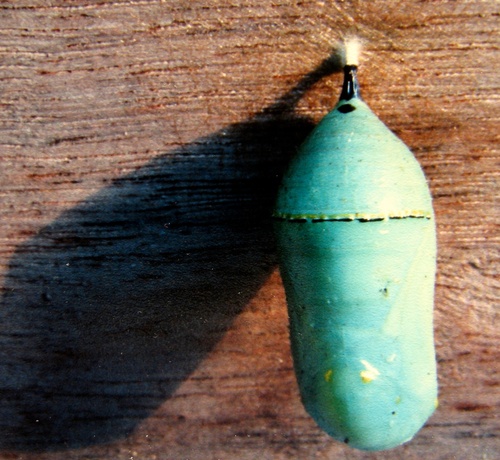
Pupa (chrysalis)
Chrysalis attaches to vegetation; metamorphosis takes several days to weeks depending on temperature.
Adult (butterfly)
Flying, reproducing stage; adults feed on nectar, sap and fermenting fruit and disperse to find host plants.
🍃Diet and predators
Young eat
Leaves of hackberry trees (Celtis spp.)
Adults eat
Tree sap, rotting/fermenting fruit, nectar, and other sugary liquids
Predators of the young
Parasitoid wasps, predatory insects, spiders and birds
Predators of adults
Birds, spiders and insectivorous animals; adults rely on camouflage and erratic flight
🌱Effect on plants and gardens
Larvae feed almost exclusively on hackberry (Celtis species) leaves; feeding rarely causes serious damage to healthy trees. Adults visit sap flows, rotting fruit, and nectar sources.
📍Where and when to find it
Look for adults on tree sap flows, rotting fruit, garden flowers, or resting on trunks and leaves; search hackberry trees for eggs and caterpillars.
Best time
Best seen spring through fall, on warm sunny days; outbreak years can produce large numbers especially in late spring and summer.
Observation tips
Photograph resting individuals from the side or head-on to show the distinctive snout and the white forewing spots; approach slowly to avoid startling them.
✨Fun facts
- The 'snout' is formed by enlarged labial palpi, not a proboscis or feeding organ.
- American snouts sometimes appear in huge numbers during warm, wet years and can migrate north as a group.
- When resting with wings closed they resemble dead leaves, a useful camouflage against predators.
?Frequently asked questions
Does the American snout bite or sting?
No. It does not bite or sting and is harmless to people.
Why is an American snout in my house?
Adults are attracted to light and to fermenting fruit or sap. They may enter homes near lights or through open doors while attracted to sugary smells.
Is the American snout a pest to trees or gardens?
Caterpillars feed on hackberry leaves, but they rarely cause serious long-term damage to healthy trees and are not considered a significant pest.
How can I get rid of American snouts in my yard?
Remove attractants like overripe fruit, reduce porch lighting at night, and encourage native predators. For localized indoor individuals, gently catch and release them outside.
Where do they live and what host plants do they need?
They live near hackberry trees (Celtis species), which are the required host for caterpillars. Habitats include woodlands, riparian zones, parks and suburban areas.
📷Photos of the American snout
More butterflies & moths
This guide was written with AI assistance and fact-checked, last updated 2026-10-10. Identification from photos is never certain: don't handle insects you can't identify, and get medical advice for bites, stings or allergic reactions. More about the American snout: iNaturalist, Wikipedia.