
American lady vs American snout
These two are easy to mix up. Here's how to tell an American lady from an American snout, and whether either one bites or stings.
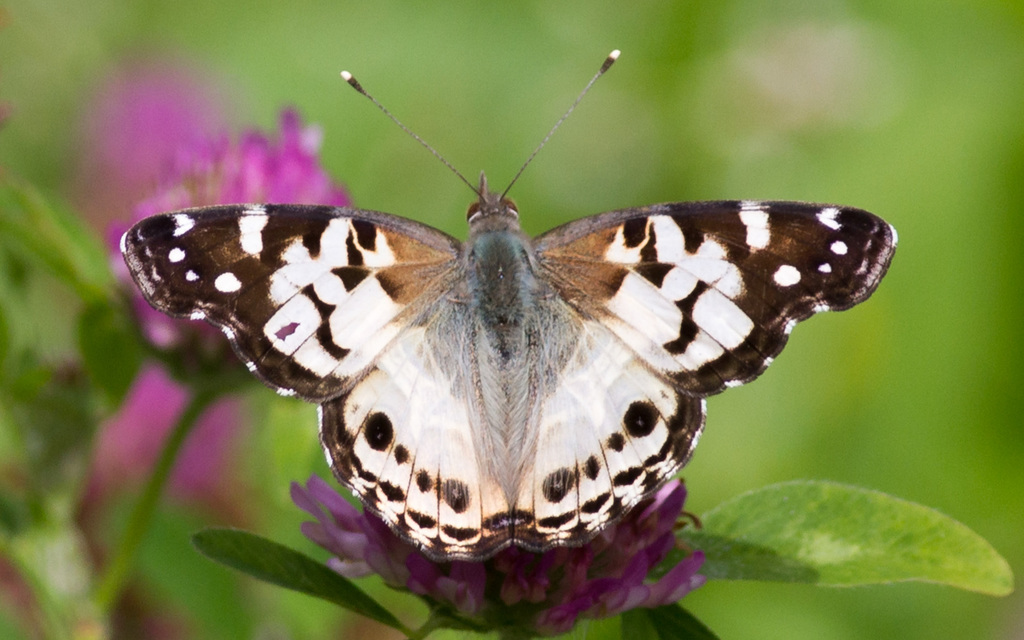
American lady
Vanessa virginiensis
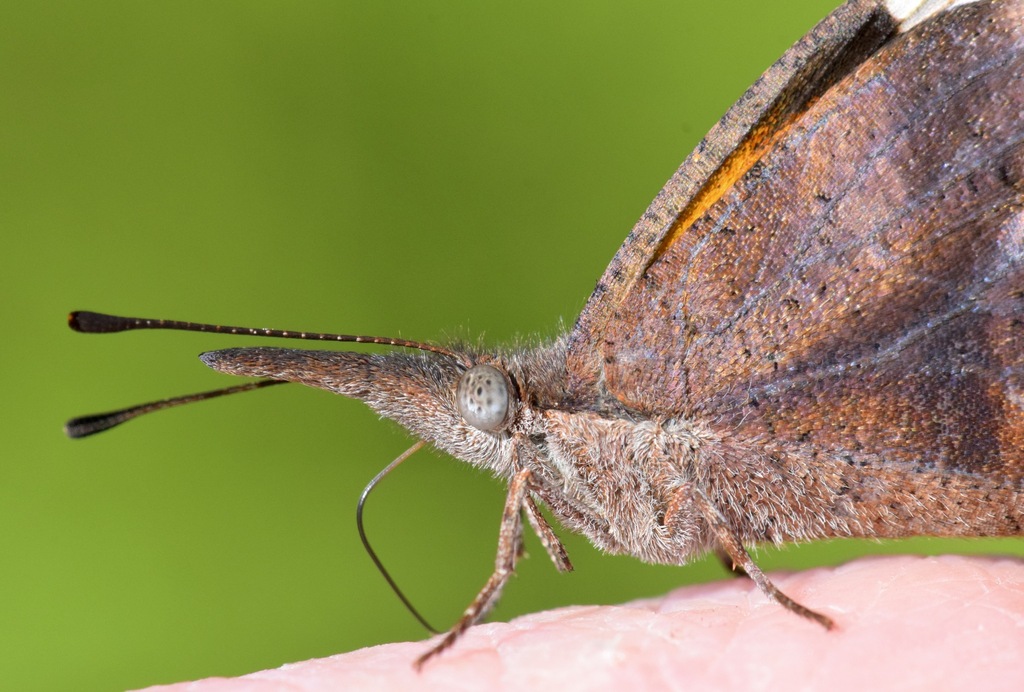
American snout
Libytheana carinenta
≠The key differences
Also orange-brown but lacks the snout; wing pattern and size differ and Vanessa holds wings more flat at rest.
⚖︎Side by side
| American lady | American snout | |
|---|---|---|
| To humans | Non-toxic | Non-toxic |
| Size | 45-60 mm wingspan | 35-50 mm wingspan |
| Colours | Orange, Black, White, Brown | Orange-brown, Dark brown, Cream/white, Mottled tan |
| Family | Nymphalidae | Nymphalidae |
| Habitat | Open, sunny habitats: gardens, meadows, roadsides, fields and open woodland edges; also urban gardens and parks. | Woodlands, riparian edges, parks and suburban areas where hackberry trees grow |
| Range | Widespread across North America: from southern Canada through the United States into northern Mexico. Common regionally throughout its range. | Widespread across the southern and eastern United States, Mexico, and parts of Central America; can appear farther north in warm-season migrations and irruptions |
| Active | Active during warm months; often seen from spring through fall (regional), daytime (diurnal). | Spring through fall (longer in southern range); diurnal, most active on warm, sunny days |
| Pest? | No | No |
🔍How to spot an American lady
- Look for two prominent rounded eyespots on the underside of the hindwing (one usually larger).
- Orange-brown upperwings with a black forewing tip that bears pale spots.
- Wingspan about 45-60 mm; underside mottled browns and grays when wings are closed for camouflage.
- Compare with painted lady: American lady usually has two prominent hindwing eyespots while painted lady (Vanessa cardui) has smaller and more numerous spots on the underside.
🔍How to spot an American snout
- Long forward-projecting labial palpi (the 'snout') visible from head-on
- Dark brown forewings with orange basal patches and white spots near the squared-off tips
- At rest wings are held closed over the back, giving a dead-leaf appearance
- Smaller than many common butterflies; wingspan about 35-50 mm
?Frequently asked questions
What is the difference between an American lady and an American snout?
Also orange-brown but lacks the snout; wing pattern and size differ and Vanessa holds wings more flat at rest.
Is an American lady or an American snout more dangerous?
American lady: Non-toxic. American snout: Non-toxic. Harmless. Harmless to people: does not bite or sting and has no venom.
Identification from photos is never certain: don't handle insects you can't identify, and get medical advice for bites, stings or allergic reactions.