
Pipevine swallowtail vs Spicebush swallowtail
These two are easy to mix up. Here's how to tell a pipevine swallowtail from a spicebush swallowtail, and whether either one bites or stings.
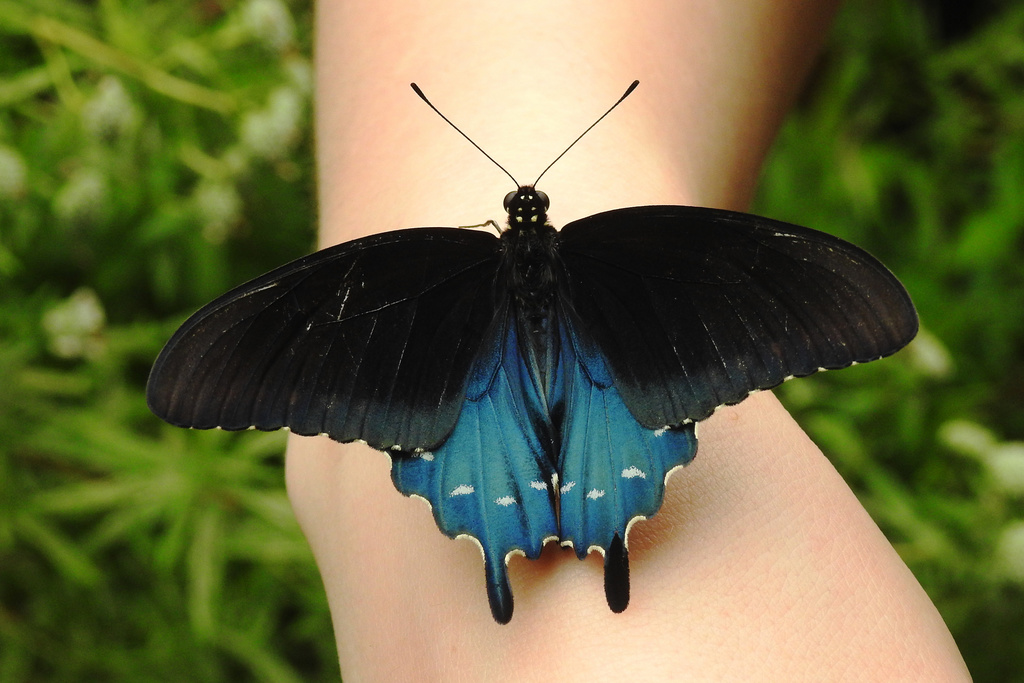
Pipevine swallowtail
Battus philenor
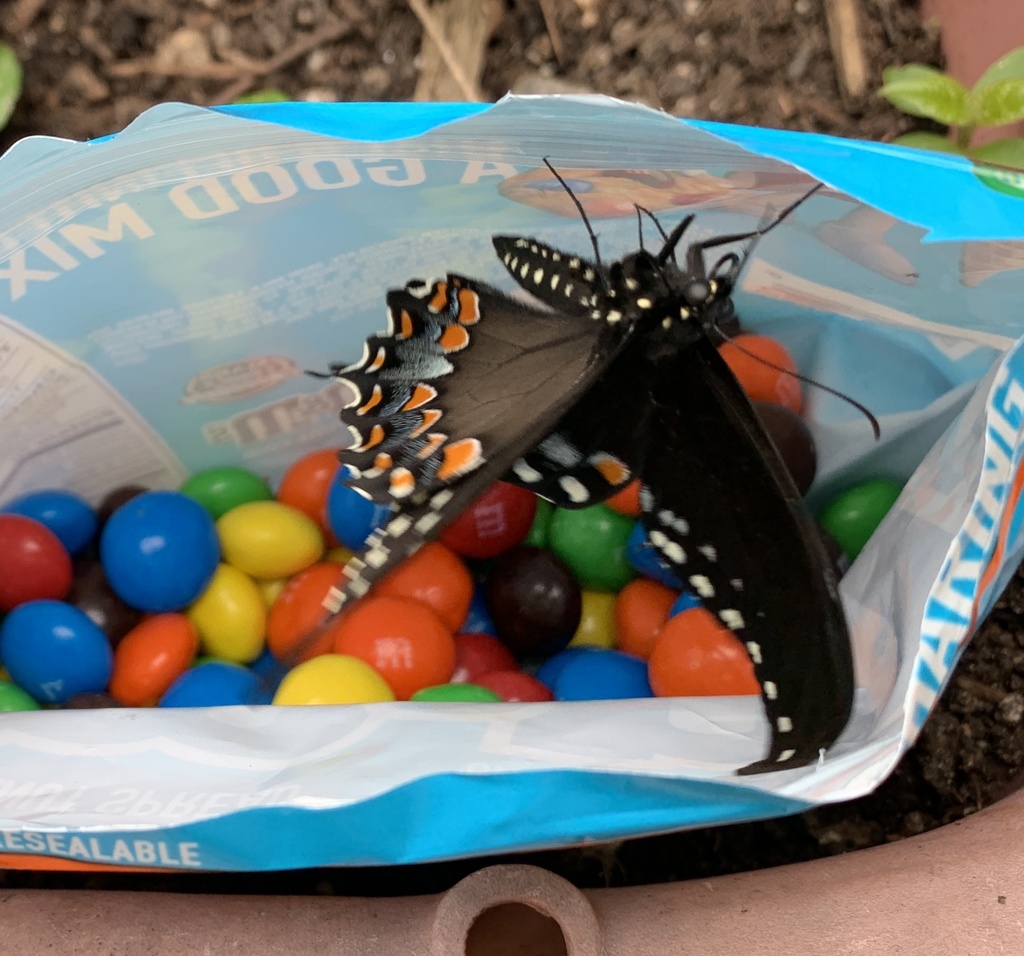
Spicebush swallowtail
Papilio troilus
≠The key differences
Spicebush swallowtail has a row of pale spots along the upperside margins and two rows of orange spots on the hindwing underside with a blue band between them; its caterpillars have false eyespots and feed on spicebush and sassafras.
Pipevine swallowtail is uniformly dark with iridescent blue on the hindwing, lacks the cream spots along the forewing margin and has a single row of orange spots on the hindwing underside (spicebush has two).
⚖︎Side by side
| Pipevine swallowtail | Spicebush swallowtail | |
|---|---|---|
| To humans | Toxic if eaten | Non-toxic |
| Size | Wingspan about 70-130 mm | 8-10 cm wingspan |
| Colours | Black, Iridescent blue, Orange, Red | Black, Iridescent blue-green, Yellow-cream, Orange |
| Family | Papilionidae | Papilionidae |
| Habitat | Open woods, edges, meadows, gardens and areas where Aristolochia (pipevine) grows | Woodland edges, swamps, wetlands, gardens and other areas where host plants (spicebush, sassafras and laurels) grow. |
| Range | Eastern and western North America (throughout much of the United States), Mexico and parts of Central America; distribution follows availability of pipevine host plants | Eastern North America: from southern Canada (Ontario, Quebec) south through much of the eastern United States to Florida and east Texas. |
| Active | Spring through autumn (multiple broods in warmer regions); active during daylight, especially late morning to afternoon | Active spring through fall; usually day-flying with peak activity in warm sunny weather. One to three broods per year depending on latitude. |
| Pest? | No | No |
🔍How to spot a pipevine swallowtail
- Large black swallowtail with a pronounced iridescent blue patch on the upper hindwing in males
- Row of bright red or orange spots along the underside of the hindwing
- Association with pipevine (Aristolochia) on which caterpillars feed
- Relatively small tail-like extensions on the hindwings (less pronounced than some other Papilionidae)
🔍How to spot a spicebush swallowtail
- Black swallowtail with a broad iridescent band across the hindwing (blue-green in males, bluer in females).
- Row of yellow or cream marginal spots on both forewing and hindwing, plus small orange submarginal spots on hindwing near the tail.
- Short swallowtail 'tails' on the hindwings.
- Caterpillars: early instars look like bird droppings; later instars are bright green with prominent false eye spots and a swollen thorax.
?Frequently asked questions
What is the difference between a pipevine swallowtail and a spicebush swallowtail?
Spicebush swallowtail has a row of pale spots along the upperside margins and two rows of orange spots on the hindwing underside with a blue band between them; its caterpillars have false eyespots and feed on spicebush and sassafras. Pipevine swallowtail is uniformly dark with iridescent blue on the hindwing, lacks the cream spots along the forewing margin and has a single row of orange spots on the hindwing underside (spicebush has two).
Is a pipevine swallowtail or a spicebush swallowtail more dangerous?
Pipevine swallowtail: Toxic if eaten. Spicebush swallowtail: Non-toxic. Pipevine swallowtail adults and caterpillars are not dangerous to touch. Harmless to people.
Identification from photos is never certain: don't handle insects you can't identify, and get medical advice for bites, stings or allergic reactions.