
Gray hairstreak
Strymon melinus · Hairstreak butterflies
A small, common North American hairstreak butterfly with pale gray undersides, thin tails and an orange spot near the hindwing tornus.
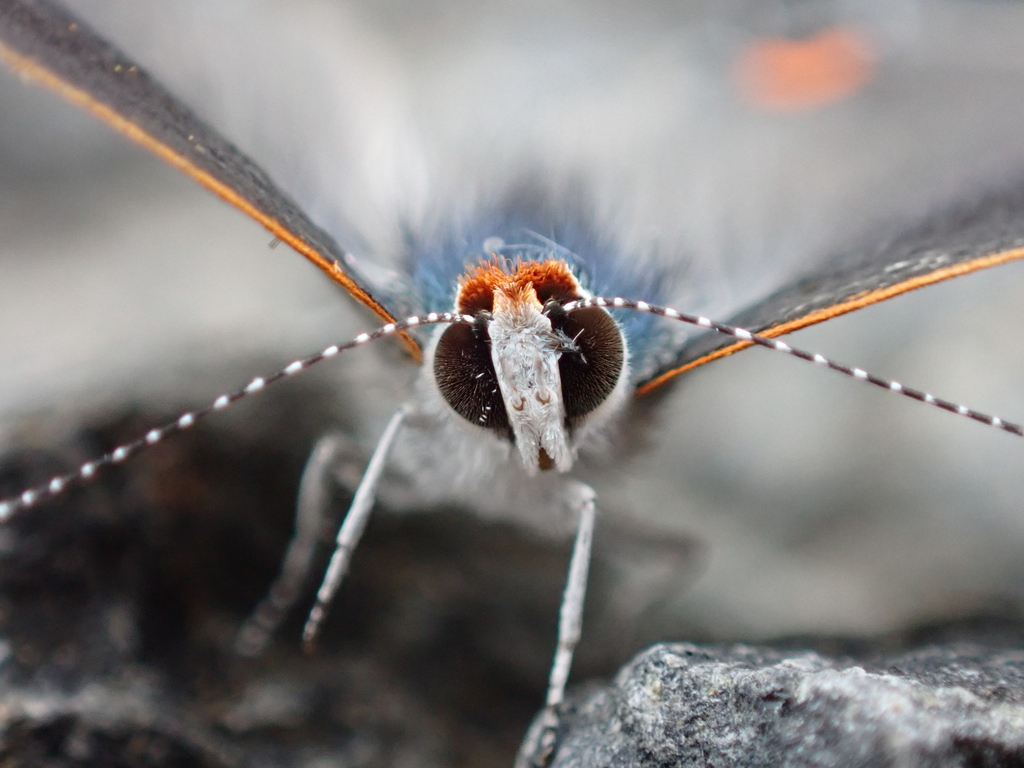
!Is the gray hairstreak dangerous?
No. Harmless to people. Adults do not bite or sting and are not poisonous. Handle gently if necessary; avoid touching wings because scales rub off easily.
Pets
Not harmful to pets. Caterpillars are not known to be toxic to dogs or cats.
📖Overview
The Gray hairstreak (Strymon melinus) is a widespread, adaptable hairstreak butterfly found across much of North America and parts of Central America. It occupies open, sunny habitats including fields, roadsides, gardens and disturbed areas and is frequently seen visiting flowers. The species is polyphagous (larvae feed on many kinds of host plants), often has multiple broods per year, and is one of the most commonly encountered small butterflies in residential and rural landscapes.
🔍How to identify a gray hairstreak
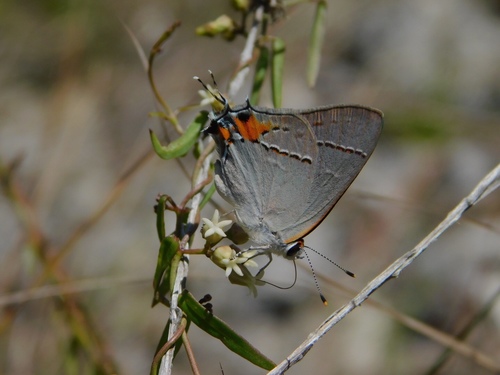
Adults have a pale gray to silvery underside crossed by thin white lines and a distinctive pair of thin 'hairstreak' tails on each hindwing. Near the rear margin of the hindwing is a black spot edged with orange. The upperside (seen with wings open) is dull brownish-gray; males and females are similar to casual observers. Wingspan is small, and the combination of tails, thin white lines, and the orange patch help distinguish it from other small butterflies.
- Pale gray underside with thin white lines crossing the wings
- One or two fine 'hairstreak' tails on each hindwing
- Black spot edged in orange near the hindwing rear margin
- Small size: about 25-35 mm wingspan
Lookalikes
Eastern tailed-blue Cupido comyntas
Usually brighter blue on the upperside (males), smaller, and lacks the pronounced orange hindwing patch seen in gray hairstreaks
Juniper hairstreak Callophrys gryneus
Greener underwing tone, lacks the same pattern of thin white lines and orange patch; different habitat preference (often near junipers)
↻Life cycle
Egg
Females lay single eggs on host plants. Eggs hatch in a few days to a couple of weeks depending on temperature.
Larva (caterpillar)
Caterpillars are small, often greenish or brownish, feed on host plant tissues and sometimes are tended by ants attracted to secretions from the caterpillar.
Pupa (chrysalis)
Pupation occurs on or near the host plant; the chrysalis is cryptic and the pupal stage lasts about 1-2 weeks in warm weather.
Adult (butterfly)
Adults emerge to feed on nectar, mate and lay eggs; multiple broods occur in most of its range.
🍃Diet and predators
Young eat
Leaves, flowers and developing seeds of a wide range of host plants (mallows, legumes, clovers, and many others)
Adults eat
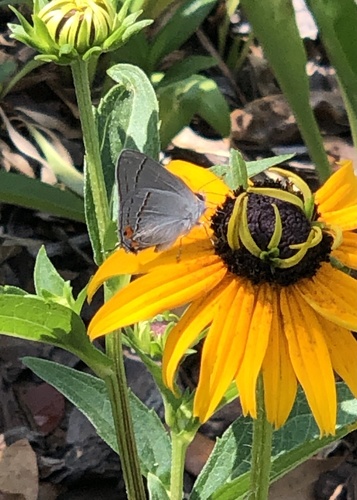
Nectar from a variety of flowering plants (e.g., milkweed, asters, clovers, dogbane and many garden flowers)
Predators of the young
Predatory insects, spiders, parasitic wasps, and birds
Predators of adults
Birds, dragonflies and other insectivores; adults escape predators using tail-and-spot 'false head' deflection
🌱Effect on plants and gardens
Larvae feed on a wide variety of host plants including mallows, legumes (clover, beans and other pea-family plants) and many others; adults are pollinators that nectar at flowers.
📍Where and when to find it
Adults visit flowers in sunny open areas, gardens, roadsides and fields. Eggs and larvae are found on host plants (mallows, legumes, clovers and others). Pupae are on or near host plants.
Best time
Spring through fall; warm, sunny days from late morning to mid-afternoon are best for observing adults.
Observation tips
Look for small gray butterflies feeding at low flowers. Photographs of the underside with the hindwing margin visible help confirm the orange spot and tails.
✨Fun facts
- Gray hairstreak caterpillars are often tended by ants which feed on sugary secretions the caterpillars produce.
- The tails and orange spot on the hindwing act like a 'false head' to divert predator attacks away from the butterfly's vital body.
- Strymon melinus is one of the most generalist (polyphagous) host-plant users among North American hairstreaks.
?Frequently asked questions
Is the gray hairstreak dangerous?
No. It is harmless to people and pets; it does not bite, sting or carry disease.
Do gray hairstreak caterpillars harm garden plants?
They feed on a variety of plants but usually do not occur in numbers large enough to cause serious damage in gardens.
Why does this butterfly have tails and an orange spot?
Those markings form a 'false head' that confuses predators and helps the butterfly survive attacks aimed at the wing tips rather than the body.
How can I attract gray hairstreaks to my garden?
Plant native nectar flowers (asters, clovers, milkweeds) and host plants such as members of the mallow and legume families; provide sunny, open spots.
How do I get rid of them if they are eating a crop?
For small problems handpick caterpillars or remove affected plant parts. For larger agricultural issues consult local extension services; this species is not typically a major crop pest.
📷Photos of the gray hairstreak



More butterflies & moths
This guide was written with AI assistance and fact-checked, last updated 2026-10-10. Identification from photos is never certain: don't handle insects you can't identify, and get medical advice for bites, stings or allergic reactions. More about the gray hairstreak: iNaturalist, Wikipedia.