
American giant millipede
Narceus americanus · Millipedes
A large, slow-moving detritivore common in eastern North America that feeds on decaying plant matter and lives in moist leaf litter and rotting wood.
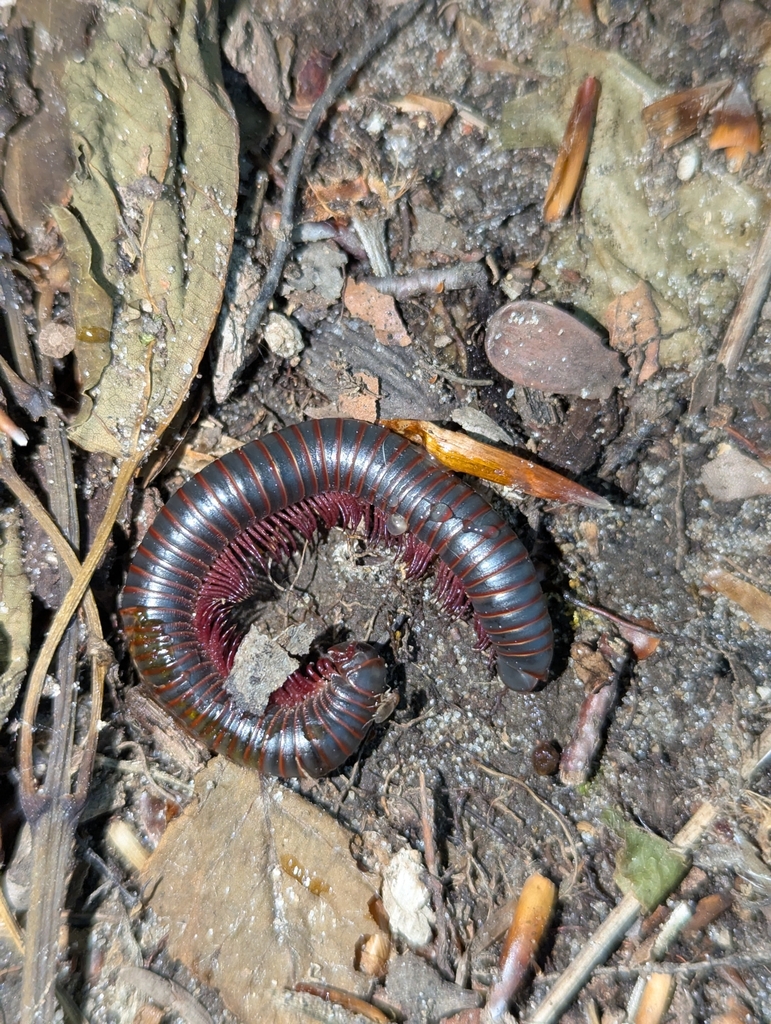
!Is the american giant millipede dangerous?
Only mildly. Not venomous or aggressive. Does not bite. If handled it may release a defensive fluid that can cause mild skin irritation or discoloration; avoid contact with eyes and wash skin with soap and water if exposed. In rare cases people with sensitive skin may react more strongly.
Pets
Generally harmless to cats and dogs. The secretion can cause mild irritation or drooling if a pet mouths a millipede; wash the pet's mouth and contact a veterinarian if symptoms persist.
📖Overview
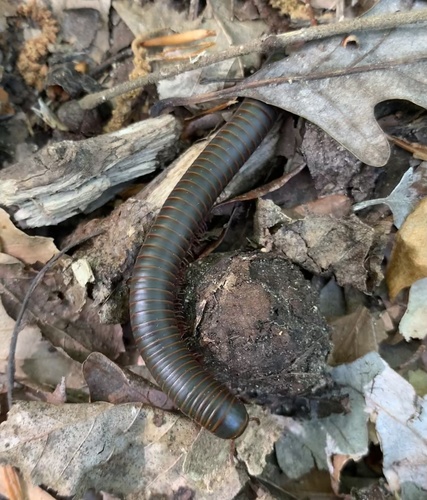
Narceus americanus is one of the largest and most familiar millipedes in eastern North America. Adults are cylindrical, slow-moving, and feed on decaying leaves, wood and other detritus. They prefer cool, moist microhabitats such as leaf litter, under logs and stones, compost piles and around foundations. When disturbed they coil into a tight spiral to protect their soft underside and may excrete a mild defensive fluid.
🔍How to identify a american giant millipede
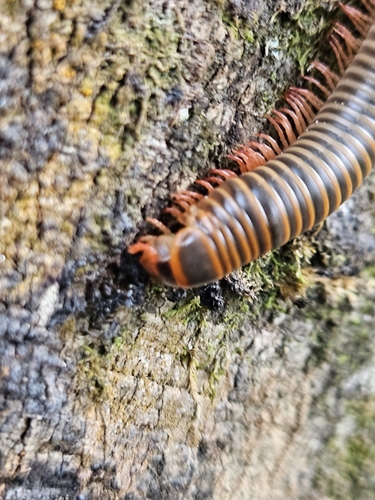
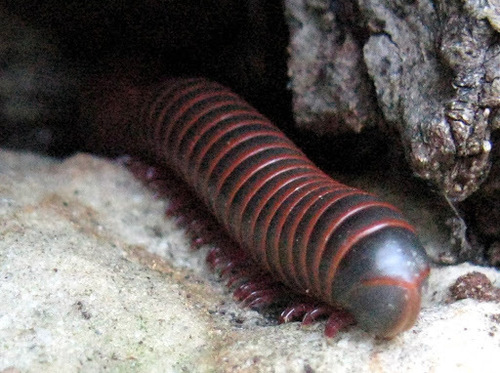
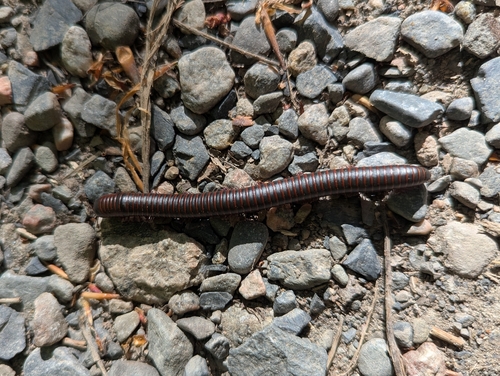
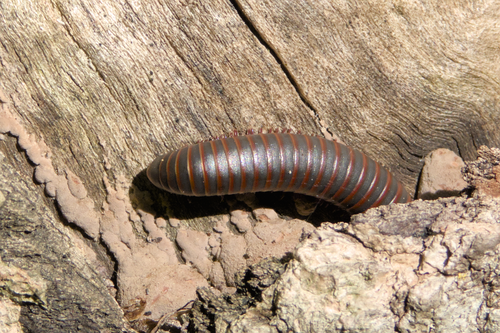
Adults are long, cylindrical and composed of many ring-like segments each bearing two pairs of legs. They typically have alternating bands or subtle color variation along the body: dark brown to black dorsal areas with lighter brown, reddish or cream margins on each segment. When threatened they coil into a tight spiral exposing the harder dorsal plates. Antennae are short and bead-like; legs are numerous and arranged beneath the body.
- Large cylindrical body with many segments, each segment bearing two pairs of legs
- Often 5-10 cm long and coils into a tight spiral when disturbed
- Alternating darker dorsal coloration with lighter margins or subtle banding on segments
- Short bead-like antennae and numerous short legs visible from the sides
Lookalikes
Pill millipede Order Glomerida (various species)
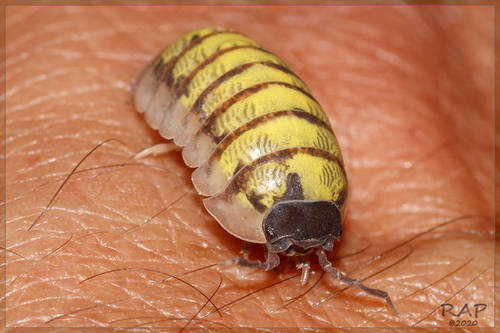
Pill millipedes are shorter, more dome-shaped and can roll into a compact ball, whereas Narceus americanus is elongated and coils into a spiral.
Flat-backed millipedes Order Polydesmida (various species)
Flat-backed millipedes have flattened lateral keels and a more angular profile; Narceus americanus is cylindrical and lacks prominent keels.
Centipedes Class Chilopoda (various species)
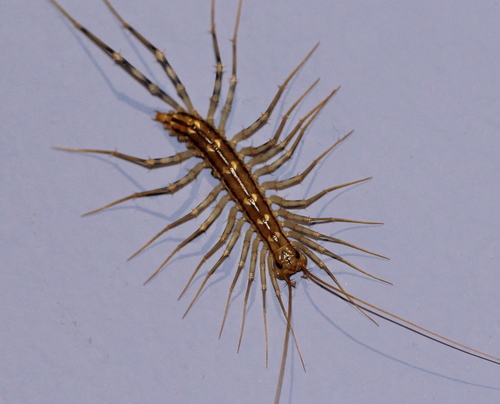
Centipedes are generally faster, dorsoventrally flattened, have one pair of legs per segment and are predatory; millipedes are slow, have two pairs of legs per apparent segment and feed on detritus.
↻Life cycle
Egg
Females lay small clusters of eggs in moist soil or rotting wood. Eggs hatch after several weeks depending on temperature and moisture.
Juvenile (nymph)
Young millipedes hatch with only a few segments and add segments and legs as they molt multiple times. Juveniles resemble adults but are smaller and paler.
Adult
After a series of molts juveniles reach the adult form with the full complement of body segments and reproductive organs. Adults continue to molt periodically.
🍃Diet and predators
Young eat
Decaying leaves, dead wood, fungal material and other detritus
Adults eat
Detritus: leaf litter, decomposing wood, and other decaying plant material; occasionally fungi and soft plant tissue
Predators of the young
Ground beetles, ants, small mammals, birds and centipedes
Predators of adults
Predatory ground beetles, shrews, foxes, birds; their coiling defense and chemical secretion deter some predators
🌱Effect on plants and gardens
Feeds on decaying plant material and helps break down leaf litter and wood, aiding nutrient cycling in soils. Not a pest of healthy living plants or crops.
📍Where and when to find it
Look in leaf litter, under logs, stones and loose bark, in compost piles and around foundations. Juveniles are found in the same moist microhabitats but are much smaller and paler.
Best time
Spring through fall in temperate regions; nocturnal so best found at night or after rain.
Observation tips
Search after rain, turn over logs and leaf litter carefully, use a flashlight for nighttime observation, and wear gloves if handling to avoid skin contact with defensive secretions.
✨Fun facts
- Narceus americanus is one of the largest millipedes in eastern North America and can live several years.
- Millipedes are important recyclers: a single millipede helps break down leaf litter, returning nutrients to the soil.
- They do not bite or sting; their main defense is coiling and a mildly irritating chemical secretion.
?Frequently asked questions
Are American giant millipedes dangerous?
No — they are not venomous or aggressive. They do not bite, but can release a defensive fluid that may irritate skin or stain surfaces.
Do American giant millipedes bite or sting?
No. They cannot sting and do not bite. Their main defense is curling up and secreting a mild irritant.
Why is this millipede in my house?
They enter homes seeking cool, moist places such as basements, bathrooms, or crawl spaces, or are accidentally brought in on potted plants or firewood.
How do I get rid of millipedes?
Reduce moisture and remove leaf litter, wood piles and mulch close to the foundation, seal gaps and doors, use a dehumidifier in basements, and remove individuals by hand or with a broom. Chemical control is usually unnecessary.
Where does Narceus americanus live?
In moist, sheltered microhabitats across eastern and central North America: leaf litter, rotting logs, under stones, compost and garden mulch.
📷Photos of the american giant millipede
More other creepy crawlies
This guide was written with AI assistance and fact-checked, last updated 2026-10-09. Identification from photos is never certain: don't handle insects you can't identify, and get medical advice for bites, stings or allergic reactions.