
Pill millipede
Glomeris marginata · Pill millipedes
A small, dark, rounded millipede that rolls into a tight ball when disturbed and feeds on decaying plant matter.
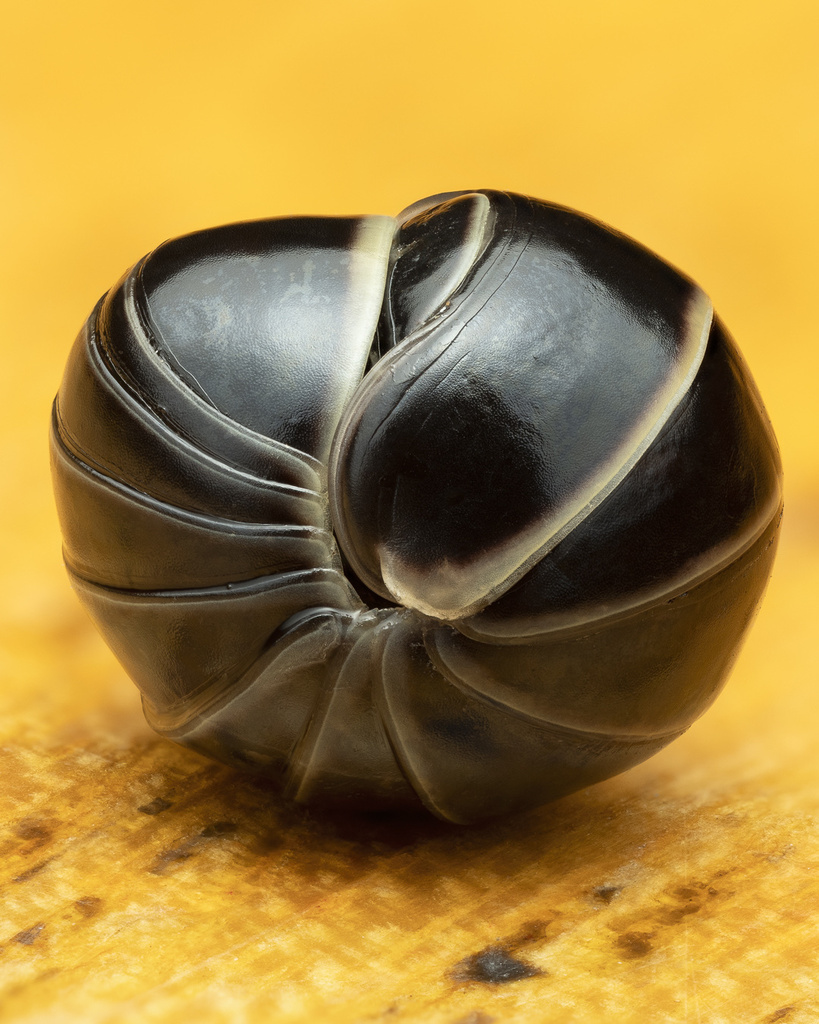
!Is the pill millipede dangerous?
No. Not dangerous. Pill millipedes do not bite or sting. Some species can secrete defensive fluids that may cause mild skin irritation in sensitive people; wash skin with soap and water if contact occurs.
Pets
Generally harmless to pets. Pets that eat many millipedes may experience mild stomach upset; do not encourage pets to eat them.
📖Overview
Glomeris marginata is a compact, oval millipede native to much of Europe and commonly found in gardens, woodland leaf litter and hedgerows. It is a detritivore that helps break down dead leaves and other organic matter. When threatened it curls into a tight ball (volvation), exposing a smooth outer shell of overlapping plates. It is slow-moving and harmless to people.
This species is often abundant where moisture and decaying plant material are available. Individuals develop by adding body segments through successive molts; juveniles resemble small, less-segmented adults. It tolerates a range of temperate habitats and is one of the most frequently encountered millipedes in western Europe.
🔍How to identify a pill millipede
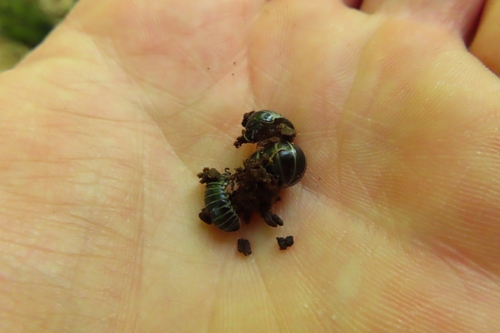
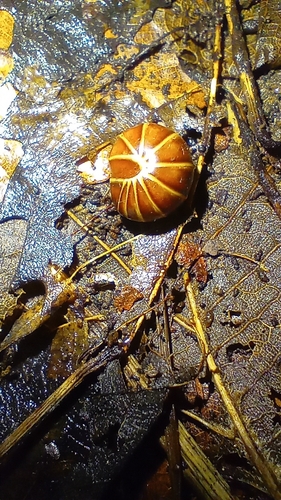
Adults are short, stout and dome-shaped in profile with 12 shiny, overlapping dorsal plates (tergites), including a large shield behind the head and a broad rear plate. The body is typically glossy black to dark brown, with a pale whitish or yellowish edge along the rear margin of each plate; some individuals show reddish-brown tones or faint spots. The body rolls into a smooth, almost perfect ball. Adults have 17 pairs (females) or 19 pairs (males) of short legs that are not easily visible from above.
- Small, dome-shaped body that rolls into a tight ball (volvation) when disturbed.
- Glossy dark dorsal plates, each with a pale whitish or yellowish rear edge.
- Short, compact appearance with legs mostly hidden under the body when viewed from above.
- Size typically 7-20 mm; adults have a smooth, rounded outline rather than elongate cylindrical shape.
Lookalikes
Glomeris connexiva Glomeris connexiva
G. connexiva often shows different colour patterns and spots on tergites; G. marginata typically has a continuous pale marginal stripe rather than distinct spots.
Common pill woodlouse Armadillidium vulgare
The pill woodlouse is a crustacean with 7 pairs of legs and many narrow segments ending in two short tail plates; the pill millipede has many more legs, a broad shield behind the head, a large rounded rear plate and a glossier, smoother shell.
↻Life cycle
Egg
Laid in moist soil or leaf litter; small clutches. Eggs hatch into juveniles after a variable incubation period depending on temperature and moisture.
Juvenile (nymph)
Juveniles hatch with fewer segments and legs, then molt repeatedly, adding segments each molt until the adult number is reached.
Adult
Sexually mature, with full complement of segments and legs; adults reproduce and continue the life cycle, living multiple years in suitable conditions.
🍃Diet and predators
Young eat
Decaying leaves, rotting wood and fungal material (same detritivorous diet as adults).
Adults eat
Primarily decomposing organic matter and fungi.
Predators of the young
Small ground beetles, centipedes, spiders, birds and small mammals.
Predators of adults
Birds, hedgehogs, toads, ground beetles and small mammals; ability to roll into a ball and defensive secretions reduce predation risk.
🌱Effect on plants and gardens
Feeds on decaying leaves, dead plant material and fungal hyphae; does not typically damage healthy living plants and is beneficial for nutrient cycling.
📍Where and when to find it
Look in leaf litter, under logs, stones, bark and in garden mulch. Adults and juveniles are most often found in moist microhabitats rich in decaying leaves.
Best time
Best searched for in spring through autumn in damp weather, at night or after rain when they are active on the surface.
Observation tips
Gently sift leaf litter or lift logs and stones slowly. Photograph from above to show the pale marginal line and overall shape; use a macro setting for small individuals.
✨Fun facts
- Pill millipedes can roll into a ball like pillbugs (woodlice) but are unrelated; this is an example of convergent evolution.
- They are important recyclers in woodland ecosystems, helping release nutrients from dead leaves back into the soil.
- Glomeris marginata is one of the most commonly observed millipedes in European gardens and woodlands.
?Frequently asked questions
Are pill millipedes harmful to people?
No, they are harmless to people. They do not bite or sting; some may produce a mild defensive secretion that can irritate sensitive skin.
Do pill millipedes eat plants in my garden?
Generally no. They feed on decaying plant material and fungi and are beneficial for soil health. They rarely damage living plants.
Why is a pill millipede in my house?
They enter buildings seeking moisture and cool, sheltered spots, especially in damp basements or around foundations. They do not infest houses like pests do.
How do I get rid of pill millipedes?
Reduce moisture and remove leaf litter, mulch piles and decaying wood near foundations. Seal entry gaps and use a broom or vacuum to remove indoor individuals. Chemical control is rarely needed.
Can pill millipedes roll into a ball?
Yes. Glomeris marginata uses volvation (rolling into a tight ball) as a defensive behavior to protect its underside and legs.
📷Photos of the pill millipede
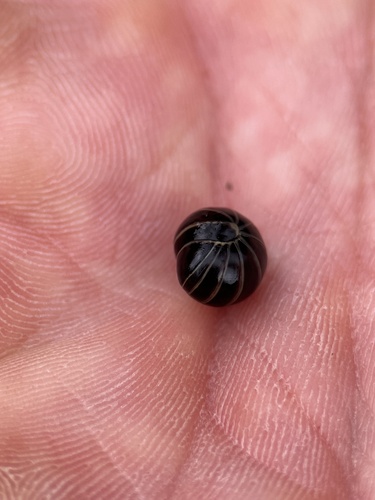
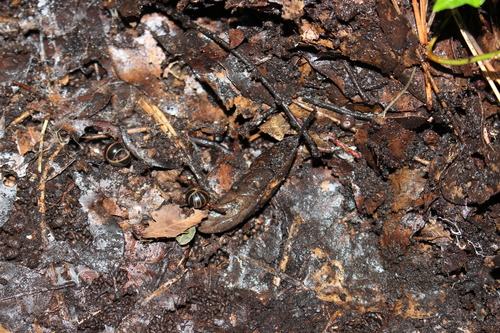
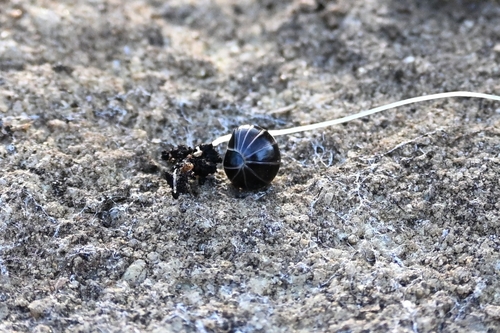
More centipedes & millipedes
Mild bite
Irritating secretion
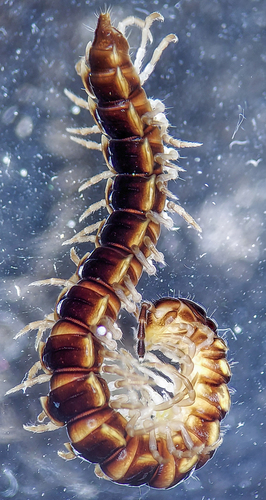
Non-toxic
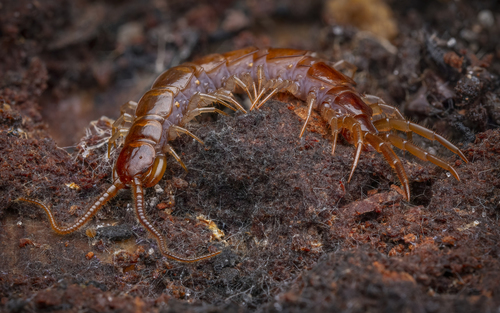
Mild bite
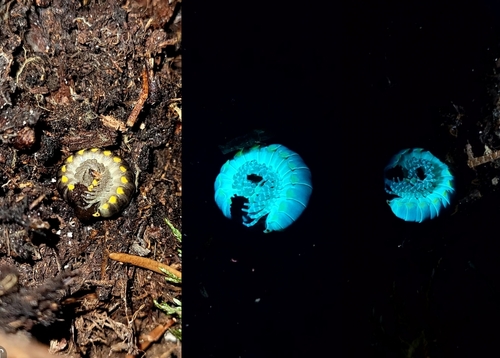
Produces cyanide
Venomous bite
This guide was written with AI assistance and fact-checked, last updated 2026-10-10. Identification from photos is never certain: don't handle insects you can't identify, and get medical advice for bites, stings or allergic reactions. More about the pill millipede: iNaturalist, Wikipedia.