
Giant African millipede
Archispirostreptus gigas · Round-backed millipedes
One of the largest millipedes in the world, a slow-moving, non-venomous detritivore that feeds on decaying plant material and is commonly kept as a pet.

!Is the giant African millipede dangerous?
Only mildly. Not venomous and do not bite as a defense. When stressed they can release a defensive fluid that may irritate skin or eyes and can stain clothing. Wash skin with soap and water if contact occurs; avoid touching your eyes after handling; rinse eyes with plenty of clean water and seek medical attention if irritation is severe or persistent.
Pets
Generally not dangerous to pets but secretions can irritate pet skin or mucous membranes; small pets that chew or eat millipedes may become sick and should be monitored or seen by a vet if they show signs of distress.
📖Overview
Archispirostreptus gigas is a large, slow-moving millipede native to parts of East Africa. It feeds on decaying leaves, wood and other plant matter and plays an important role in nutrient recycling. Adults can reach substantial lengths and are popular in the pet trade and classroom displays because they are easy to handle when calm.
These millipedes are primarily nocturnal or crepuscular and spend daylight hours hidden under logs, leaf litter or in burrows. When disturbed they curl into a tight spiral to protect their softer underside and may release a defensive fluid that can irritate skin or eyes. They are not venomous and do not bite in the way predatory arthropods do.
🔍How to identify a giant African millipede
Adults are cylindrical, composed of many body segments each with two pairs of legs, giving a dense banded appearance. Colour varies from dark brown to black or reddish-brown, often with a glossy, slightly striated exoskeleton. When threatened they roll into a coil exposing the harder dorsal plates. Males are generally smaller and slimmer than females; females can appear stouter particularly when gravid.
- Very large cylindrical body up to about 20-38 cm long with many segments.
- Each body segment bears two pairs of legs, producing a dense, banded-looking underside.
- Glossy dark brown to black or reddish-brown dorsal plates; curls into a tight spiral when disturbed.
- Slower moving than centipedes and lacks the flattened, fast-bodied appearance and visible long legs of centipedes.
Lookalikes
American giant millipede Narceus americanus
Also a dark, round-backed millipede that coils when disturbed, but much smaller (up to about 10 cm), often with reddish edges to the segments, and native to eastern North America.
Other spirostreptid millipedes Spirostreptidae (various species)
Related large round-backed millipedes may look similar; A. gigas is among the largest and has a robust cylindrical body and specific regional range.
↻Life cycle
Egg
Females lay clusters of eggs in moist soil or rotting wood; incubation time varies with temperature and humidity.
Juvenile (nymph)
Hatchlings resemble small adults but with fewer segments and legs; they grow by molting and add segments at each molt.
Adult
After multiple molts juveniles reach adult size and reproductive maturity; adults continue to molt periodically.
🍃Diet and predators
Young eat
Decaying plant material, leaf litter, rotting wood; juveniles may accept softer fruits in captivity
Adults eat
Detritivore; primarily dead leaves, decaying wood and other decomposing vegetation; may also consume soft fruits and vegetable scraps in captivity
Predators of the young
Birds, small mammals, amphibians, reptiles and predatory insects
Predators of adults
Larger birds, small mammals, some reptiles and invertebrate predators; curling and chemical defenses reduce predation
🌱Effect on plants and gardens
Feeds on dead and decaying plant material; helps break down leaf litter and return nutrients to the soil. Not a primary pest of live crops or healthy plants.
📍Where and when to find it
Look under logs, rocks, leaf litter, rotting wood and in soil crevices. In captivity they are often found in the moist substrate of their enclosure.
Best time
Night and early evening are best for observing them; active year-round in warm climates.
Observation tips
Use a soft light and approach slowly. Photograph from above or at slight angle to show the cylindrical body and leg pairs. Keep them moist and minimize handling stress if observing in captivity.
✨Fun facts
- Giant African millipedes can live many years in captivity, sometimes 5-10 years with good care.
- They have two pairs of legs per body segment — that is a defining trait of millipedes (Diplopoda).
- Instead of venom or a bite, their main defense is curling up and using a chemical secretion that can deter predators.
?Frequently asked questions
Do giant African millipedes bite?
No. They are detritivores with chewing mouthparts for eating decaying plant matter and are not aggressive biters.
Do giant African millipedes spray acid or poison?
They secrete a defensive fluid that can irritate skin or eyes and may have a noticeable smell. It is not delivered as a spray or venomous bite. Avoid handling them with bare hands if you are concerned; wash hands after handling.
Why is a giant African millipede in my house?
They are attracted to damp, dark places and decaying organic matter. They may wander indoors seeking moisture or shelter, especially during wet weather.
How do I get rid of giant African millipedes in my home?
Gently pick them up (use gloves) and release them outdoors away from the house. Reduce moisture, seal entry points, remove leaf litter and woodpiles near foundations to make your home less attractive to them.
Are giant African millipedes good for my garden?
Yes. They are beneficial decomposers that help break down organic matter and return nutrients to the soil; they rarely damage healthy plants.
More centipedes & millipedes
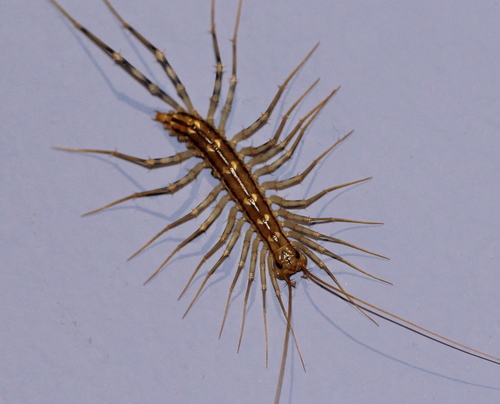
Mild bite
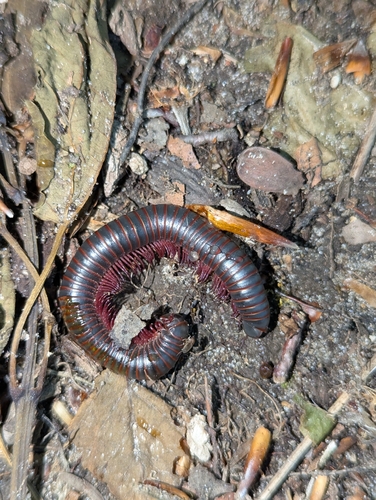
Irritating secretion
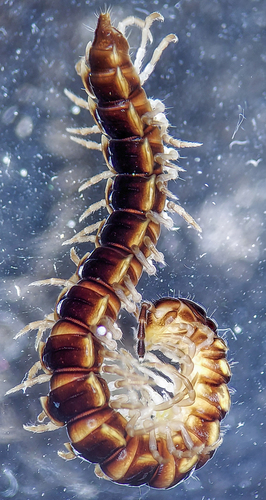
Non-toxic
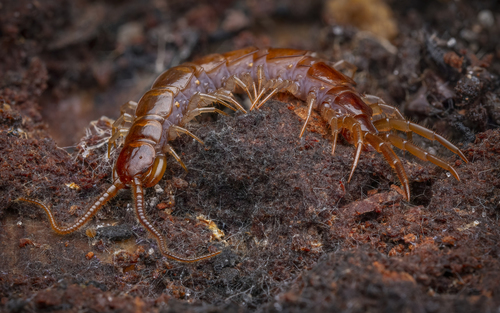
Mild bite
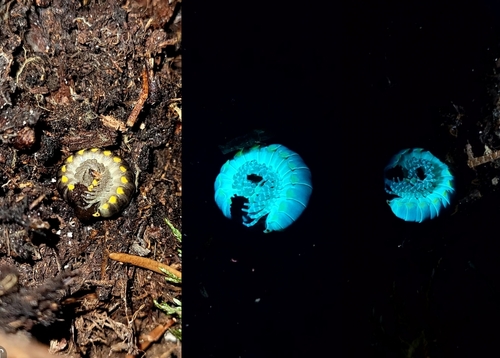
Produces cyanide
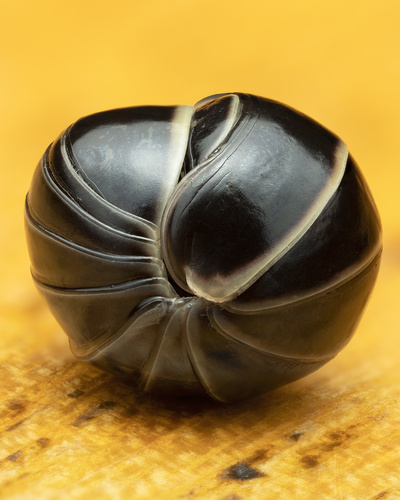
Non-toxic
This guide was written with AI assistance and fact-checked, last updated 2026-10-10. Identification from photos is never certain: don't handle insects you can't identify, and get medical advice for bites, stings or allergic reactions. More about the giant African millipede: iNaturalist, Wikipedia.