
House centipede
Scutigera coleoptrata · House centipedes
A fast-moving, many-legged predator that commonly lives inside damp houses and feeds on household pests.
!Is the house centipede dangerous?
Only mildly. House centipedes are venomous to their small prey but rarely bite people. Bites can cause local pain, redness and mild swelling for a few hours; severe reactions are rare. If bitten, wash the area with soap and water, apply a cold pack for comfort, and seek medical care if swelling or allergic symptoms worsen.
Pets
Unlikely to seriously harm dogs or cats; a bite may cause brief local irritation. Pets that eat centipedes could get mild oral irritation or vomiting in some cases.
📖Overview
Scutigera coleoptrata is a long-legged centipede often found inside buildings. It hunts small arthropods such as spiders, cockroaches, silverfish and moths, and is valued by some people for reducing pest insects. It prefers cool, humid microhabitats such as basements, bathrooms and wall voids. Adults are nocturnal and very quick-moving; they are more often seen at night or after disturbance.
Although a member of the arthropods, it is not an insect but a centipede (class Chilopoda). Bites are rare and usually only occur if the animal is handled roughly; any bite typically causes only mild, short-lived local pain and swelling in people. House centipedes are originally Mediterranean in origin but now occur across much of the world in buildings and gardens.
🔍How to identify a house centipede
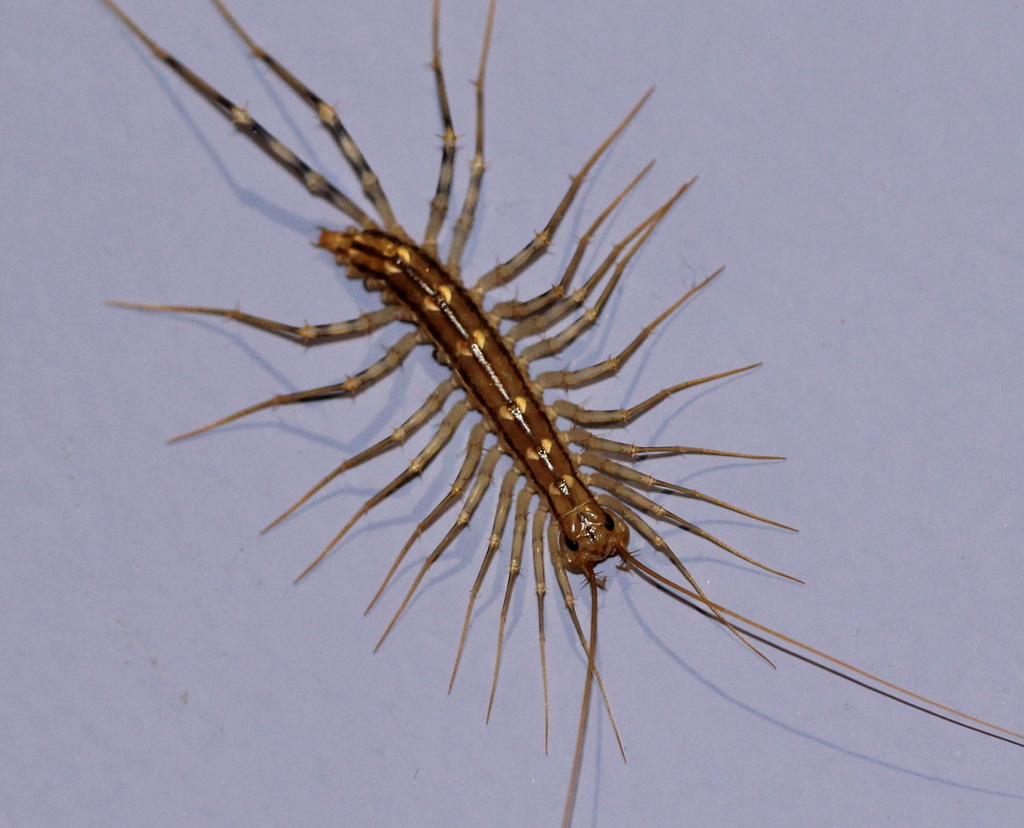
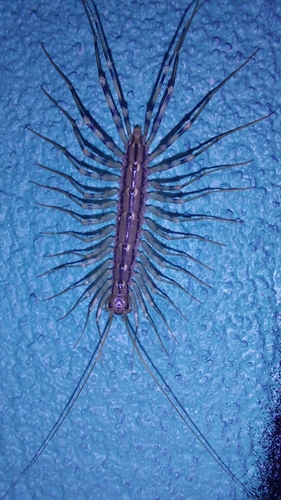
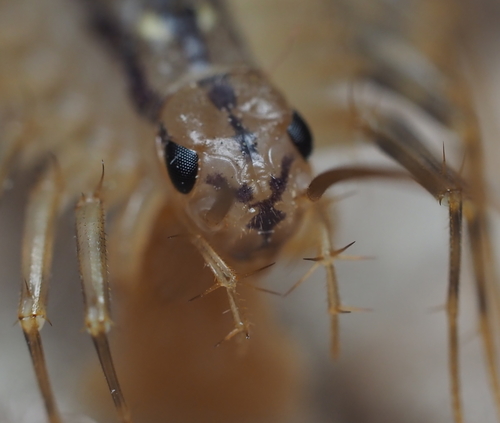
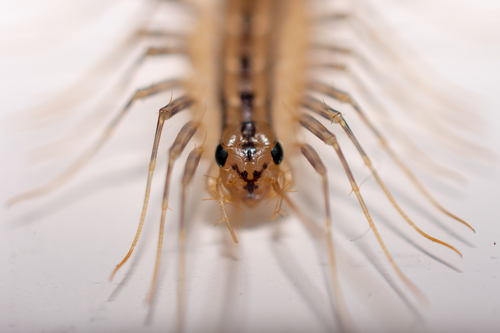
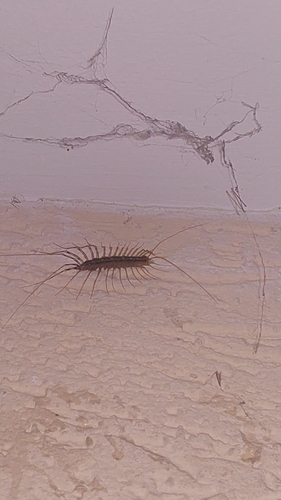
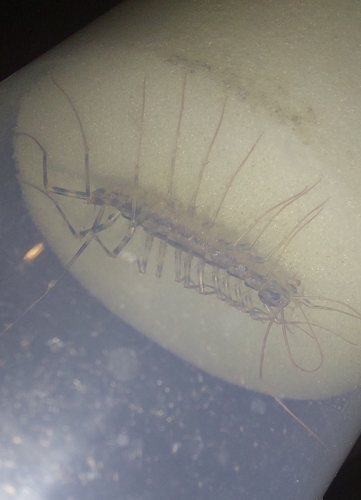
Adults have a flattened, elongated body up to about 25-40 mm long (body only) with 15 pairs of very long, slender legs that extend well beyond the body sides. The body is banded with alternating pale and darker stripes; antennae are long and many-segmented. Legs are delicate and fringed; the last pair is elongated and tail-like. Movement is rapid and wave-like, making them easy to recognise in the home.
- Very long, many-segmented legs (15 pairs) giving a fringed appearance and fast, wave-like movement
- Body length 25-40 mm with long antennae and banded pale and darker stripes
- Very flattened, elongated body with last pair of legs elongated into a tail-like appendage
- Seen running quickly on walls, ceilings or floors at night rather than slow-moving like soil-dwelling centipedes
Lookalikes
Stone centipede Lithobius spp.
Lithobius are shorter, stouter with fewer visible legs (7-15 pairs), lack the very long fringe-like legs and are slower; they are more strictly ground-dwelling.
Giant house spider Eratigena atrica
Spiders have 8 legs and two body parts; house centipedes have 15 pairs of long legs, long antennae and a long, flattened segmented body.
↻Life cycle
Egg
Females lay clusters of eggs in protected, damp sites. Eggs hatch into young that resemble miniature adults.
Nymph (juvenile)
Young appear like small adults but with fewer leg pairs; they add legs as they molt and grow. Juveniles are predatory from an early stage.
Adult
Adults have the full complement of 15 leg pairs and reproduce after maturity; they continue to molt periodically.
🍃Diet and predators
Young eat
Small arthropods such as springtails, mites, small insects
Adults eat
Spiders, cockroaches, silverfish, flies and other household arthropods; strictly carnivorous
Predators of the young
Spiders, beetles, small vertebrates and larger centipedes
Predators of adults
Spiders, birds, rodents, larger arthropod predators, and some small mammals
🌱Effect on plants and gardens
Does not feed on plants; feeds on small arthropods and can reduce numbers of household pests
How to get rid of house centipedes
Reduce humidity and clutter, fix leaks, seal cracks around doors and windows, remove piles of boxes and debris, reduce other household arthropods (their prey) through hygiene and traps. Capture and release outdoors with a jar and cardboard, or use sticky traps if removal is desired. Insecticide sprays provide temporary reduction but are usually unnecessary for control.
📍Where and when to find it
Look at night on walls, ceilings, in basements, bathrooms, closets, behind furniture and around window/door frames. Outdoors check under stones, logs and leaf litter.
Best time
Night-time is best; visible year-round indoors, more common to see them during warm or damp conditions.
Observation tips
Use a flashlight at night to spot them on walls and ceilings. Move slowly to avoid startling them; they run quickly and may hide in cracks.
✨Fun facts
- Despite their delicate look, house centipedes are fast, agile hunters that use their long legs to trap prey such as silverfish and cockroaches before injecting venom.
- They add leg pairs as they molt: juveniles hatch with fewer legs and gain more with successive molts.
- They can run across ceilings and walls using their many long legs to move quickly and with surprising stability.
?Frequently asked questions
Do house centipedes bite?
Bites are rare and usually occur only if the animal is handled or trapped. A bite may cause brief local pain, redness and swelling; severe reactions are uncommon.
Are house centipedes dangerous?
No—house centipedes are not considered dangerous. They have venom for subduing small prey, but risk to humans is low and effects are normally mild.
Why do I have house centipedes in my house?
They are attracted to damp, sheltered places and to homes that have abundant prey (other insects and spiders). Basements, bathrooms and cluttered storage areas are common locations.
How do I get rid of house centipedes?
Reduce moisture and clutter, seal entry points, remove other household pests (their food), use sticky traps or capture and release. Chemical sprays can reduce numbers but are usually unnecessary.
Where do house centipedes live outdoors?
Outdoors they live under stones, logs and leaf litter in cool, moist habitats; indoors they hide in dark, damp areas such as basements and bathrooms.
📷Photos of the house centipede
More other creepy crawlies
This guide was written with AI assistance and fact-checked, last updated 2026-10-09. Identification from photos is never certain: don't handle insects you can't identify, and get medical advice for bites, stings or allergic reactions.