
Giant desert centipede
Scolopendra heros · Centipedes
A large, nocturnal, venomous centipede of the southwestern United States and Mexico that preys on insects and small vertebrates.
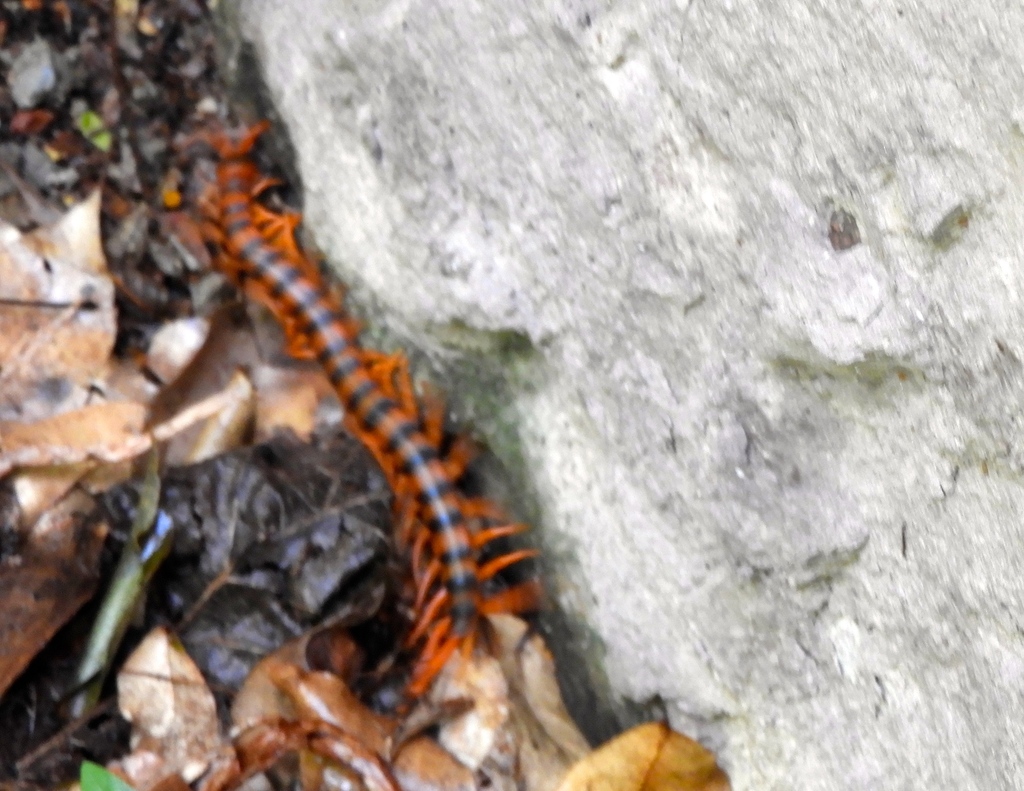
!Is the giant desert centipede dangerous?
Yes, it can be. Bites are painful and inject venom that causes immediate pain, swelling and sometimes numbness, nausea or headache. Allergic reactions are possible. Most healthy adults recover without long-term harm; seek medical care if symptoms are severe, if the victim is a child, elderly or has a heart condition, or if signs of infection appear. If someone has trouble breathing, swelling of the face or throat, or feels faint after a bite, call emergency services immediately and use an epinephrine auto-injector if one has been prescribed. First aid: wash the wound, apply a cold pack to reduce swelling, immobilize the limb, and seek medical advice for pain control and tetanus status.
Pets
Can bite small pets (rodents, small reptiles, kittens, puppies), causing pain, localized swelling and distress. Larger dogs and cats are usually not seriously harmed but should be checked by a veterinarian if bitten or if swelling or unusual behavior occurs.
📖Overview
Scolopendra heros is a large scolopendrid centipede found in the south-central and southwestern United States and northern Mexico. It is chiefly nocturnal, hiding under rocks, logs and debris by day and hunting at night. Adults are opportunistic predators that feed on insects, spiders and occasionally small lizards, frogs and rodents. They deliver venomous bites with their front forcipules; bites are painful and can cause localized swelling and systemic symptoms in some people, but are rarely life-threatening to healthy adults.
This species prefers warm, dry habitats such as deserts, rocky slopes and scrubland, but it will enter human structures seeking shelter or prey. It is solitary except when mating or guarding eggs; females brood their eggs and young for a period after hatching.
🔍How to identify a giant desert centipede
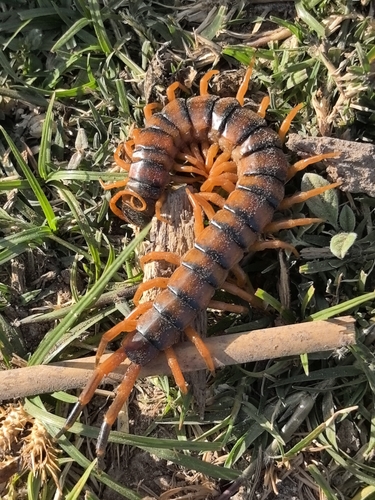
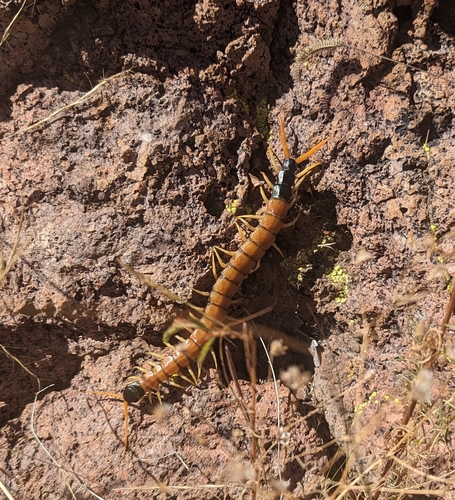
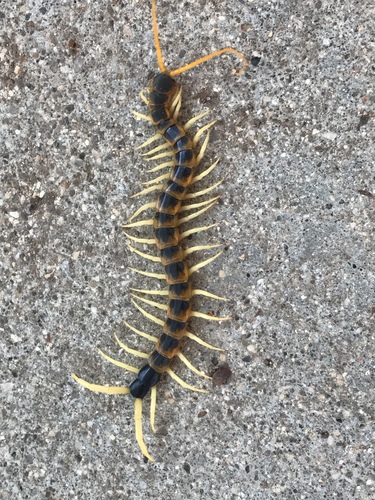
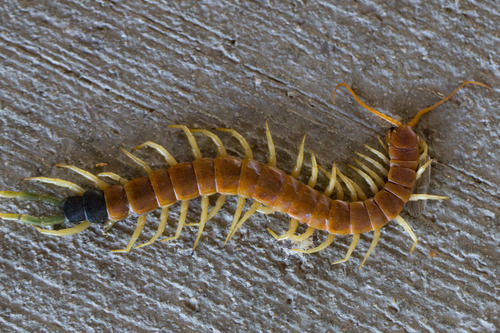
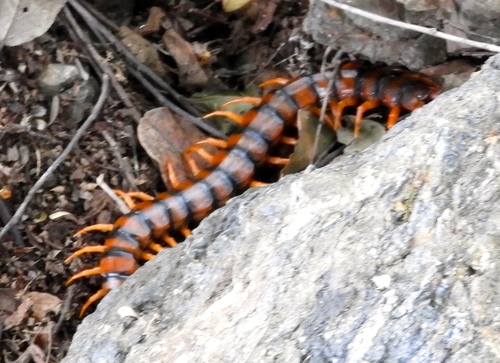
Adults of Scolopendra heros are large and robust, typically with 21 (rarely 23) pairs of legs and a flattened, elongated body. Body color varies by population and subspecies but often shows a contrasting head and body: a reddish or orange head and first segments, with darker midbody and posterior segments (brown to nearly black). The terminal legs may be lighter or show reddish tones. The appendages of the first body segment are modified into venom-injecting forcipules (pincer-like), and the last pair of legs are elongated. Adults can reach lengths commonly 10-18 cm, occasionally longer.
- Large size (commonly 10-18 cm) with many visible body segments and usually 21 pairs of legs
- Distinctive contrasting head color (often reddish) with darker midbody segments
- Forcipules (pincer-like first legs) visible near the head used to inject venom
- One pair of legs per body segment and a pair of long antennae; no wings; body is dorsoventrally flattened
Lookalikes
Striped desert centipede Scolopendra polymorpha
Usually smaller (up to about 10-13 cm), tan to brown with a dark band across each body segment; S. heros is larger and more robust, typically with a red or black head and a dark body without that striping.
↻Life cycle
Egg
Female lays a clutch of eggs in a burrow or sheltered cavity and coils around them to guard and ventilate them.
Juvenile (post-egg)
Young hatch with the full number of body segments and legs, looking like pale miniature adults, and grow larger with each of several molts until maturity.
Adult
Sexually mature centipedes mate; females often continue to guard broods. Adults remain solitary predators.
🍃Diet and predators
Young eat
Small invertebrates such as insects and mites; newly hatched individuals take proportionally smaller prey
Adults eat
Insects, spiders, scorpions, and occasionally small vertebrates such as lizards, frogs or mice
Predators of the young
Spiders, predatory insects, small reptiles and birds
Predators of adults
Mammals (such as skunks, coyotes and shrews), birds, snakes and other ground-dwelling predators; humans may kill them when encountered
🌱Effect on plants and gardens
Does not feed on plants; is a predator of insects and small vertebrates and can help reduce pest invertebrates.
📍Where and when to find it
Look under stones, logs, fallen cactus ribs, and in crevices; at night they may be seen actively hunting on the ground. Juveniles are found in similar sheltered microhabitats but are smaller and closer to moist refuges.
Best time
Spring through fall evenings and nights when temperatures are warm
Observation tips
Use a flashlight at night and look under objects rather than overturning them with bare hands. Wear gloves when handling, and place individuals in a jar or on a flat object to photograph.
✨Fun facts
- Centipedes are not insects: they belong to the class Chilopoda and always have an odd number of leg pairs (usually 21 in Scolopendra heros).
- Females brood their eggs and young, coiling around the clutch to protect and ventilate them.
- They can subdue surprisingly large prey relative to their size using venomous forcipules (modified legs).
?Frequently asked questions
Are giant desert centipedes dangerous?
They are venomous and can deliver a painful bite; bites usually cause local pain and swelling and rarely cause serious systemic effects in healthy adults. Seek medical care if symptoms are severe or if the victim is a child, elderly or has underlying health issues.
Do giant desert centipedes bite people?
Yes, they can bite when handled or threatened. Bites are painful because of the venom and mechanical puncture.
Why is one in my house?
They enter houses seeking shelter, moisture and prey (insects). Common entry points are cracks, gaps under doors, crawl spaces and piles of debris near foundations.
How do I get rid of them?
Reduce attractive habitat: remove rock and wood piles, seal cracks and gaps, store firewood off the ground, reduce moisture. Use gloves and a container to remove individuals. For heavy infestations, professional pest control can apply targeted insecticide treatments around foundations and entry points.
Where do they live?
In arid and semi-arid regions under rocks, logs, leaf litter and inside burrows. In human settings they are found around foundations, basements and garages.
📷Photos of the giant desert centipede
More centipedes & millipedes
Mild bite
Irritating secretion
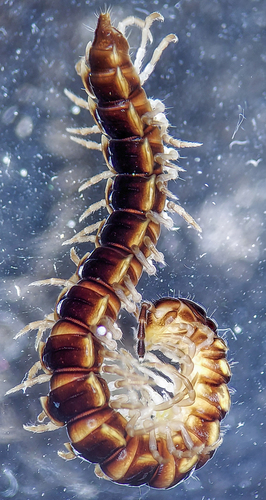
Non-toxic
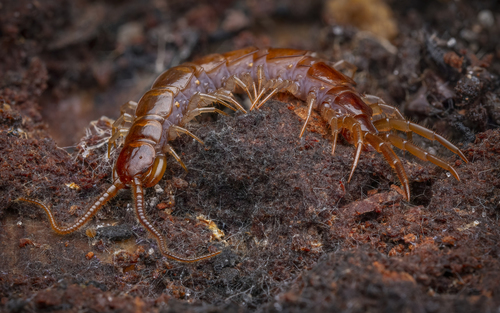
Mild bite
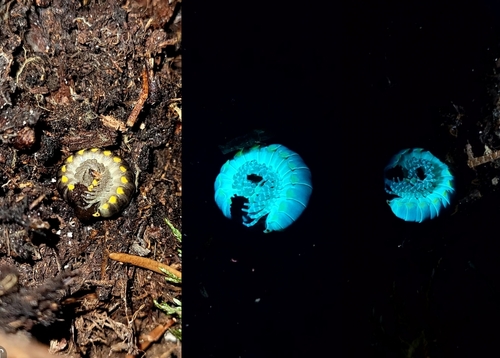
Produces cyanide
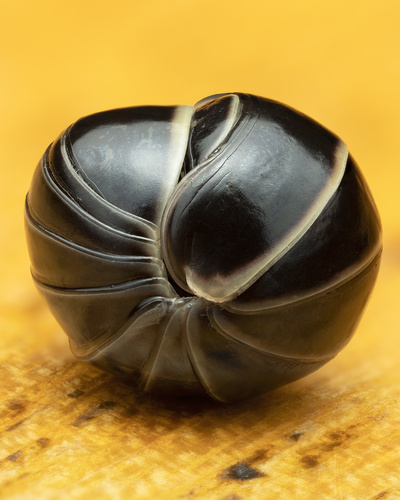
Non-toxic
This guide was written with AI assistance and fact-checked, last updated 2026-10-10. Identification from photos is never certain: don't handle insects you can't identify, and get medical advice for bites, stings or allergic reactions. More about the giant desert centipede: iNaturalist, Wikipedia.