
Greenhouse millipede
Oxidus gracilis · Flat-backed millipedes
A small, cosmopolitan millipede often found in greenhouses and potted plants; a detritivore that rarely harms people but can be a nuisance in large numbers.
!Is the greenhouse millipede dangerous?
No. Does not bite or sting. Can release a weak defensive fluid that in rare cases may cause mild skin irritation or stain clothing and surfaces; wash skin with soap and water if contact occurs. Seek medical advice if a persistent rash or strong reaction develops.
Pets
Generally not dangerous to cats or dogs. Pets that eat large numbers may suffer mild gastrointestinal upset; keep curious pets from ingesting them. The defensive secretions are unlikely to cause serious harm but may irritate mucous membranes.
📖Overview
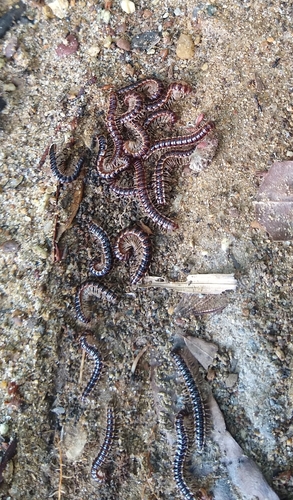
Oxidus gracilis is a small, flattened millipede originally from East Asia that has spread worldwide with the movement of potted plants and soil. It lives in moist, sheltered places rich in decaying plant material, including greenhouses, nurseries, potted plants and garden mulch. Individuals curl up when disturbed and can occur in large numbers in favorable, damp conditions.
They are primarily detritivores that help break down organic matter and recycle nutrients. In greenhouses and indoor plantings they are usually harmless, but very high densities can damage seedlings or tender roots. They do not bite or sting; their main defence is to secrete a mild fluid that can irritate sensitive skin or stain surfaces in some cases.
🔍How to identify a greenhouse millipede
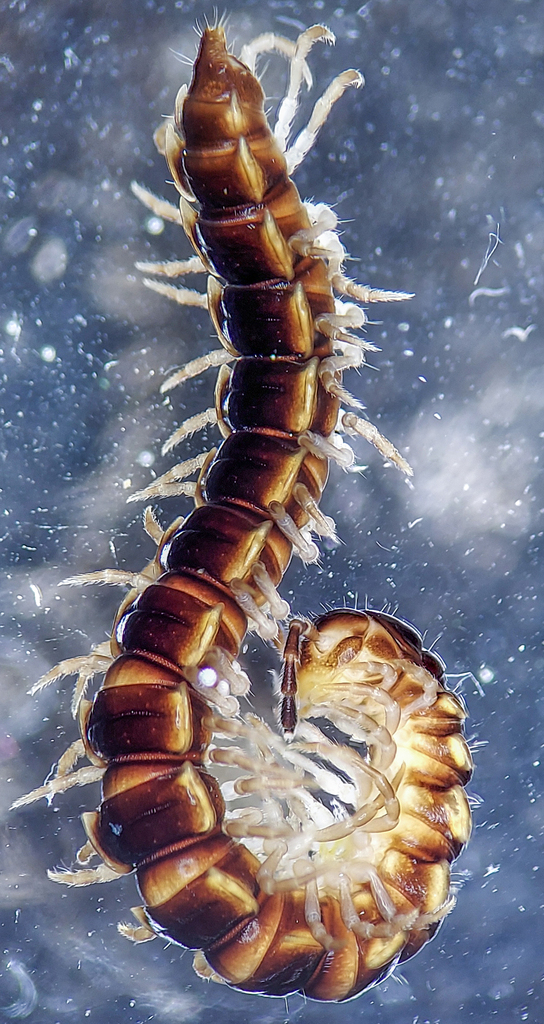
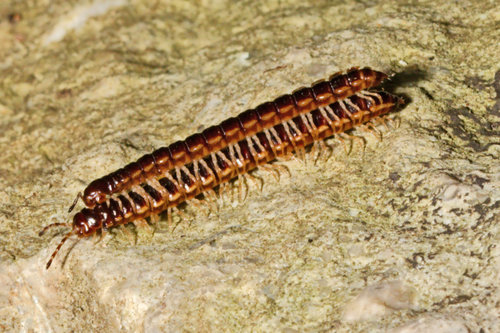
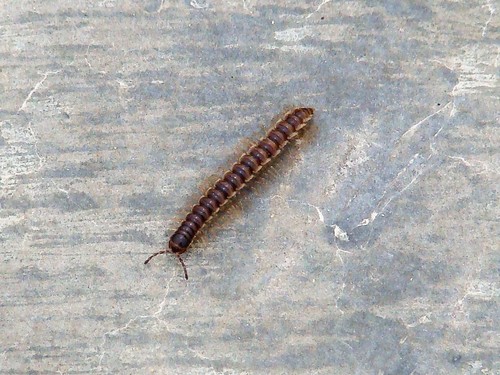
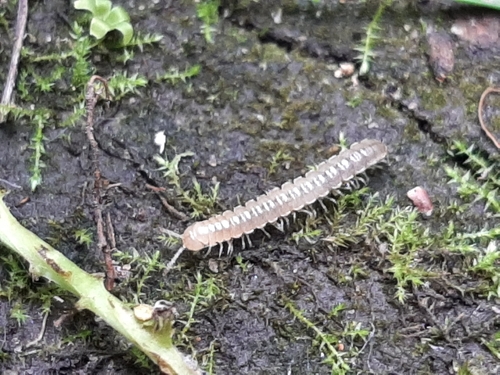
Adults are small, dorsoventrally flattened and segmented with many short legs. Colour is dark brown to nearly black, with pale yellowish lateral keels (paranota) on the body segments giving a flattened outline. When disturbed they curl into a loose coil rather than a tight sphere. New juveniles hatch with only a few pairs of legs and gain additional segments and legs as they grow.
- Small flattened body 8-20 mm long with many short legs and obvious segmental ridges (paranota) along sides
- Uniform pale to dark brown colour with faint segmental banding; lacks the large size and bright rings of some native millipedes
- When disturbed it curls into a loose coil rather than forming a tight ball
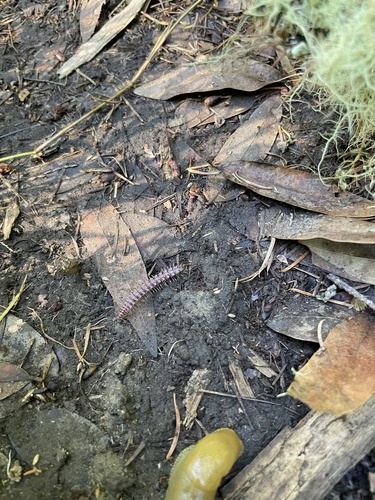
- Commonly found in damp potting soil, under bark, in compost or in greenhouses
Lookalikes
Julid millipedes (e.g. Cylindroiulus spp.) Cylindroiulus spp.
Julids are more cylindrical in cross-section, usually longer and rounder; Oxidus gracilis is dorsoventrally flattened with lateral keels.
American giant millipede Narceus americanus
Narceus is much larger (up to about 10 cm long), cylindrical and robust; O. gracilis is flattened and only about 2 cm long.
↻Life cycle
Egg
Laid in moist soil or organic debris; eggs are deposited in small clusters and hatch in days to weeks depending on temperature and moisture.
Juvenile (nymph)
Young millipedes hatch with fewer segments and legs and add segments through successive molts; juveniles resemble small adults and feed on decaying matter.
Adult
Sexually mature individuals have the full complement of segments and legs and stop molting; adults can live months to a couple of years.
🍃Diet and predators
Young eat
Decaying leaf litter, compost and other decomposing plant material
Adults eat
Mainly decaying organic matter; occasionally soft seedlings, roots or tender plant tissue in high densities
Predators of the young
Ground beetles, centipedes, spiders, small mammals and birds
Predators of adults
Beetles, centipedes, birds, small mammals and amphibians
🌱Effect on plants and gardens
Feeds mainly on decaying plant material and helps decompose organic matter. In very high numbers in confined situations (greenhouses, pots) they may nibble seedlings or roots and cause local damage.
How to get rid of greenhouse millipedes
Reduce moisture and remove excess organic debris where they breed. Improve drainage in pots, allow surface soil to dry between waterings, repot with fresh potting mix if infested, and remove visible animals by hand or with a vacuum. Trapping with shallow dishes of moist leaf litter can concentrate individuals for removal. Chemical controls are rarely necessary indoors; if used, choose labelled products for millipedes and follow instructions or consult a professional.
📍Where and when to find it
Look in moist potting soil, under pots, bark, stones, compost heaps, garden mulch and inside greenhouses. Juveniles are found in the same substrates but are much smaller.
Best time
Any time in heated greenhouses or indoors; outdoors best after rain or in wet seasons and at night or early morning.
Observation tips
Turn over pots and lift the soil surface gently to find millipedes. Use a damp white tray or shallow container to collect and photograph individuals; photographing their dorsal profile helps with identification.
✨Fun facts
- Oxidus gracilis has become nearly global through the plant trade and is one of the most widely distributed millipedes.
- They help break down leaf litter and compost, contributing to nutrient recycling in soils and greenhouse beds.
- Young millipedes hatch with only a few legs and add more legs and segments each time they molt.
?Frequently asked questions
Are greenhouse millipedes harmful to people?
No — they do not bite or sting. Their defensive secretions can occasionally irritate sensitive skin or stain surfaces, so wash with soap and water if you handle them.
Do greenhouse millipedes eat plants or roots?
They mainly eat decaying organic matter. In very high numbers, especially in confined pots or greenhouses, they may nibble seedlings or tender roots and cause damage.
Why are there millipedes in my house or potted plants?
They are attracted to moist, cool conditions and feed and breed in damp potting mix, compost, leaf litter and under debris. Overwatering and lots of organic material encourage them.
How do I get rid of greenhouse millipedes?
Dry out the habitat: reduce watering, remove decaying organic matter, improve drainage and repot if necessary. Handpick or vacuum visible animals. Chemical control is rarely needed indoors.
Will pesticides kill them?
Some insecticides labelled for millipedes can reduce numbers, but pesticides often give only temporary relief unless habitat conditions (moisture and debris) are corrected.
📷Photos of the greenhouse millipede
More centipedes & millipedes
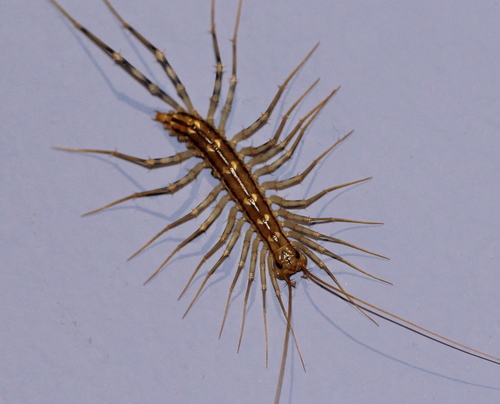
Mild bite
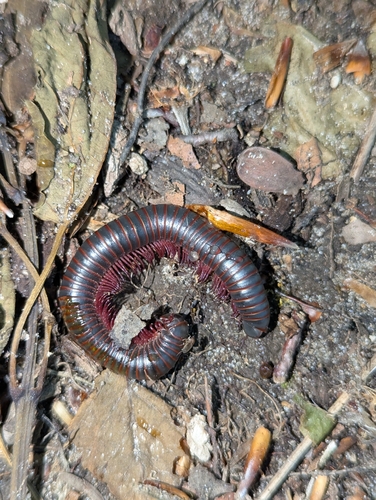
Irritating secretion
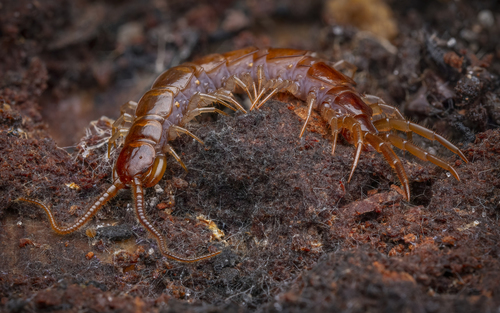
Mild bite
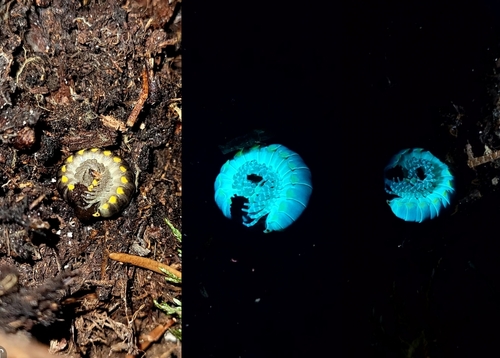
Produces cyanide
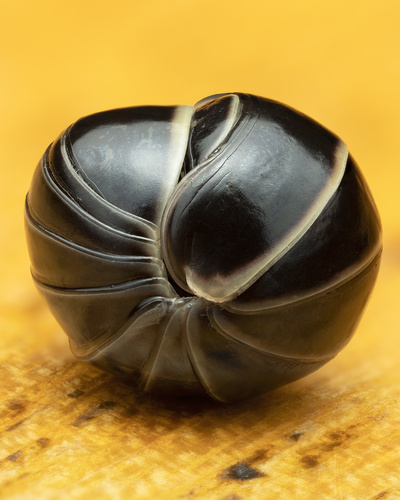
Non-toxic
Venomous bite
This guide was written with AI assistance and fact-checked, last updated 2026-10-10. Identification from photos is never certain: don't handle insects you can't identify, and get medical advice for bites, stings or allergic reactions. More about the greenhouse millipede: iNaturalist, Wikipedia.