
American giant millipede vs Greenhouse millipede
These two are easy to mix up. Here's how to tell an American giant millipede from a greenhouse millipede, and whether either one bites or stings.
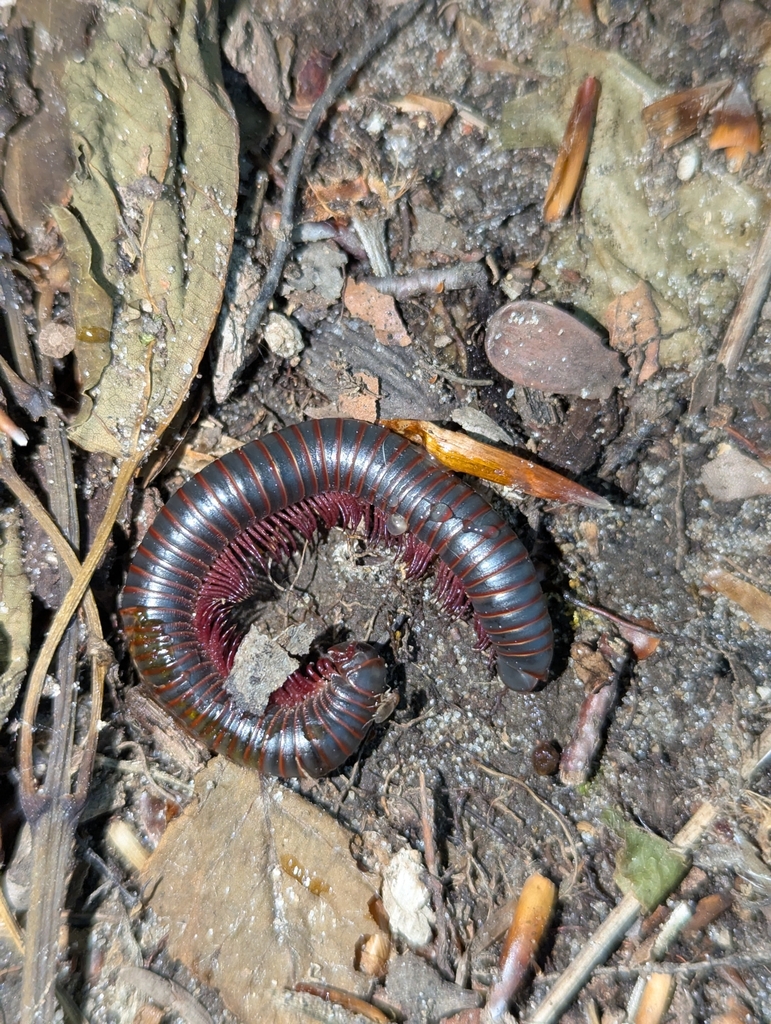
American giant millipede
Narceus americanus
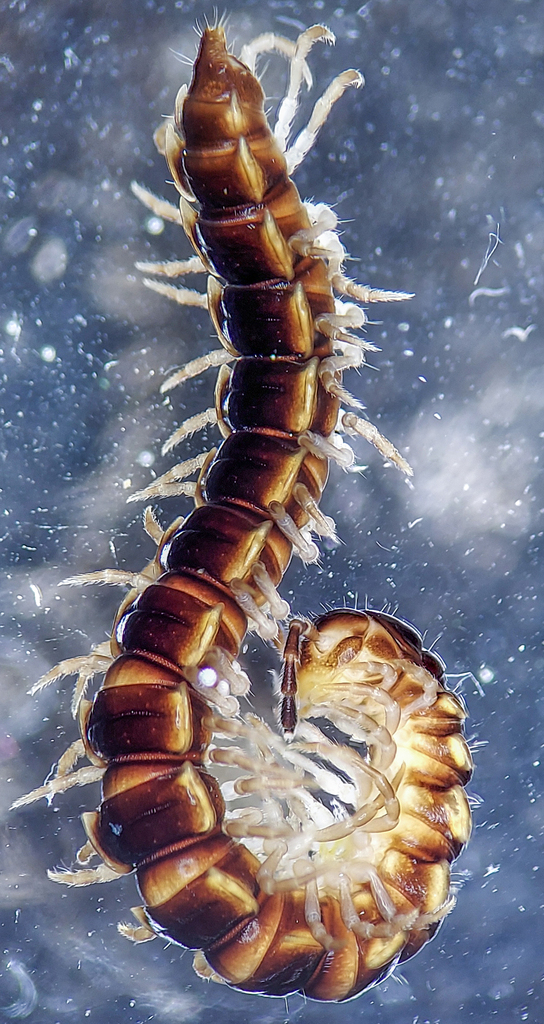
Greenhouse millipede
Oxidus gracilis
≠The key differences
Narceus is much larger (up to about 10 cm long), cylindrical and robust; O. gracilis is flattened and only about 2 cm long.
⚖︎Side by side
| American giant millipede | Greenhouse millipede | |
|---|---|---|
| To humans | Irritating secretion | Non-toxic |
| Size | 5-10 cm (50-100 mm) long | About 15-23 mm long |
| Colours | Dark brown, Reddish brown, Cream, Black | Light brown, Dark brown, Yellowish tan |
| Family | Spirobolidae | Paradoxosomatidae |
| Habitat | Moist terrestrial habitats: leaf litter, rotting logs, under stones, compost piles, and garden mulch; also inside basements and crawl spaces when moist | Moist leaf litter, compost, garden mulch, greenhouses, potted plant soil, under logs and stones |
| Range | Eastern and central North America, from the northeastern United States through the southeastern states; reports extend into parts of the Midwest and southern Canada | Cosmopolitan (introduced globally from East Asia); common in temperate and tropical greenhouses, nurseries and urban gardens worldwide |
| Active | Mostly nocturnal and active in warm, wet seasons; activity peaks in spring through fall in temperate regions | Active year-round in heated greenhouses and indoors; outdoors most active in wet seasons and at night or in cool, damp weather |
| Pest? | No | Yes |
🔍How to spot an American giant millipede
- Large cylindrical body with many segments, each segment bearing two pairs of legs
- Often 5-10 cm long and coils into a tight spiral when disturbed
- Alternating darker dorsal coloration with lighter margins or subtle banding on segments
- Short bead-like antennae and numerous short legs visible from the sides
🔍How to spot a greenhouse millipede
- Small flattened body 8-20 mm long with many short legs and obvious segmental ridges (paranota) along sides
- Uniform pale to dark brown colour with faint segmental banding; lacks the large size and bright rings of some native millipedes
- When disturbed it curls into a loose coil rather than forming a tight ball
- Commonly found in damp potting soil, under bark, in compost or in greenhouses
?Frequently asked questions
What is the difference between an American giant millipede and a greenhouse millipede?
Narceus is much larger (up to about 10 cm long), cylindrical and robust; O. gracilis is flattened and only about 2 cm long.
Is an American giant millipede or a greenhouse millipede more dangerous?
American giant millipede: Irritating secretion. Greenhouse millipede: Non-toxic. Not venomous or aggressive. Does not bite or sting.
Identification from photos is never certain: don't handle insects you can't identify, and get medical advice for bites, stings or allergic reactions.