
American giant millipede vs Pill millipede
These two are easy to mix up. Here's how to tell an American giant millipede from a pill millipede, and whether either one bites or stings.
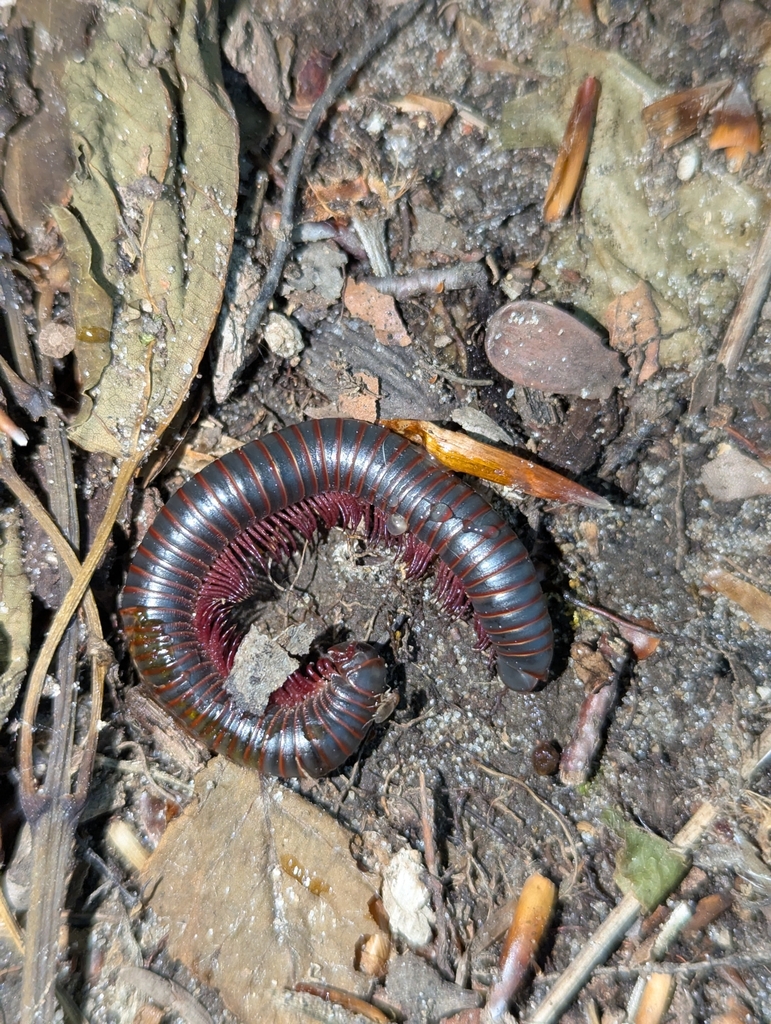
American giant millipede
Narceus americanus
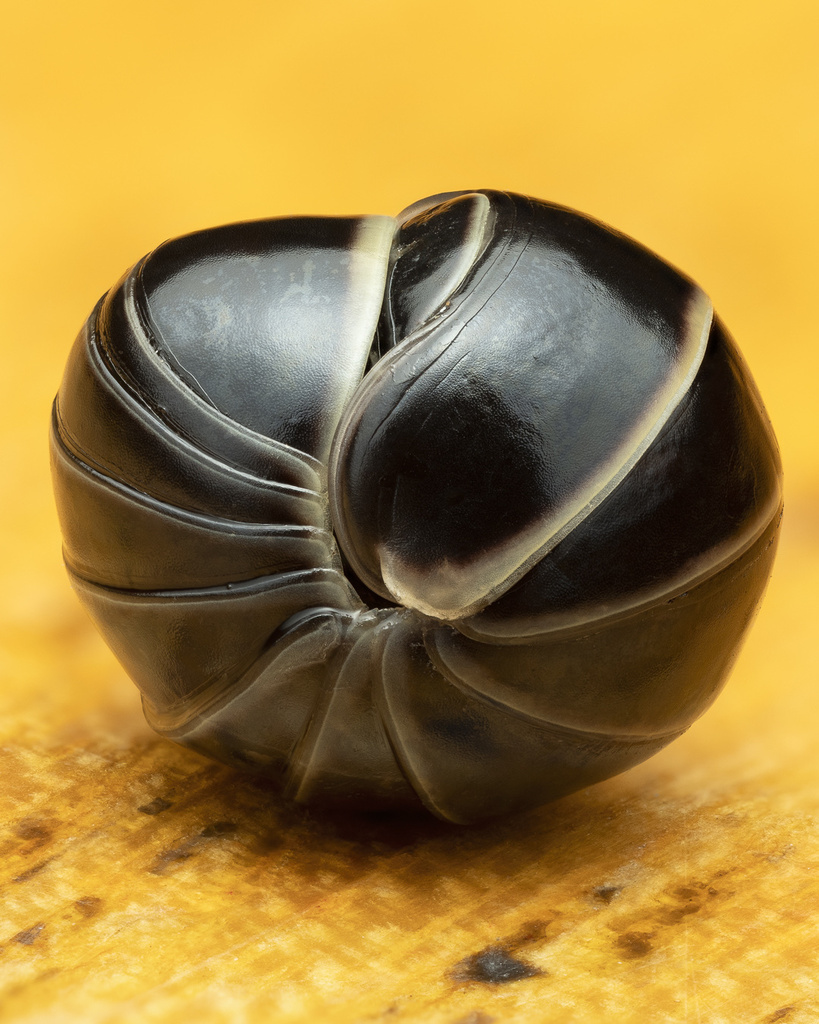
Pill millipede
Glomeris marginata
≠The key differences
Pill millipedes are shorter, more dome-shaped and can roll into a compact ball, whereas Narceus americanus is elongated and coils into a spiral.
⚖︎Side by side
| American giant millipede | Pill millipede | |
|---|---|---|
| To humans | Irritating secretion | Non-toxic |
| Size | 5-10 cm (50-100 mm) long | 7-20 mm long (typical adult length) |
| Colours | Dark brown, Reddish brown, Cream, Black | Dark brown / black, Reddish brown, Pale yellow margin |
| Family | Spirobolidae | Glomeridae |
| Habitat | Moist terrestrial habitats: leaf litter, rotting logs, under stones, compost piles, and garden mulch; also inside basements and crawl spaces when moist | Leaf litter, under logs and stones, mossy banks, gardens, hedgerows and woodland in temperate regions; prefers moist microhabitats. |
| Range | Eastern and central North America, from the northeastern United States through the southeastern states; reports extend into parts of the Midwest and southern Canada | Widespread across western and central Europe and into parts of southern and eastern Europe; commonly recorded in the British Isles and mainland Europe. |
| Active | Mostly nocturnal and active in warm, wet seasons; activity peaks in spring through fall in temperate regions | Active mainly in damp conditions year-round in mild climates; most active spring to autumn and at night or during damp daylight hours. |
| Pest? | No | No |
🔍How to spot an American giant millipede
- Large cylindrical body with many segments, each segment bearing two pairs of legs
- Often 5-10 cm long and coils into a tight spiral when disturbed
- Alternating darker dorsal coloration with lighter margins or subtle banding on segments
- Short bead-like antennae and numerous short legs visible from the sides
🔍How to spot a pill millipede
- Small, dome-shaped body that rolls into a tight ball (volvation) when disturbed.
- Glossy dark dorsal plates, each with a pale whitish or yellowish rear edge.
- Short, compact appearance with legs mostly hidden under the body when viewed from above.
- Size typically 7-20 mm; adults have a smooth, rounded outline rather than elongate cylindrical shape.
?Frequently asked questions
What is the difference between an American giant millipede and a pill millipede?
Pill millipedes are shorter, more dome-shaped and can roll into a compact ball, whereas Narceus americanus is elongated and coils into a spiral.
Is an American giant millipede or a pill millipede more dangerous?
American giant millipede: Irritating secretion. Pill millipede: Non-toxic. Not venomous or aggressive. Not dangerous.
Identification from photos is never certain: don't handle insects you can't identify, and get medical advice for bites, stings or allergic reactions.