
Centipede or millipede? An identification guide to the common species
Centipedes and millipedes both have many legs and turn up in basements, bathrooms and gardens, but they're very different animals. Centipedes are fast hunters with a venomous bite. Millipedes are slow, harmless plant recyclers.
The quickest way to tell them apart is the legs. Here's how to check, followed by the species you're most likely to find.
Centipede or millipede: the 10-second check
Count the legs on one segment of the body. Centipedes have one pair of legs per segment, sticking out to the sides. Millipedes have two pairs per segment on most of the body, tucked underneath.
Centipedes are flattened, run fast, have long antennae, and the first pair of legs is modified into venom claws. Millipedes are usually rounded or slightly flattened, move slowly, have short antennae, and curl up into a coil or a ball when disturbed.
Centipedes can bite. Millipedes don't bite, but many release a defensive fluid that can irritate skin or stain it brown, so wash your hands after touching one.
Centipedes you might find
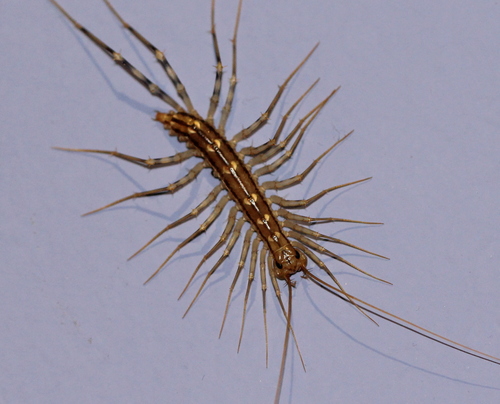
The house centipede is the one most people find indoors: a grey-yellow body with three dark stripes and 15 pairs of very long, banded legs that make it look much bigger than it is. It runs very fast, lives in damp basements and bathrooms, and eats insects, spiders and silverfish. It rarely bites, and a bite is usually no worse than a bee sting.
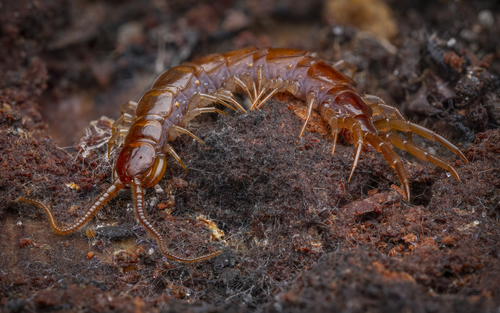
Stone centipedes, such as the brown centipede, are smaller (15-30 mm), shiny chestnut-brown, with 15 pairs of short legs. They live under stones, logs and plant pots and sometimes wander indoors. A bite is a sharp pinch at most.
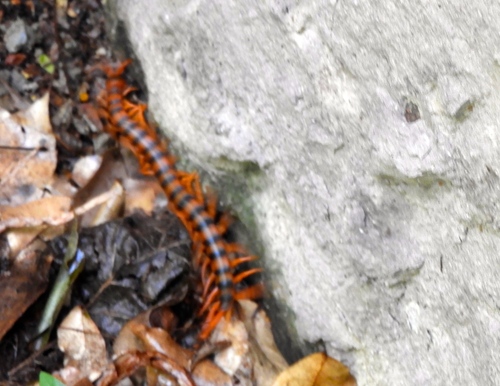
The giant desert centipede of the southwestern US and northern Mexico is a different matter. It can reach about 20 cm (8 inches), often has a reddish head and a darker body, and has 21 or 23 pairs of legs. Its bite is very painful and venomous. Don't handle it, and get medical advice after a bite, especially for children, older people and anyone with a heart condition.
Millipedes you might find
Greenhouse millipedes are small (about 15-23 mm), dark brown and flat-backed, with pale side ridges. They often invade houses in large numbers in autumn or after heavy rain, coming in under doors from lawns and mulch. They're harmless and die quickly indoors because the air is too dry.
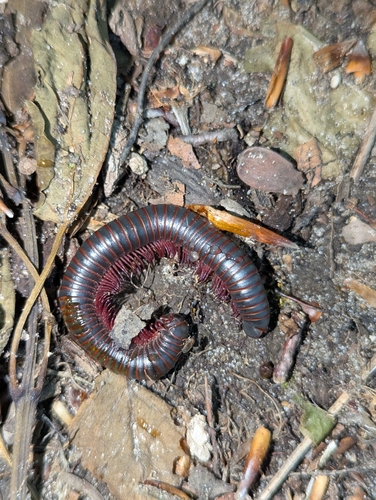
The American giant millipede is a large, rounded, dark millipede up to about 10 cm long, often with reddish edges to the segments, found in eastern North America. It coils into a tight spiral when handled.
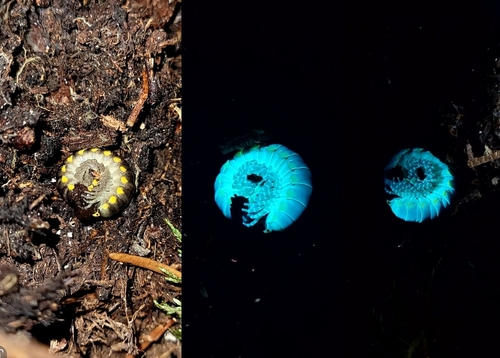
The yellow-spotted millipede of the Pacific Northwest is glossy black with a row of bright yellow spots along each side. When disturbed it releases a fluid that smells of almonds and contains small amounts of hydrogen cyanide. It's not dangerous to touch, but wash your hands and keep it away from your eyes and mouth.
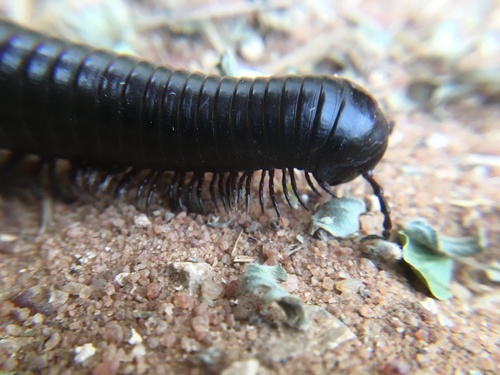
Giant African millipedes are kept as pets and can reach 30 cm or more. Handle them gently and wash your hands afterwards.
Pill millipede or pill bug?
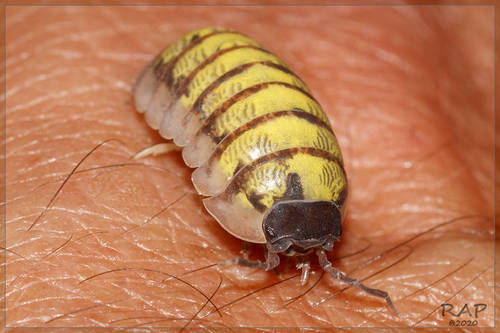
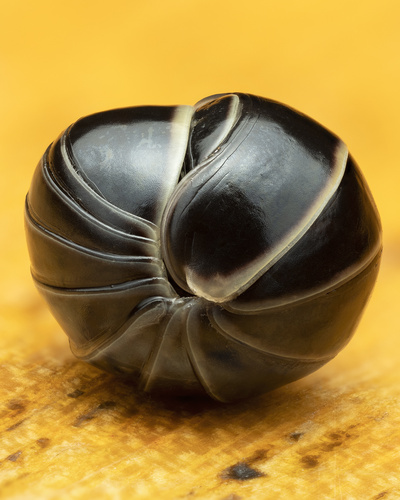
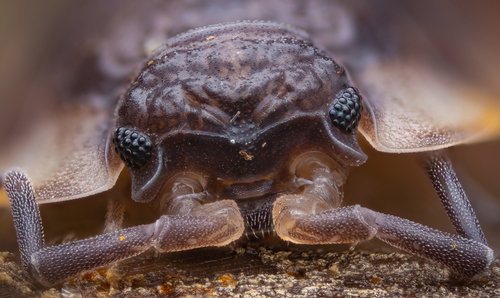
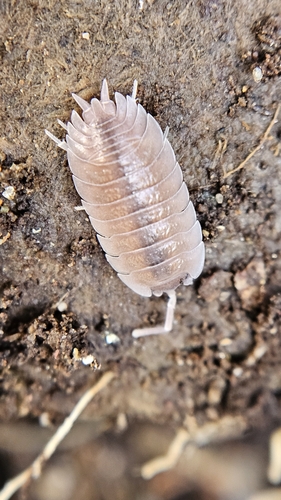
Both roll into a ball, so they're easy to confuse. The pill bug (also called a roly-poly or woodlouse) is not a millipede at all but a land crustacean. It has seven pairs of legs, a grey segmented back made of separate plates, and no visible tail spikes.
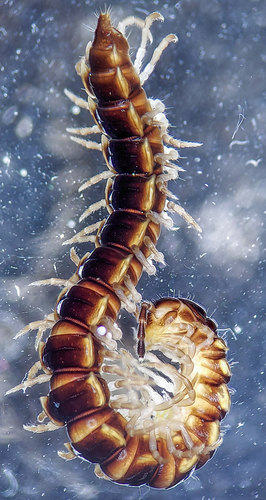
The pill millipede has many more legs (17 to 19 pairs), a shiny black back made of 12 smooth plates, often with pale edges, and a broad, rounded rear plate. When rolled up it forms a smoother, glossier ball than a pill bug.
Other woodlice, like the common shiny woodlouse and the rough woodlouse, can't roll into a ball and have two small tail spikes. All of them are harmless to people.
How to keep centipedes and millipedes out
Both need moisture, so drying out your house is the most effective step. Run a dehumidifier in the basement, fix leaking pipes and gutters, and ventilate crawl spaces.
Outside, move mulch, leaf litter, firewood and stones away from the foundation, and seal gaps under doors and around pipes. For millipede invasions, a door sweep and sealing the gap at the bottom of the garage door make a big difference.
Indoors, a vacuum is the easiest way to remove them. House centipedes eat other household pests, so a few of them are more useful than harmful.
If you're not sure what you've found, take a clear photo from above and compare it with the photos on this page, or identify it from the photo.
?Frequently asked questions
How do you tell a centipede from a millipede?
Look at the legs. A centipede has one pair of legs per body segment, sticking out to the sides, and runs fast. A millipede has two pairs per segment on most of its body, tucked underneath, moves slowly and curls up when disturbed.
Are centipedes dangerous?
House centipedes and small stone centipedes rarely bite, and the bite is usually like a bee sting at worst. Large species like the giant desert centipede have a very painful venomous bite; don't handle them and get medical advice if bitten.
Do millipedes bite?
No. Millipedes don't bite or sting. Many release a defensive fluid that can irritate skin or stain it brown, so wash your hands after handling one and avoid touching your eyes.
Why are there so many millipedes in my house?
Millipedes come indoors when it's very wet or as they migrate in autumn, usually from lawns, mulch and leaf litter next to the house. They can't survive long in dry indoor air. Seal gaps under doors and move mulch away from the walls to stop them.
Written by the Insect Scanner team, last updated 2026-10-26. Identification from photos is never certain: don't handle insects you can't identify, and get medical advice for bites, stings or allergic reactions.