
Common pill bug
Armadillidium vulgare · Pill woodlice
A small, roundable land crustacean that feeds on decaying plant material and commonly occurs in damp gardens and under debris.
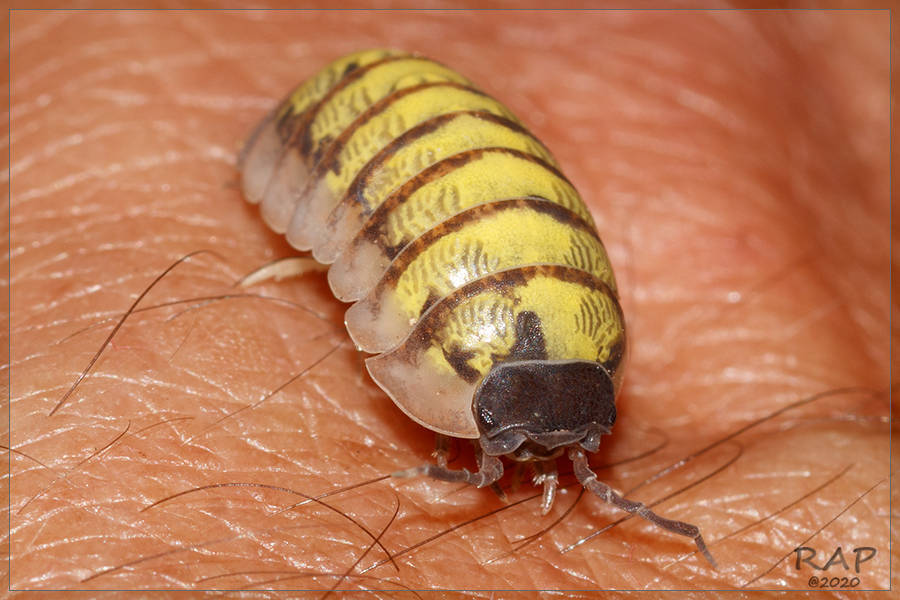
!Is the common pill bug dangerous?
No. Pill bugs do not bite or sting and are not poisonous. They are harmless to people; handling may leave dirt on hands. Rarely, people with specific allergies to crustaceans could react, but this is uncommon.
Pets
Generally harmless to pets. Small animals might eat them without issue; large numbers are unlikely to cause harm but are not nutritious and should not replace a balanced diet.
📖Overview
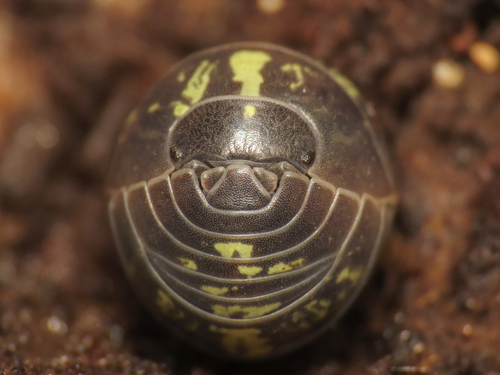
Armadillidium vulgare is a terrestrial crustacean (commonly called a pill bug or roly-poly) found in temperate regions worldwide. It is a detritivore that prefers moist, shaded microhabitats where it feeds on decaying leaves, wood and other organic matter. When disturbed it can roll into a tight ball (conglobate) as a defensive behaviour.
Pill bugs are important decomposers in gardens and soil ecosystems. They are not insects but are often mistaken for them; they breathe through gill-like structures and require moister conditions than most insects. They reproduce by brooding eggs in a ventral pouch, and juveniles emerge as miniature versions of the adult (manca).
🔍How to identify a common pill bug
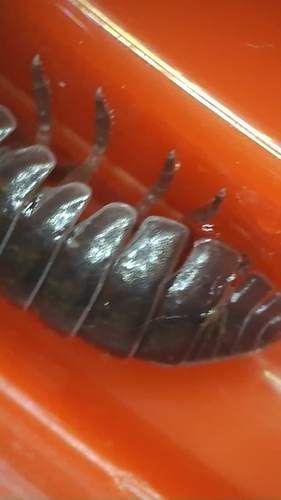
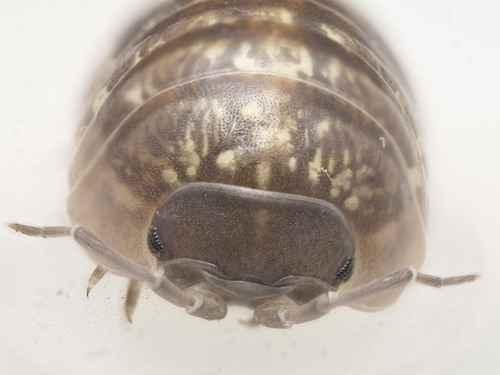
Adults are oval to nearly spherical when rolled and have a series of segmented, overlapping plates on the back that allow conglobation. Typical adults are about 8-15 mm long, grey to brown with slight mottling; antennae and seven pairs of walking legs are visible when unrolled. Compared with similar woodlice that cannot roll fully into a ball, A. vulgare forms a tight sphere that protects its softer underside.
- Rolls into a tight ball (conglobation) when disturbed; this distinguishes pill bugs from other woodlice that cannot fully roll.
- Segmented, overlapping dorsal plates with visible antennae and seven pairs of legs when unrolled.
- Size about 8-15 mm and grey to brown mottled coloration.
Lookalikes
Common woodlouse Oniscus asellus
Flatter and more elongated; cannot roll into a complete ball and has a different dorsal plate shape and pattern.
Common rough woodlouse Porcellio scaber
Generally more flattened and rough-textured; cannot conglobate and often has a dimpled surface rather than smooth plates.
↻Life cycle
Egg
Females brood eggs inside a ventral brood pouch (marsupium) for several weeks until young are ready to emerge.
Juvenile (manca)
Juveniles (called mancae) hatch as small, undeveloped copies of the adult and undergo several moults while still resembling adults.
Adult
Sexually mature adults have a full complement of body segments and appendages; they can reproduce and continue the cycle for 1-3 years.
🍃Diet and predators
Young eat
Decaying plant material, similar to adults; they may also feed on very soft fresh plant tissue if available.
Adults eat
Decaying leaves, wood, compost and other organic detritus; occasionally soft plant tissues or ripe fruit in very damp conditions.
Predators of the young
Small predators such as ground beetles, centipedes, spiders, and small birds.
Predators of adults
Birds, amphibians (frogs, toads), small mammals, predatory insects and centipedes.
🌱Effect on plants and gardens
Primarily feeds on decaying organic matter and helps recycle nutrients. In high numbers and in very damp conditions they may nibble tender seedlings or soft fruit, but significant plant damage is uncommon.
📍Where and when to find it
Look under stones, logs, leaf litter, compost, garden mulch, and inside damp basements or garages. Juveniles are found in the same microhabitats as adults.
Best time
Year-round in mild climates; most active at night or during damp, cool weather months (spring and autumn).
Observation tips
Turn over moist logs or stones slowly and place a white tray beneath to photograph. Use a damp piece of cardboard as a temporary attractant to observe groups.
✨Fun facts
- Pill bugs are terrestrial crustaceans closely related to shrimp and crabs, not insects.
- They breathe through gill-like structures and must stay in moist environments to survive.
- Pill bugs can detect humidity and will often move toward damp microhabitats such as under rocks or mulch.
- Females carry and protect developing young in a pouch until they are ready to survive on their own.
?Frequently asked questions
Do pill bugs bite?
No. Pill bugs do not bite or sting and are harmless to people.
Are pill bugs insects?
No. They are crustaceans (order Isopoda), related to crabs and shrimp, but live on land.
Why are pill bugs in my house?
They enter houses seeking cool, moist conditions and shelter—often because of high humidity, leaks, or damp basements. They usually do not survive long indoors.
How do I get rid of pill bugs?
Reduce moisture and remove shelter: fix leaks, improve drainage, clear leaf litter and mulchy contact with foundations, seal gaps. Trapping with a damp cardboard or board to collect and relocate is effective and humane.
Are pill bugs harmful to my garden?
Mostly no—they are beneficial decomposers. In very moist conditions and when populations are high they may nibble seedlings or soft fruit, but major damage is uncommon.
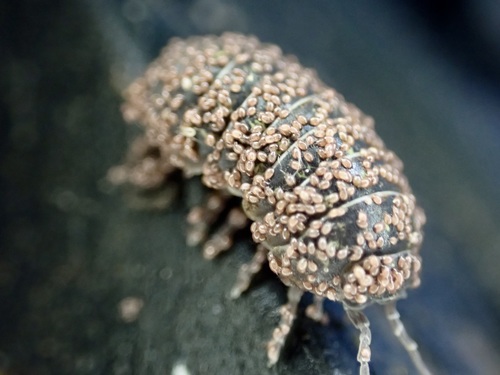
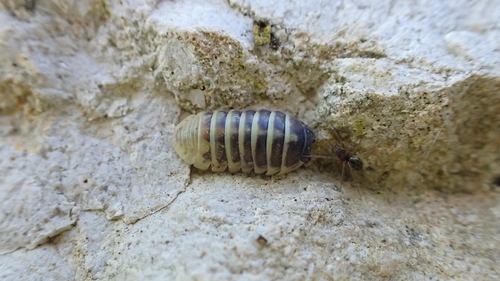
📷Photos of the common pill bug
More other creepy crawlies
This guide was written with AI assistance and fact-checked, last updated 2026-10-09. Identification from photos is never certain: don't handle insects you can't identify, and get medical advice for bites, stings or allergic reactions.