
Common pill bug vs Common rough woodlouse
These two are easy to mix up. Here's how to tell a common pill bug from a common rough woodlouse, and whether either one bites or stings.
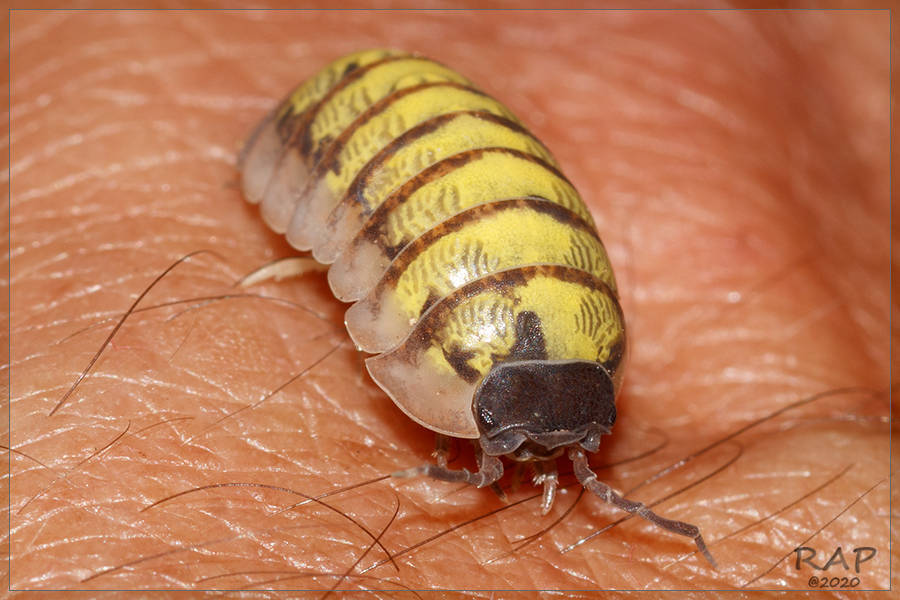
Common pill bug
Armadillidium vulgare
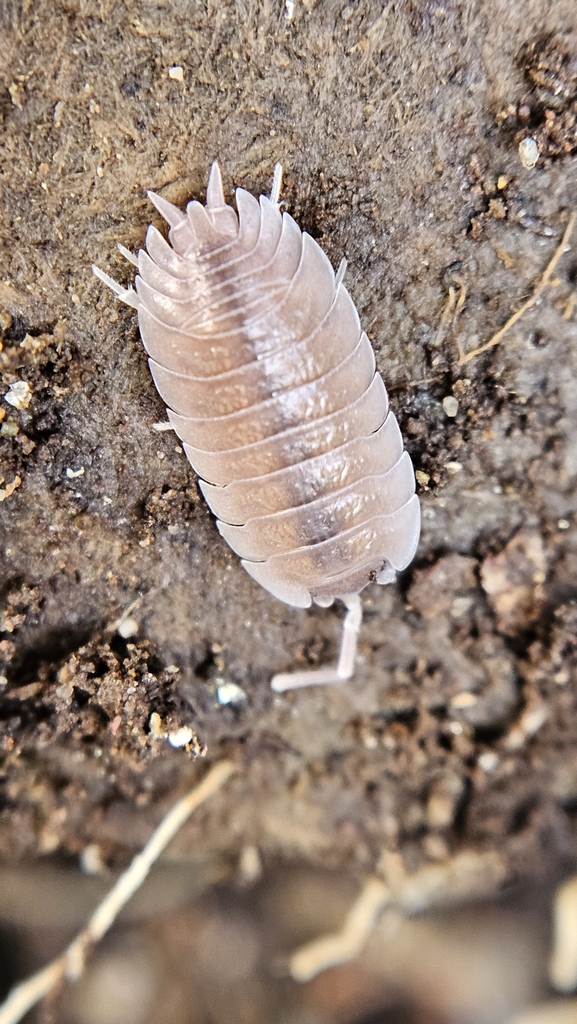
Common rough woodlouse
Porcellio scaber
≠The key differences
Generally more flattened and rough-textured; cannot conglobate and often has a dimpled surface rather than smooth plates.
Can roll into a tight ball (conglobate) and has smoother, more rounded plates; Porcellio scaber cannot fully roll up.
⚖︎Side by side
| Common pill bug | Common rough woodlouse | |
|---|---|---|
| To humans | Non-toxic | Non-toxic |
| Size | 8-15 mm long (up to about 18 mm) | 10-18 mm long |
| Colours | Gray, Brown, Dark slate | Grey, Brown, Mottled grey-brown |
| Family | Armadillidiidae | Porcellionidae |
| Habitat | Moist, shaded places: under rocks, logs, leaf litter, mulch, compost piles, and occasionally inside basements or garages. | Moist, shaded microhabitats: under logs, stones, leaf litter, bark, garden mulch, compost heaps, cellars and damp basements |
| Range | Originally native to Europe but now widespread across temperate regions worldwide through human-assisted dispersal. | Native to Europe and now cosmopolitan through accidental human-assisted spread; found in temperate regions worldwide |
| Active | Most active in cool, moist conditions; primarily nocturnal or active in damp daylight conditions. | Primarily nocturnal and active year-round in mild climates; activity reduced in very cold or dry conditions |
| Pest? | No | No |
🔍How to spot a common pill bug
- Rolls into a tight ball (conglobation) when disturbed; this distinguishes pill bugs from other woodlice that cannot fully roll.
- Segmented, overlapping dorsal plates with visible antennae and seven pairs of legs when unrolled.
- Size about 8-15 mm and grey to brown mottled coloration.
🔍How to spot a common rough woodlouse
- Rough, bumpy dorsal plates (uneven texture) rather than smooth
- Cannot roll into a tight ball; body remains flattened when disturbed
- Adult length about 10-18 mm and generally grey to brown in colour
- Uropods (small tail-like appendages) extend beyond the rear margin of the body
?Frequently asked questions
What is the difference between a common pill bug and a common rough woodlouse?
Generally more flattened and rough-textured; cannot conglobate and often has a dimpled surface rather than smooth plates. Can roll into a tight ball (conglobate) and has smoother, more rounded plates; Porcellio scaber cannot fully roll up.
Is a common pill bug or a common rough woodlouse more dangerous?
Common pill bug: Non-toxic. Common rough woodlouse: Non-toxic. Pill bugs do not bite or sting and are not poisonous. Porcellio scaber is harmless to people.
Identification from photos is never certain: don't handle insects you can't identify, and get medical advice for bites, stings or allergic reactions.