
Yellow fever mosquito
Aedes aegypti · Mosquitoes
A small, day‑biting mosquito species that breeds in small containers and is a primary vector of yellow fever, dengue, Zika and chikungunya viruses.
!Is the yellow fever mosquito dangerous?
Yes, it can be. Females bite and can transmit viruses such as yellow fever, dengue, Zika and chikungunya. Bites may cause local itching. If you are bitten, clean the area with soap and water and apply an antiseptic; antihistamine or topical corticosteroid can relieve itching. Seek medical care if you develop fever, rash, severe headache, joint pain, eye redness or other flu-like symptoms after travel to an area with these diseases.
Pets
Generally not a direct threat to pets, but mosquitoes can transmit some diseases (like heartworm) to dogs in regions where those parasites are present. Preventive veterinary measures are recommended where heartworm is endemic.
📖Overview
Aedes aegypti is a small mosquito strongly associated with human habitation. Females bite during daylight hours, often preferring to feed on humans, and lay eggs in artificial containers and other small bodies of clean standing water. Because it readily lives, feeds and breeds near people, Aedes aegypti is an efficient vector of several viral diseases, including yellow fever, dengue, Zika and chikungunya. It is native to Africa but now has a pantropical and subtropical distribution and is often introduced to new areas by human activity.
🔍How to identify a yellow fever mosquito
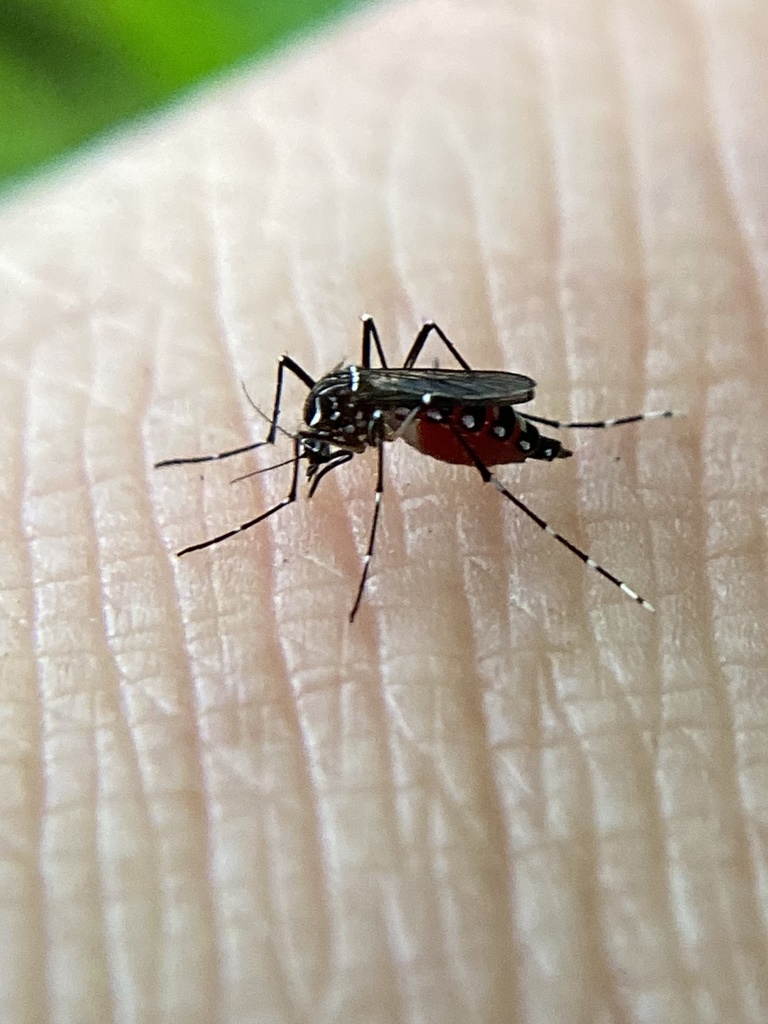
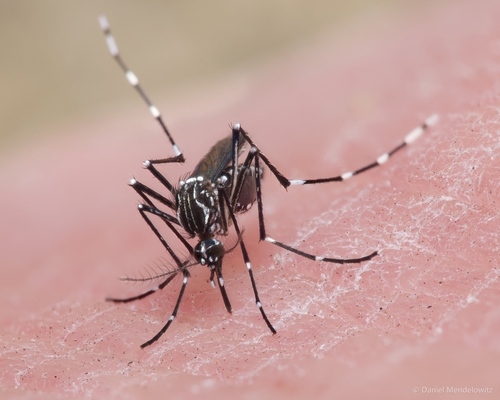
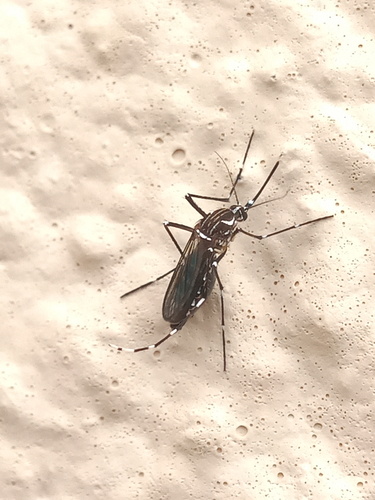
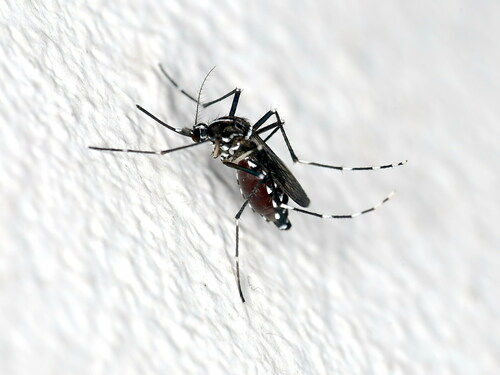
Adults are relatively small (about 4-7 mm body length) and have distinctive black-and-white markings: a lyre-shaped pattern of white scales on the dorsal thorax and banded legs. The abdomen shows narrow white bands on dark segments. Males look similar but are smaller and have bushier antennae. Larvae are wormlike aquatic stages that hang at the water surface; pupae are comma-shaped, mobile "tumblers" before the adult emerges.
- Small mosquito 4-7 mm with a black body and distinct white scale markings on the thorax forming a lyre-shaped pattern
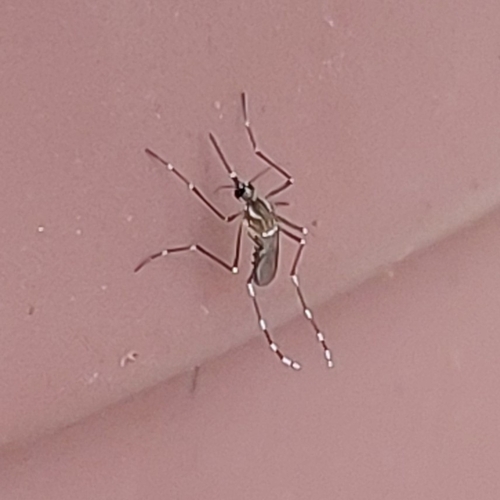
- Legs show white banding on dark segments (banded legs)
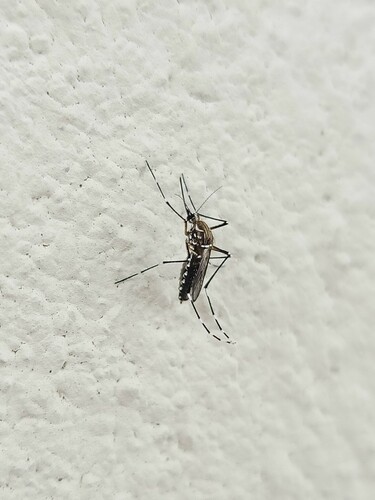
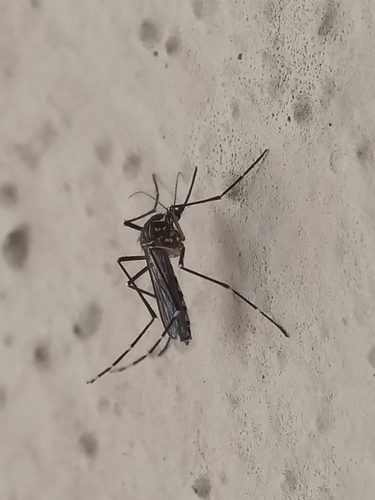
- Daytime activity: often found resting indoors on walls or in shaded areas near people
- Eggs or larvae found in small, clean water containers close to buildings
Lookalikes
Asian tiger mosquito Aedes albopictus
Aedes albopictus has a single white dorsal stripe on the thorax (not a lyre shape) and slightly different banding on legs; albopictus is generally more tolerant of vegetated areas.
Culex pipiens (house mosquito) Culex pipiens
Culex species are usually active at dusk and night, have brownish duller markings without the distinctive white lyre pattern, and prefer larger or more polluted water bodies.
↻Life cycle
Egg
Females lay desiccation-resistant eggs on the inner walls of water-holding containers near the waterline. Eggs can survive dry conditions for months and hatch when submerged.
Larva (wriggler)
Aquatic larvae feed on organic matter and microorganisms at the water surface; they molt through four instars over several days to weeks depending on temperature.
Pupa (tumbler)
Nonfeeding pupae are mobile and metamorphose into the adult in about 1-3 days under warm conditions.
Adult
Winged adults emerge and mate; females require a blood meal to develop each batch of eggs and typically lay multiple clutches during their life.
🍃Diet and predators
Young eat
Aquatic micro-organisms, detritus and microbial films
Adults eat
Nectar (both sexes); females also seek blood meals from vertebrates (especially humans) to produce eggs
Predators of the young
Aquatic predators such as fish, predatory mosquito larvae, copepods and other aquatic invertebrates
Predators of adults
Bats, dragonflies, spiders and insectivorous birds
🌱Effect on plants and gardens
Adults feed on nectar as well as blood (females need blood for egg production) and do not harm plants. Larvae feed on organic matter and microorganisms in water.
How to get rid of yellow fever mosquitoes
Eliminate standing water in containers around homes, cover or regularly empty water storage, use tight-fitting lids on barrels, clean gutters, and store tires indoors. Use window and door screens, wear long sleeves and insect repellent containing DEET, picaridin, IR3535 or oil of lemon eucalyptus when exposed. For heavy infestations, use larvicides (e.g. Bti products) in water that cannot be removed and consider professional insecticide treatments for adults. Community-level source reduction is the most effective control.
📍Where and when to find it
Look for adults resting on indoor walls, in closets or shaded outdoor areas near houses. Check small containers, plant saucers, buckets, tires, gutters and water storage for eggs and larvae.
Best time
Early morning and late afternoon; year-round in the tropics, in warm months in subtropical regions.
Observation tips
Wear long sleeves and use a window‑mounted or handheld camera with a flash for close photos; inspect container edges just above the waterline to find eggs and use a dipper to check for larvae.
✨Fun facts
- Aedes aegypti eggs can survive dry conditions for months and hatch when water returns, which helps them persist in dry seasons.
- This species has evolved to live very close to humans and often prefers indoor resting and human blood meals, which makes it an efficient disease vector.
?Frequently asked questions
Is the yellow fever mosquito dangerous?
Yes — it can transmit several serious viruses (yellow fever, dengue, Zika, chikungunya) so it is considered a significant public health risk in affected areas.
Does Aedes aegypti bite at night?
No — it is primarily day‑biting, most active in early morning and late afternoon, though it can bite indoors at other times.
Why is this mosquito in my house?
They prefer human dwellings for resting and feeding; indoor water storage, plant saucers, vases or other containers near the house provide breeding sites.
How do I get rid of yellow fever mosquitoes?
Remove or regularly empty standing water in containers, cover water storage, use screens, apply approved larvicides where water cannot be removed, use repellents and wear protective clothing. For large infestations contact public health or pest control professionals.
Can indoor insecticide sprays stop them?
Indoor sprays can reduce adult mosquitoes temporarily but do not address breeding sites. Integrated control (source reduction plus targeted insecticide when needed) is most effective.
📷Photos of the yellow fever mosquito
More flies & mosquitoes
This guide was written with AI assistance and fact-checked, last updated 2026-10-10. Identification from photos is never certain: don't handle insects you can't identify, and get medical advice for bites, stings or allergic reactions. More about the yellow fever mosquito: iNaturalist, Wikipedia.