
Phantom crane fly
Bittacomorpha clavipes · Phantom crane flies
A delicate, long-legged fly of wet habitats whose black-and-white banded legs give it a ghostly "phantom" appearance when it wafts above vegetation or water.
!Is the phantom crane fly dangerous?
No. Phantom crane flies do not bite or sting and are not venomous. They are harmless to people; handle gently if necessary to avoid crushing their delicate legs.
Pets
Not toxic to pets. Pets may catch or eat adults, which is harmless though the insect is not a food source.
📖Overview
Bittacomorpha clavipes is a fragile-looking fly found in damp habitats such as marsh edges, wet meadows and shaded woodland near streams. Adults are notable for very long, black-and-white banded legs with swollen, air-filled basal tarsal segments and a dark, slender body; they often hover or drift on light air currents, creating a floating, ghostlike appearance that gives the species its common name. Larvae are aquatic or semi-aquatic detritivores living in saturated soil, moss or shallow water where they feed on decaying organic matter.
Adults are short-lived and are most commonly seen in spring and summer. They do not bite or sting and pose no danger to people or pets. Their presence indicates moist, healthy wetland habitat rather than an indoor infestation; adults may enter houses accidentally but do not breed indoors.
🔍How to identify a phantom crane fly
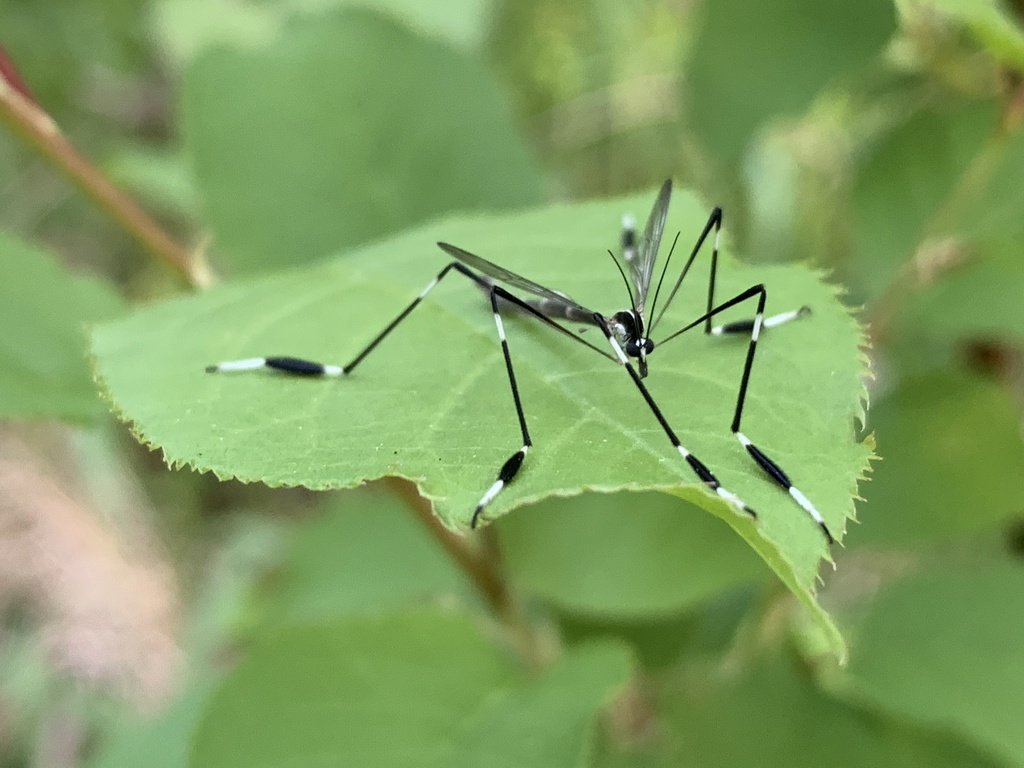
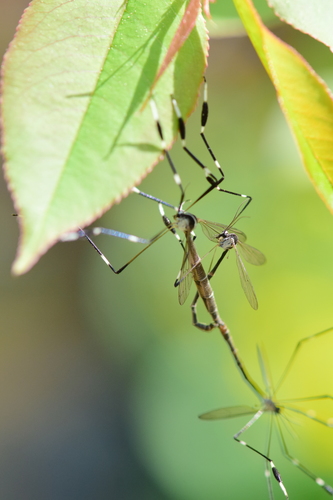
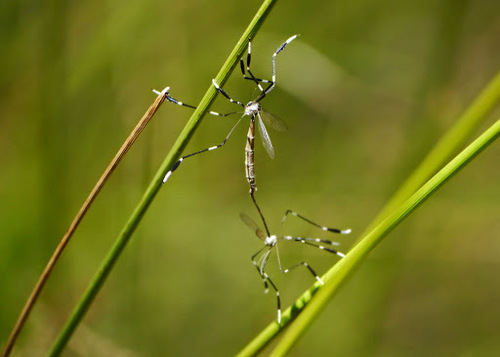
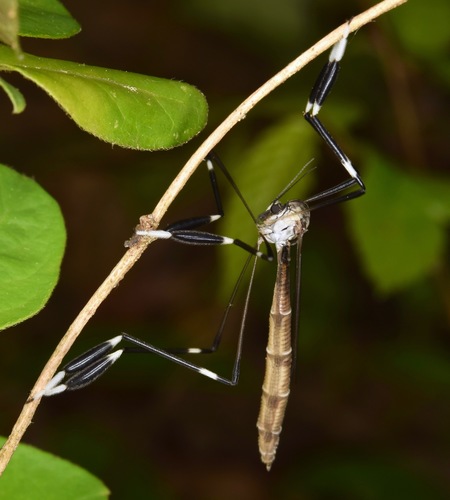
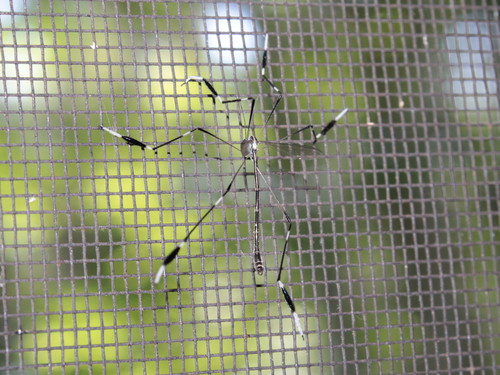
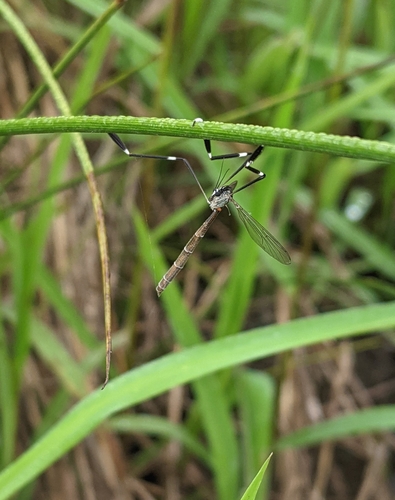
Adults have a slender, elongate black to dark brown body about 12-16 mm long, very long, slender legs and narrow, clear or lightly tinted wings. The most distinctive feature is the legs: they are black with bold white bands, and the first tarsal segment of each leg is conspicuously swollen and filled with air sacs (tracheae). When the fly drifts with its legs spread wide, only the white bands catch the light, giving a floating, ghostly look. Antennae are short and head small compared with body length.
- Very long, slender black legs with bold white bands and swollen basal tarsal segments
- Dark, slender body about 12-16 mm with narrow, translucent wings
- Habit of drifting or wafting on light breezes above wet ground or water margins
- Found in marshy, mossy or boggy areas rather than dry landscapes
Lookalikes
Ptychoptera phantom crane flies Ptychoptera spp.
Ptychoptera are in the same family but have mostly plain legs without bold white bands or swollen tarsi, and they do not drift with legs spread like Bittacomorpha clavipes.
True crane flies Family Tipulidae
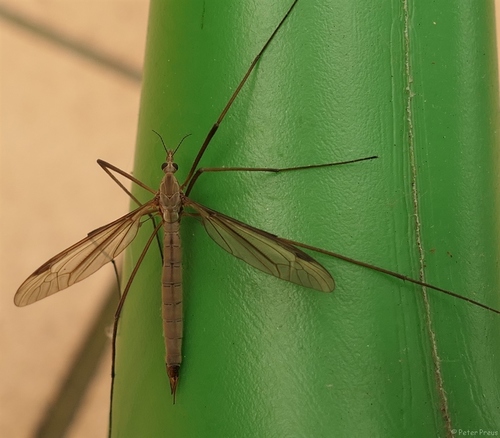
True crane flies (Tipulidae) are often larger and usually brown or grey, with plain legs that lack the bold white bands and swollen tarsi; they fly rather than drift with legs outspread.
↻Life cycle
Egg
Laid in moist soil, moss or at water margins; eggs hatch in days to weeks depending on temperature and moisture.
Larva (maggot)
Aquatic or semi-aquatic, elongate, detritivorous larvae live in saturated soil, moss or shallow water and feed on decaying organic matter; larval development may take months.
Pupa
Pupation occurs in moist substrate at or near the waterline; pupal stage lasts days to weeks.
Adult (fly)
Short-lived winged stage devoted to dispersal and reproduction; adults often hover or drift on light air currents.
🍃Diet and predators
Young eat
Detritus and decomposing organic matter in saturated soils, moss or shallow water
Adults eat
Adults likely feed little; may sip nectar or not feed significantly (common for many short-lived flies)
Predators of the young
Aquatic predators, predatory insects, nematodes and microbial pathogens
Predators of adults
Birds, spiders, dragonflies and other aerial insectivores
🌱Effect on plants and gardens
Larvae feed on decaying plant material and help recycle nutrients in wet soils; adults do not damage plants and are not agricultural pests.
📍Where and when to find it
Look for adults hovering or drifting above wet meadows, marsh edges, mossy bogs, stream margins and shaded wet forest floors. Larvae are found in saturated soil, moss mats or shallow water.
Best time
Spring to summer; daytime in calm, humid conditions when adults are active
Observation tips
Photograph from a low angle to capture the white leg bands against vegetation; approach slowly because their long legs are delicate and can break if handled roughly.
✨Fun facts
- The common name 'phantom' comes from the contrast between the dark body and white leg bands: in dappled shade only the white spots are visible, so the insect seems to appear and disappear.
- Adults spread their legs wide while drifting, and their swollen, air-filled tarsi help them waft along on air currents.
- Larvae help break down dead plant material in wet soils and moss, contributing to nutrient cycling in bogs and marshes.
?Frequently asked questions
Are phantom crane flies harmful to people?
No. They do not bite or sting and are harmless to people.
Why is a phantom crane fly in my house?
Adults are attracted to light or may be blown indoors on breezes. They do not infest homes or breed indoors; they come from nearby wet areas.
Do phantom crane flies eat plants or damage gardens?
No. Larvae feed on decaying organic matter and adults do not harm plants. They are not garden pests.
How do I get rid of them if I have many around my yard?
They indicate wet habitat. Reducing extensive standing water or very saturated areas can reduce local numbers, but control is usually unnecessary. Adults can be gently shooed out or removed with a cup and paper.
Do they live in water?
Larvae live in saturated soil, moss or shallow water. Adults are terrestrial and aerial, found near wetlands.
📷Photos of the phantom crane fly
More flies & mosquitoes
This guide was written with AI assistance and fact-checked, last updated 2026-10-10. Identification from photos is never certain: don't handle insects you can't identify, and get medical advice for bites, stings or allergic reactions. More about the phantom crane fly: iNaturalist, Wikipedia.