
Face fly
Musca autumnalis · House flies and kin
A gray, non-biting fly that feeds on animal secretions and is a mechanical vector of livestock eye infections, commonly found around cattle and farms.
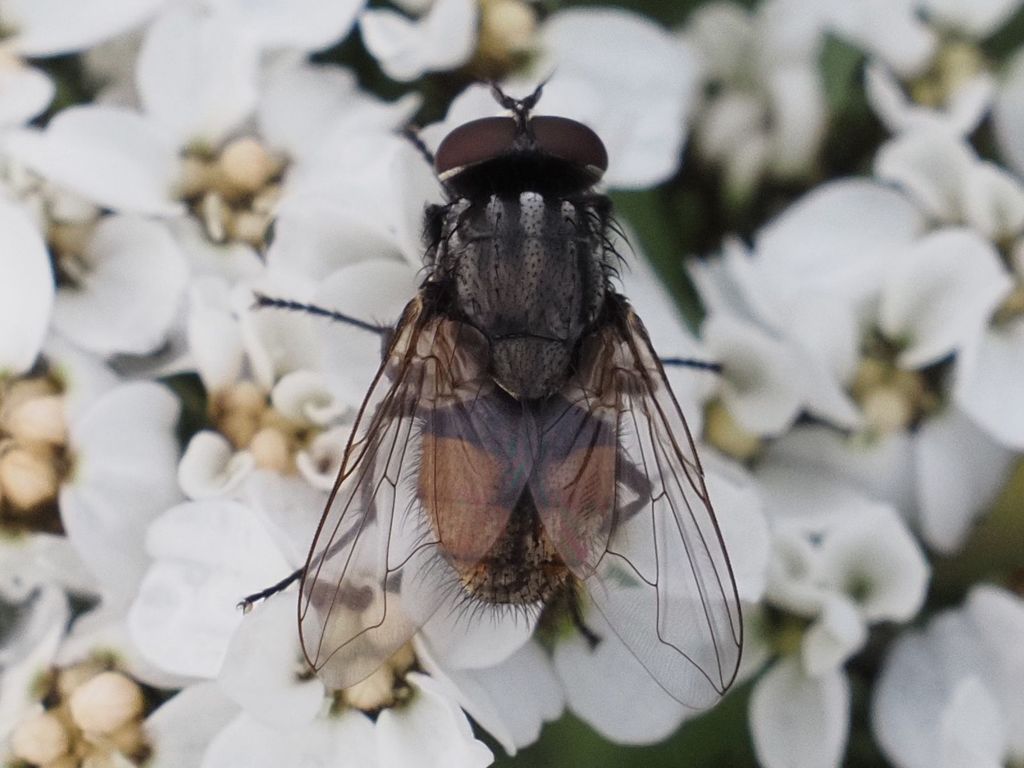
!Is the face fly dangerous?
Only mildly. Face flies do not bite or inject venom. They may land on human faces and feed on secretions, which can be annoying and potentially transfer bacteria mechanically. Basic hygiene (brushing flies away, using screens) prevents problems. If a fly contaminates food, discard it. There are no specific venom-first-aid concerns.
Pets
For livestock, face flies are significant because they can transmit infectious agents such as the bacteria that cause bovine keratoconjunctivitis ('pinkeye') and the eyeworm Thelazia spp. Infested animals may rub and injure eyes, reduce weight gain and milk yield. Pets such as dogs and cats are occasionally irritated but are not primary hosts.
📖Overview
Musca autumnalis, the face fly, is a synanthropic fly commonly associated with cattle and other livestock. Adults feed on tears, saliva and other secretions from the faces and eyes of animals (and sometimes humans), which they lap up with their sponging mouthparts. They do not pierce skin to blood-feed. Face flies breed in fresh cattle dung and other decaying organic matter and can occur in large numbers on farms, where they are an important mechanical vector of bacteria and eye parasites that affect livestock.
Originally native to parts of Europe and Asia, M. autumnalis has spread and become established in many temperate regions, including large areas of North America following accidental introductions. Populations peak in summer, and adults overwinter in sheltered sites such as attics and wall voids of buildings, sometimes in large numbers.
🔍How to identify a face fly
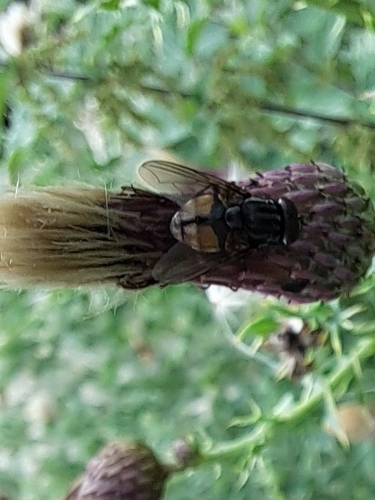
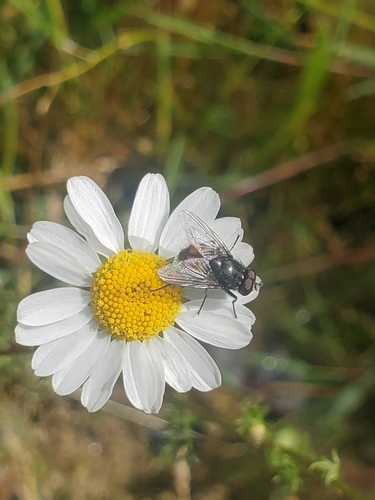
Adult face flies are similar in size and build to the common house fly but have a few distinguishing marks: a grey thorax with four dark longitudinal stripes, a slightly paler or yellowish face (especially in males), and a pattern of darker and lighter patches on the abdomen. The eyes are large and often show a reddish tint. Legs and antennae are typical of muscid flies; wings are clear with the characteristic wing venation of house flies.
- Size 6-8 mm, similar to house fly but with a paler or slightly yellowish face.
- Thorax grey with four distinct dark longitudinal stripes.
- Abdomen with alternating light and dark patterning; large red eyes.
- Frequently rests on the faces or around eyes and nostrils of cattle and other animals.
Lookalikes
House fly Musca domestica
House flies are similar but usually have a less yellow face and are more associated with human dwellings and varied breeding sites; face flies are more strongly associated with livestock and have a slightly paler/yellow face.
Stable fly Stomoxys calcitrans
Stable flies look similar in size but have a proboscis for piercing and blood-feeding; they bite animals and humans and are generally more painful than non-biting face flies.
Cluster fly Pollenia rudis
Cluster flies are darker, slower-moving and often enter buildings in large numbers to overwinter; they do not show the yellowish face and are not closely tied to cattle dung.
↻Life cycle
Egg
Females lay eggs in fresh cattle dung and sometimes decaying organic matter; eggs hatch in about 1 day in warm weather.
Larva (maggot)
Larvae feed in dung, passing through three instars over several days to a couple of weeks depending on temperature.
Pupa
Larvae pupate in drier material near the dung; the pupal stage lasts several days to a week in warm conditions.
Adult fly
Adults emerge, feed on animal secretions, mate and the females seek fresh dung to lay eggs; multiple generations occur each season.
🍃Diet and predators
Young eat
Decaying organic matter, primarily fresh cattle dung where they develop and feed on microbes and organic material.
Adults eat
Tear fluid, nasal and ocular secretions, saliva of mammals, occasional nectar; adults use sponging mouthparts and do not bite to draw blood.
Predators of the young
Dung beetles, predatory insects and parasitoid wasps that attack fly pupae; soil predators also feed on larvae and pupae.
Predators of adults
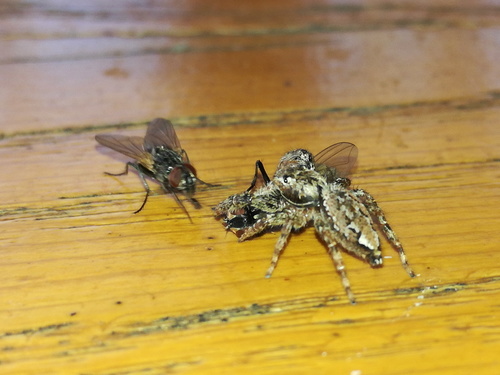
Spiders, predatory flies, birds, bats and insectivorous mammals.
🌱Effect on plants and gardens
Adults do not feed on plants; they may visit flowers for nectar occasionally but have little direct impact on crops or gardens. The main impact is on livestock health.
How to get rid of face flies
Reduce breeding sites by removing or spreading fresh cattle dung and managing manure; maintain good barn sanitation and drainage. Use physical barriers (screens on windows, face/eye protection for livestock), fly traps and baits as part of an integrated program. On farms, insecticide treatments (pour-ons, sprays, ear tags or dust bags for cattle) and biological control (parasitic wasps that attack fly pupae) are used; follow label directions and veterinary advice. For small-scale nuisance around homes, window screens, fly paper, and bait traps help reduce numbers.
📍Where and when to find it
Adults on livestock faces, on vegetation near pastures, on barn walls. Eggs and larvae are in fresh cattle dung; pupae are in drier soil or manure.
Best time
Spring through autumn in temperate zones, during warm daylight hours; highest numbers on warm sunny days.
Observation tips
To photograph adults, approach pastures quietly and focus on livestock faces or nearby vegetation; use a telephoto lens to avoid disturbing animals. For larvae, inspect fresh dung with gloves.
✨Fun facts
- Face flies are named for their habit of clustering around the faces of livestock to feed on tears and secretions.
- They spread pinkeye bacteria mechanically on their mouthparts and bodies, and they also serve as hosts in which eyeworm (Thelazia) larvae develop before being passed to cattle.
- Unlike stable flies, face flies do not bite to obtain blood; their mouthparts are adapted for sponging liquids.
?Frequently asked questions
Do face flies bite?
No. Face flies have sponging mouthparts and do not bite to draw blood; they feed on secretions like tears and saliva.
Are face flies dangerous to humans?
They are not venomous or biting, but they can mechanically transfer bacteria and may contaminate food. The main health concern is for livestock, not humans.
Why are face flies on my cattle's face?
Adults are attracted to ocular and nasal secretions; they feed on these fluids and can irritate animals and spread pathogens that cause conditions like bovine pinkeye.
How do I get rid of face flies on my farm?
Use integrated control: remove or manage fresh dung, improve barn hygiene, use physical barriers and traps, and employ approved insecticidal products or biological controls under veterinary or extension guidance.
Where do face flies live and breed?
They breed in fresh cattle dung and nearby decaying organic matter; adults live around pastures, barns and farm buildings.
📷Photos of the face fly
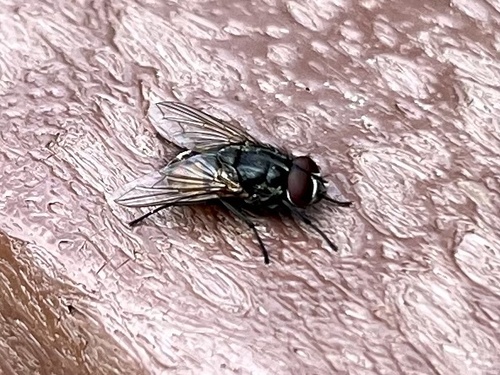
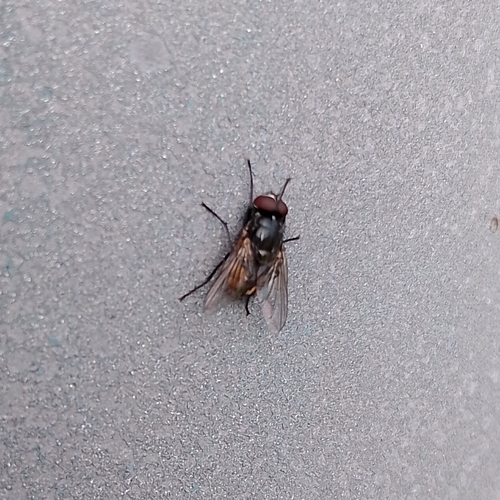
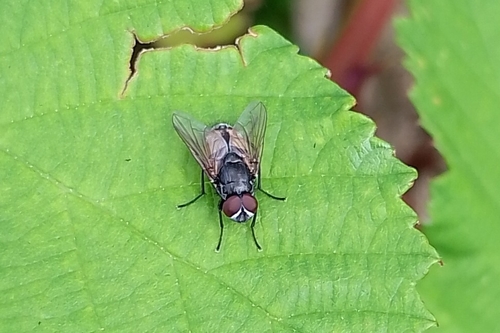
More flies & mosquitoes
This guide was written with AI assistance and fact-checked, last updated 2026-10-10. Identification from photos is never certain: don't handle insects you can't identify, and get medical advice for bites, stings or allergic reactions. More about the face fly: iNaturalist, Wikipedia.