
Stable fly
Stomoxys calcitrans · House-fly type flies
A blood-feeding fly that bites people and livestock, often found around farmyards, manure and decaying vegetation.
!Is the stable fly dangerous?
Only mildly. Stable flies deliver painful, biting wounds while feeding on blood. Bites cause local pain, itching and sometimes small swelling; repeated bites can lead to secondary infection from scratching. Stable flies are not a major source of lethal human disease, but they can mechanically transfer some pathogens and are an important pest because of biting nuisance and allergic or inflammatory reactions in sensitive people. First aid: wash bite with soap and water, apply a cold pack to reduce swelling, use topical antiseptic and seek medical advice if signs of infection or severe allergic reaction occur.
Pets
Stable flies bite horses, cattle, dogs and other mammals. In livestock they cause stress, reduced weight gain and lower milk yield. Horses frequently show leg stomping, tail swishing and restlessness. Pets can develop irritated, inflamed skin from repeated bites; seek veterinary care if bites appear infected or animals show signs of systemic illness.
📖Overview
Stomoxys calcitrans, the stable fly, is a cosmopolitan biting fly closely associated with livestock and human habitations. Adults feed on blood from mammals (including cattle, horses, dogs and humans); both sexes take blood meals. They breed in moist decaying organic matter mixed with manure, and are an important pest of livestock because repeated biting reduces weight gain and milk production.
Stable flies are active, persistent biters by day and often aggregate on the legs and lower body of animals. They are strong fliers and can disperse from breeding sites to nearby homes, pastures and parks. Control combines sanitation to remove breeding habitats, trapping, and targeted insecticide use when necessary.
🔍How to identify a stable fly
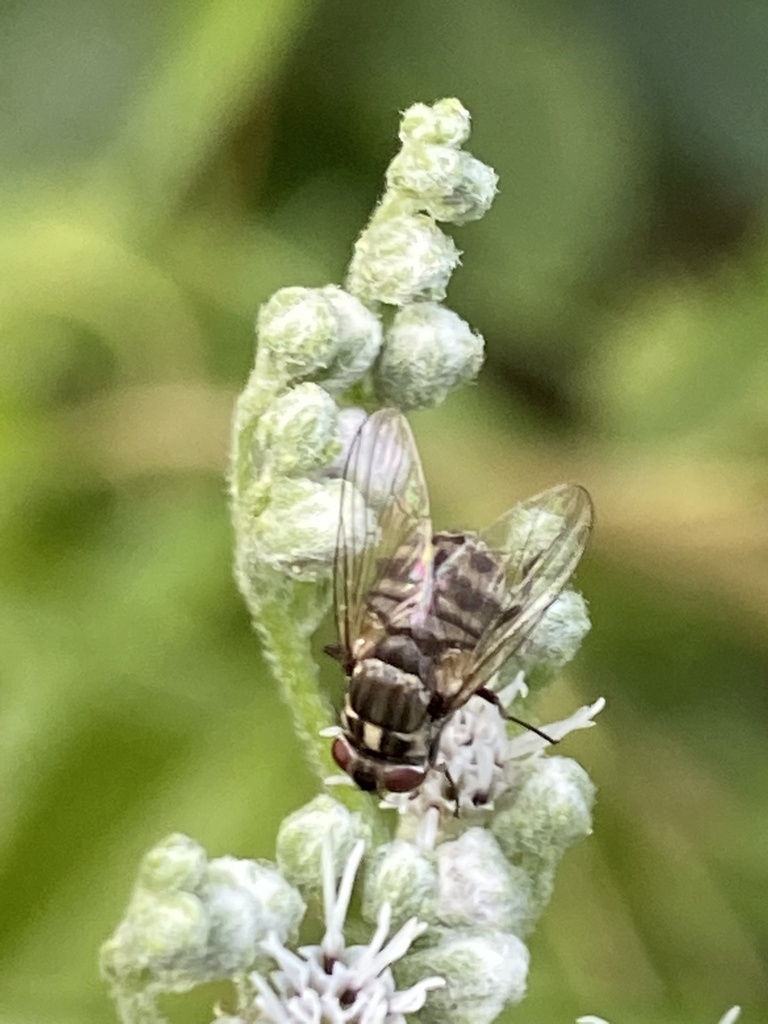
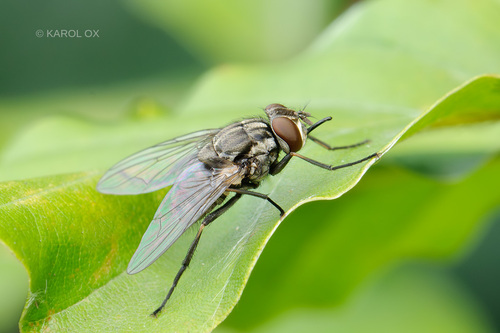
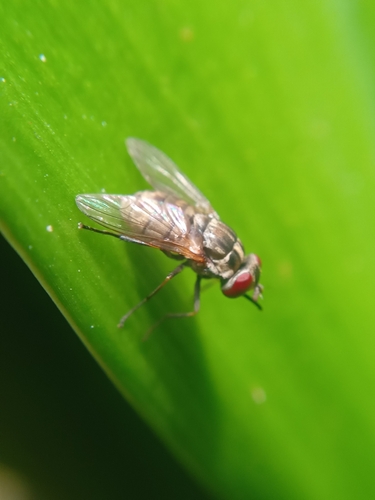
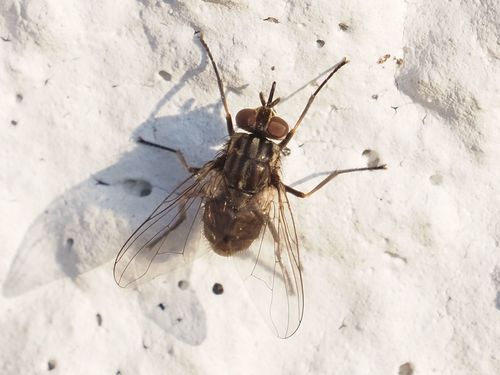
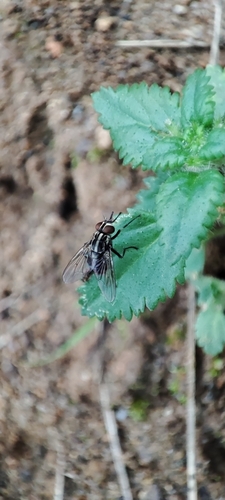
Adult stable flies resemble house flies but have a piercing, forward-projecting proboscis used for blood feeding. They are 5-7 mm long with a somewhat hump-backed thorax and patterned abdomen. The body and wings are generally grayish with darker longitudinal markings; wings are held folded over the back at rest. The mouthpart (proboscis) is rigid and visible projecting beneath the head, unlike the sponge-like mouthparts of non-biting house flies.
- Look for a 5-7 mm grayish fly with darker longitudinal thoracic markings and patterned abdomen.
- Check for a rigid, forward-pointing proboscis beneath the head used for piercing skin (visible in close photos) — unlike non-biting house flies.
- Observe behavior: stable flies actively bite and commonly rest on legs and lower body of livestock and humans, often repeatedly.
- Compare with house fly: stable flies are more robust, have piercing mouthparts and bite; house flies have sponge-like mouthparts and do not bite.
Lookalikes
House fly Musca domestica
House flies do not have a rigid piercing proboscis and do not blood-feed; stable flies are biting and have a visible forward-pointing proboscis.
Horn fly Haematobia irritans
Horn flies are smaller, stay on cattle most of the time and rarely disperse; stable flies are larger, more likely to bite off-host animals and are stronger fliers.
↻Life cycle
Egg
Females lay batches of 20-50 eggs in damp decaying organic matter mixed with manure, such as soiled straw, hay, silage, compost or decaying plant material.
Larva (maggot)
Larvae develop in the moist, nutrient-rich substrate for several days to weeks depending on temperature, consuming decaying organic matter and microorganisms.
Pupa
Larvae pupate in drier material or the surface layer; pupal development lasts a few days to a couple of weeks before adults emerge.
Adult
Adults emerge ready to feed; both males and females take blood meals and females need blood for egg development. Adults mate near hosts and breeding sites.
🍃Diet and predators
Young eat
Decaying organic matter and microorganisms in manure-mixed substrates
Adults eat
Blood from mammals (hosts include cattle, horses, dogs and humans); occasionally nectar and plant sugars for energy
Predators of the young
Predatory beetles, parasitic wasps and microbial pathogens in the substrate
Predators of adults
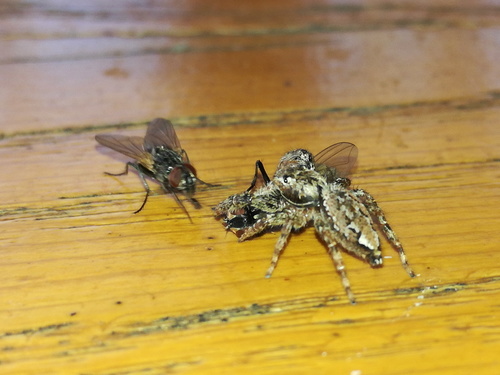
Birds, spiders, predatory insects and bats
🌱Effect on plants and gardens
Stable flies do not feed on plants; they feed on mammal blood and have little direct effect on vegetation, though heavy populations are tied to decaying plant material used as larval habitat.
How to get rid of stable flies
Sanitation to remove or dry out breeding material is the most effective control: remove or compost wet hay/straw, keep feed areas clean, avoid mixed organic waste with manure, clean manure-contaminated bedding and standing water. Traps (sticky panels, blue/black fabric or Alsynite fiberglass traps) reduce adult numbers near animals. Insecticide sprays or pour-ons for livestock, residual sprays on resting sites and larvicides can be used as part of an integrated program; rotate products and follow label instructions. Exclusion (screens, fans) helps protect people and indoor animals. For persistent problems consult an agricultural extension service or pest professional.
📍Where and when to find it
Adults: on animal legs, lower body, fences, walls and vegetation near livestock or compost piles. Larvae: in wet decaying organic matter mixed with manure, soiled straw, hay or silage.
Best time
Warm months (spring through autumn in temperate areas); active during daylight, especially mid-morning to late afternoon.
Observation tips
Look around livestock pens, compost heaps and damp straw; use close-up photos of the head area to show the piercing proboscis for identification. Wear protective clothing and repellents when inspecting infested areas.
✨Fun facts
- Both male and female stable flies feed on blood — unlike mosquitoes, where only the females bite.
- Stable flies are often mistaken for house flies but cause very different problems because they bite and feed on blood.
- Heavy stable fly populations can cause significant economic losses in livestock because animals spend more time avoiding flies and less time feeding.
?Frequently asked questions
Do stable flies bite humans?
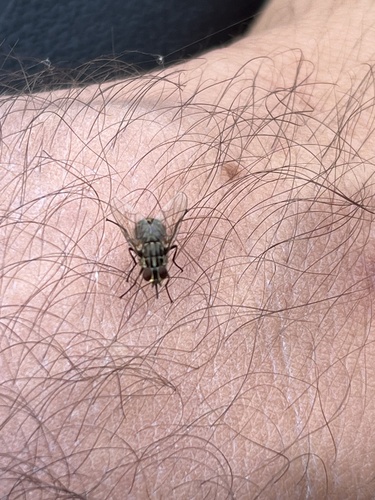
Yes. Stable flies bite people and their bites are painful; they usually target legs and ankles but will bite exposed skin.
Are stable fly bites dangerous?
Bites are painful and can cause itching, swelling and occasionally secondary infection from scratching. They are not a common source of severe human disease, but can transmit pathogens mechanically in some situations.
Why are stable flies in my house or yard?
They breed in moist, decaying organic matter mixed with manure or wet hay/straw. Nearby compost, soiled bedding, silage or piles of decaying vegetation attract them.
How do I get rid of stable flies?
Prioritize sanitation: remove or dry wet organic material mixed with manure, clean animal bedding and manage compost. Use traps and exclusion (screens, fans) and consult targeted insecticide or livestock treatments as needed as part of an integrated pest management plan.
Do insect repellents work on stable flies?
Topical repellents (DEET, picaridin) can reduce bites on people for a time. Repellents are less practical for livestock — physical barriers, fans and fly traps are often more effective around animals.
📷Photos of the stable fly
More flies & mosquitoes
This guide was written with AI assistance and fact-checked, last updated 2026-10-10. Identification from photos is never certain: don't handle insects you can't identify, and get medical advice for bites, stings or allergic reactions. More about the stable fly: iNaturalist, Wikipedia.