
Common house mosquito
Culex pipiens · Mosquitoes
A widespread, urban-adapted mosquito; females bite at night and can transmit pathogens such as West Nile virus.
!Is the common house mosquito dangerous?
Yes, it can be. Female Culex pipiens bite humans and birds to obtain blood. Bites are itchy but not usually dangerous on their own. However, this species can transmit pathogens (for example West Nile virus and some encephalitis viruses) in areas where those pathogens circulate. If bitten, clean the bite with soap and water and use ice or an anti-itch cream for relief. Seek medical care if you develop fever, severe headache, stiff neck, confusion or other flu-like symptoms after mosquito exposure.
Pets
Mosquito bites can annoy pets and, rarely, cause allergic reactions. Dogs and cats are not important hosts for the human viruses this mosquito carries, but Culex pipiens is among the mosquitoes that can transmit dog heartworm (Dirofilaria immitis) where it occurs. Ask your veterinarian about heartworm prevention.
📖Overview
Culex pipiens is a widespread, mainly temperate mosquito species commonly found around human habitation. It breeds in stagnant water in urban and suburban areas and is active mainly at dusk and through the night. Females require a blood meal to develop eggs and will bite humans and birds. Culex pipiens is an important vector of several pathogens, most notably West Nile virus in many regions; local disease risk varies by area and season.
The species is part of the Culex pipiens complex (closely related forms and subspecies) that can be difficult to separate without microscopic or genetic examination. It is highly adapted to urban life, commonly using polluted or artificial containers, storm drains, catch basins and sewage-influenced water for breeding.
🔍How to identify a common house mosquito
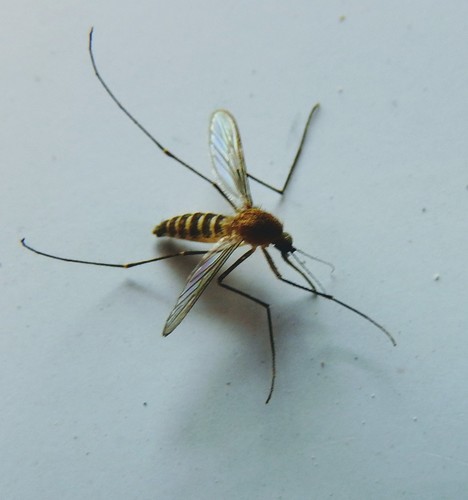
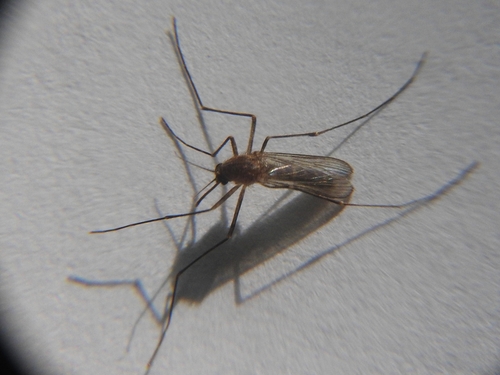
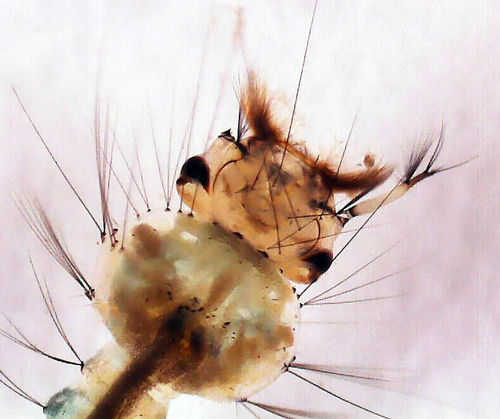
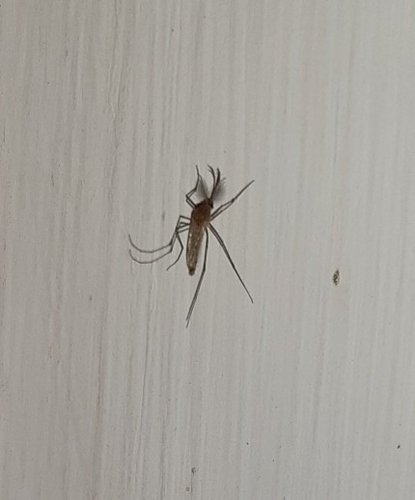
Adults are medium-small mosquitoes with a slender body and long legs. Typical coloration is various shades of brown and gray; wings appear clear to slightly dusky. Males have bushy (plumose) antennae, while females have sparse antennae and a pointed proboscis for blood feeding. Unlike Aedes aegypti, Culex pipiens lacks strong black-and-white banding on the legs or body and generally looks uniformly brownish.
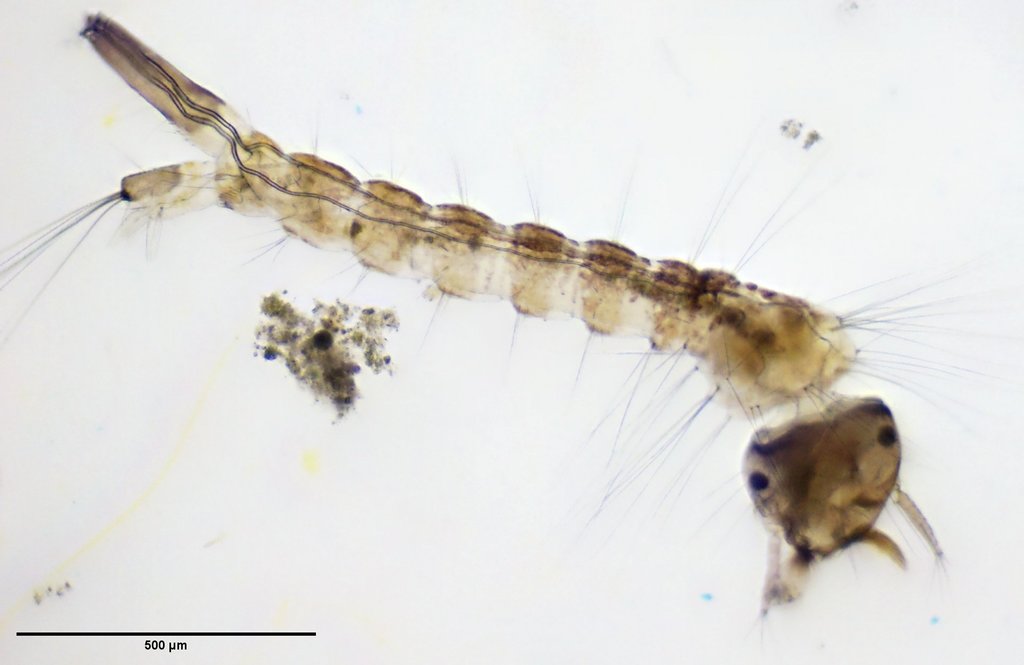
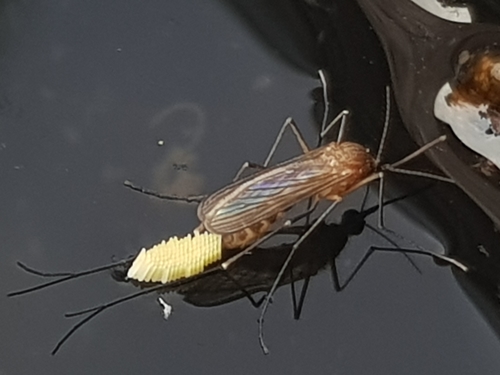
Eggs are laid in rafts of up to a few hundred eggs floating on still water. Larvae (wrigglers) are aquatic, cigar-shaped and hang at the water surface to breathe through a siphon. Pupae are comma-shaped and mobile at the water surface.
- Medium-small mosquito, overall brown to gray, lacking the bold black-and-white banding of Aedes species.
- Males have feathery antennae; females have sparse antennae and a long proboscis for biting.
- Often found resting in sheltered, shaded spots during the day and active at dusk and night.
Lookalikes
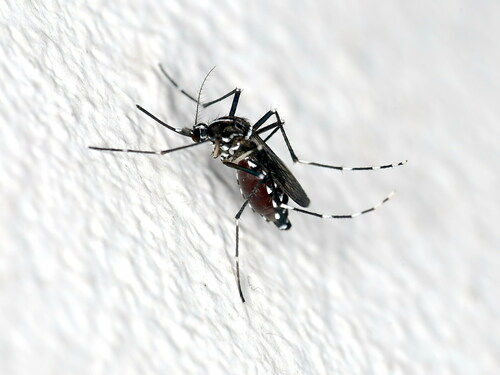
Yellow fever mosquito Aedes aegypti
Aedes aegypti has distinctive black-and-white markings on the body and legs and bites mainly during daytime; Culex pipiens is brownish and active at night.
Anopheles mosquito Anopheles spp.
Anopheles rests with body at an angle to the surface and has long palps in females; Culex rests parallel to surfaces and has shorter palps.
↻Life cycle
Egg raft
Females lay eggs in rafts of up to a few hundred eggs floating on still water surfaces; eggs hatch in 1-3 days depending on temperature.
Larva (wriggler)
Aquatic larvae feed on organic detritus and microorganisms; they breathe at the water surface via a siphon and go through four instars over several days to weeks.
Pupa (tumbler)
Non-feeding pupae develop for 1-3 days before the adult emerges at the water surface.
Adult mosquito
Adults emerge, feed on nectar; females seek blood meals to develop eggs and repeat the cycle.
🍃Diet and predators
Young eat
Filter-feed on algae, bacteria and organic detritus in water.
Adults eat
Males and females feed on nectar and plant sugars; females also take blood meals from birds and mammals (including humans) to produce eggs.
Predators of the young
Fish, aquatic insects (dragonfly and damselfly larvae), predatory mosquito larvae and some aquatic beetles.
Predators of adults
Bats, swifts and other insectivorous birds, spiders and predatory insects like dragonflies.
🌱Effect on plants and gardens
Culex pipiens does not feed on plants as adults beyond nectar and does not damage plants. Larvae filter organic matter from water and do not affect plants.
How to get rid of common house mosquitoes
Remove breeding sites: empty or tip out standing water weekly, clear clogged gutters, cover or screen rain barrels and water tanks, and keep septic systems sealed. Use Bti (Bacillus thuringiensis israelensis) larvicide in water that cannot be drained. Keep window and door screens in good repair and use an EPA-registered repellent (such as DEET, picaridin or oil of lemon eucalyptus) outdoors at dusk and night. Contact local mosquito control services for drains, catch basins and large problems.
📍Where and when to find it
Look for adults at dusk and night near lights, in garages, basements and shaded vegetation. Find larvae and pupae in stagnant water, especially in container habitats and polluted standing water.
Best time
Spring to autumn in temperate zones; evenings, nights and dawn are best for observing adult activity.
Observation tips
Photograph resting adults in sheltered spots with a close-up macro lens; larvae are easier to observe by sampling still water with a dropper or net. Wear protective clothing and repellents when working near breeding sites.
✨Fun facts
- Culex pipiens females are attracted to artificial light and human habitation, which is why they are common around houses at night.
- The species belongs to a complex of closely related forms; identifying exact members of the complex can require microscopic or genetic methods.
- Eggs are deposited in floating rafts rather than singly; a single female can lay several rafts during her life.
?Frequently asked questions
Do common house mosquitoes bite?
Yes — only females bite. They need a blood meal to develop eggs and will feed on humans and birds, usually at dusk or during the night.
Are Culex pipiens dangerous?
On their own bites are usually just itchy, but Culex pipiens can transmit diseases such as West Nile virus in areas where the virus is present. Local public health advisories indicate actual risk.
Why am I finding them in my house?
They enter at night attracted to light or to find a blood meal and rest in cool, sheltered indoor spots. Open doors, unscreened windows and nearby breeding sites (stagnant water) increase indoor presence.
How do I get rid of them?
Reduce breeding by removing standing water (empty containers, clean gutters, cover rain barrels). Use window/door screens, tight-fitting lids on water tanks, larvicides for unavoidable standing water, and personal protection like repellents and bed nets. Professional pest control can help for large infestations.
Where do they lay eggs?
In still or polluted water: containers, clogged gutters, storm drains, septic effluent, ponds with lots of organic matter, and other stagnant sources.
📷Photos of the common house mosquito
More flies & mosquitoes
This guide was written with AI assistance and fact-checked, last updated 2026-10-10. Identification from photos is never certain: don't handle insects you can't identify, and get medical advice for bites, stings or allergic reactions. More about the common house mosquito: iNaturalist, Wikipedia.