
Bee-like robber fly
Laphria thoracica · Robber flies
A bee-mimicking predatory fly that ambushes other insects from sunny perches and is harmless to gardens.
!Is the bee-like robber fly dangerous?
Only mildly. Adults are predatory and can deliver a painful bite if handled or squeezed, but they do not seek out people and are not venomous in the medical sense. If bitten, clean the area with soap and water, apply a cold pack to reduce swelling, and monitor for signs of infection or an unusual allergic reaction. Seek medical help if severe swelling, persistent pain, or allergy occurs.
Pets
Not known to be a threat to pets. A curious pet might receive a defensive bite if it grabs the fly, but there is no evidence of systemic toxicity to cats or dogs.
📖Overview
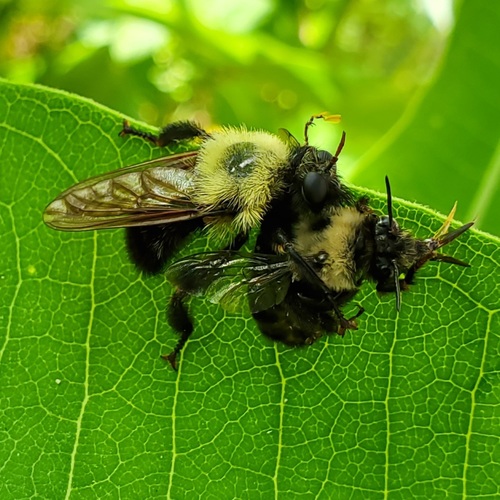
Laphria thoracica is a species of robber fly (family Asilidae) that closely resembles bumblebees and other hairy bees. Adults are active, visual predators that sit on sunny perches and launch rapid sallies to catch flies, bees, wasps and other insects in midair. They are most often seen in summer in wooded edges, meadows and gardens. Larvae live in soil, rotting wood or leaf litter and are also predatory.
The species uses its bee-like appearance as mimicry to avoid detection by prey and potential predators. Although adults are capable of delivering a painful bite if handled, they do not seek out humans and are not medically significant. They are beneficial in natural and garden ecosystems because they reduce populations of pest insects.
🔍How to identify a bee-like robber fly
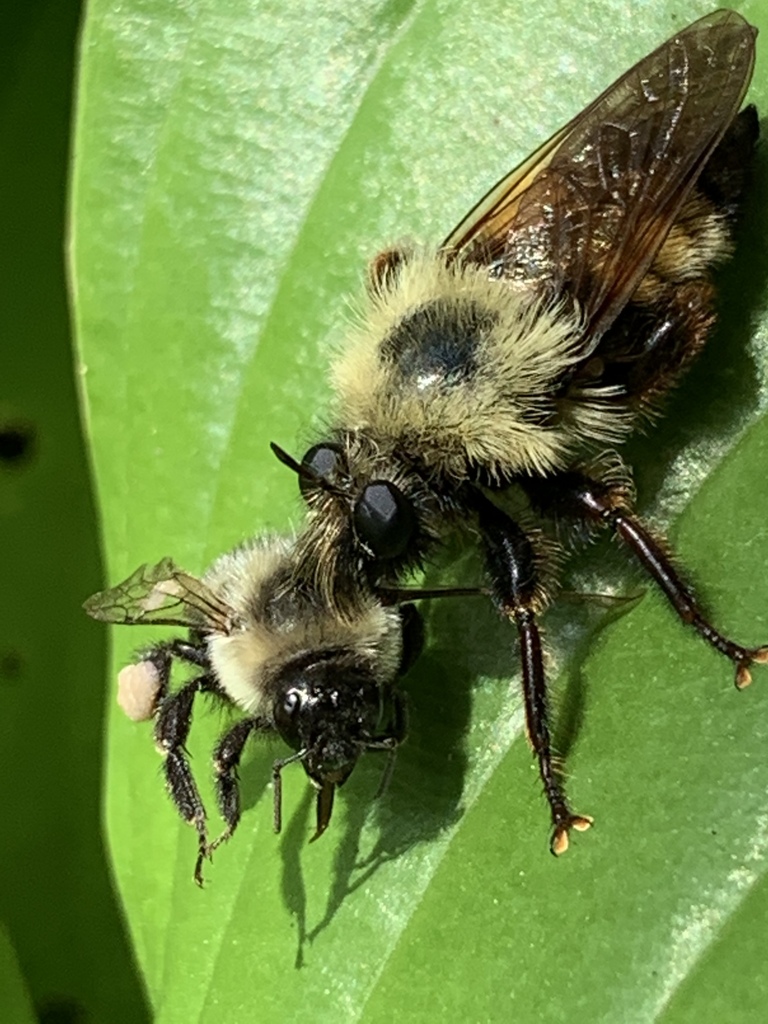
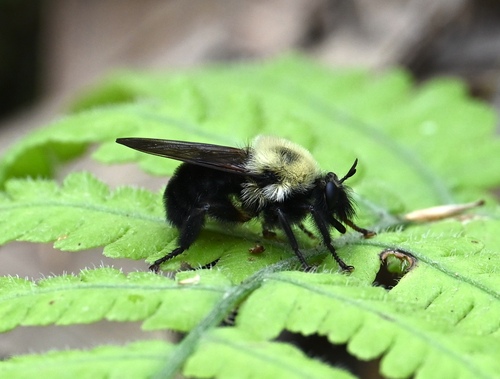
Adults are robust, densely hairy flies with a bumblebee-like profile. The thorax and abdomen usually show bands or patches of yellow to orange hair mixed with darker hair, giving a fuzzy, bee-like look. Legs are strong and often dark; the head has large compound eyes and a short, stout proboscis used to pierce and suck fluids from prey. Wings are clear or lightly tinted. Sexual dimorphism is subtle; males may be slightly smaller and have different eye spacing.
- Fuzzy, bumblebee-like appearance: dense yellow/orange and dark hairs on thorax and abdomen
- Robust fly body with large compound eyes and a short, stout proboscis (not a bee's tongue or long ovipositor)
- Perches in sunny spots and makes fast aerial sallies to catch other flying insects
- Legs are strong and adapted for grabbing prey in flight; wings are those of a true fly (one pair)
Lookalikes
Bumblebee Bombus spp.
True bumblebees are Hymenoptera with four wing surfaces, pollen-carrying structures on hind legs and no large predatory proboscis; robber fly has only one pair of wings and fly-style eyes and legs for grasping prey.
Other Laphria robber flies Laphria spp.
Several Laphria species mimic bees; identification to species often requires close examination of hair patterns, genitalia or geographic range.
Bee-mimicking hoverfly Various Syrphidae
Hoverflies have a different wing venation and typically hover near flowers; robber flies have a more robust, predatory posture and different flight strikes.
↻Life cycle
Egg
Eggs are laid in soil, leaf litter or decaying wood; details for L. thoracica are not extensively documented in the literature.
Larva
Larvae are predatory and live in soil, rotting wood or detritus where they feed on other insect larvae and small invertebrates.
Pupa
Pupation takes place in the soil or wood debris; pupal stage lasts weeks to months depending on temperature and season.
Adult
Adults are aerial predators that capture prey in flight, mate, and lay eggs to complete the cycle.
🍃Diet and predators
Young eat
Predatory on small invertebrates and insect larvae in soil and decaying wood
Adults eat
Predatory on other insects (flies, bees, wasps, beetles and other arthropods) captured in flight
Predators of the young
Ground-dwelling predators such as ants, ground beetles and small mammals
Predators of adults
Birds, larger predatory insects and spiders; their mimicry and agility reduce but do not eliminate predation
🌱Effect on plants and gardens
Adults visit areas with flowering plants because those areas attract prey (other insects), but they do not feed on nectar regularly and do not damage plants.
📍Where and when to find it
Adults: sunny perches on twigs, fences, or plant stems near flowers. Larvae: soil, leaf litter and rotting wood. Look near meadows, woodland edges and gardens.
Best time
Late spring to early autumn, during warm sunny afternoons when they actively hunt.
Observation tips
Watch quietly from a short distance; approach slowly and use a telephoto or zoom lens. Photograph perched individuals from the side to show hair patterns and body shape.
✨Fun facts
- Laphria thoracica mimics bumblebees so well that both predators and prey can be fooled.
- Robber flies inject saliva that liquefies internal tissues of their prey, then suck out the resulting fluid.
- Despite looking hairy and bee-like, they are true flies and have only one pair of wings.
?Frequently asked questions
Are bee-like robber flies dangerous to people?
Only mildly. They are not venomous to people, but an adult can bite if handled or trapped against skin. Bites are uncommon and usually cause only brief pain and minor swelling.
Do bee-like robber flies sting like bees?
No. They do not have a stinger. Any defensive injury would be a bite from their proboscis, not a sting.
Why is a bee-like robber fly in my garden?
They hunt other insects and use sunny perches in gardens and flower edges to spot prey, so gardens with flowers and insect activity attract them.
How do I get rid of them?
They are beneficial predators and usually don't need removal. If necessary, reduce sunny perches and heavy insect attractants or gently shoo them away. Avoid handling them directly.
Where does Laphria thoracica live?
It is found in wooded edges, meadows and gardens in parts of eastern North America; larvae develop in soil and decaying wood or leaf litter.
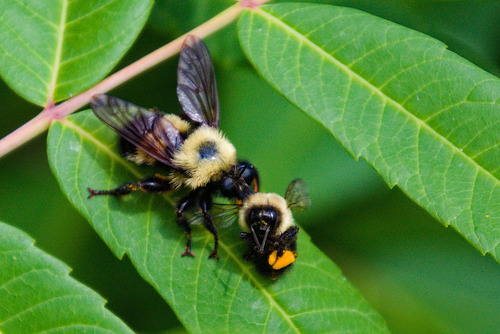
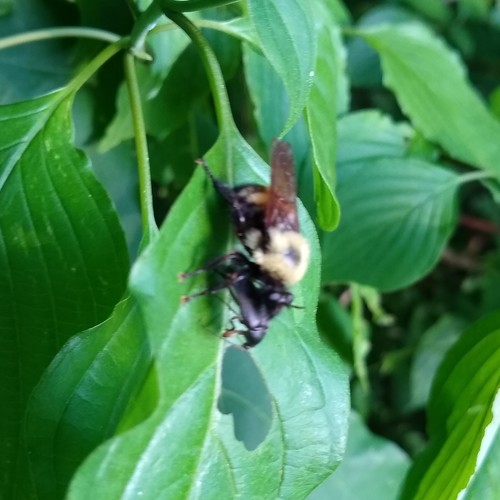
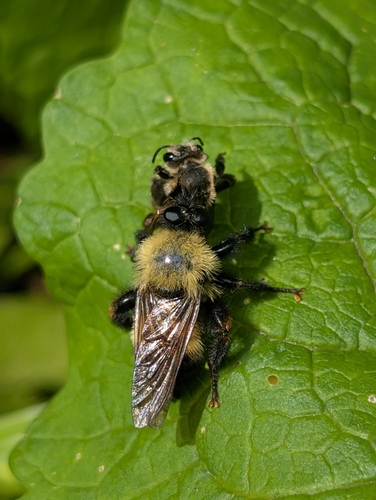
📷Photos of the bee-like robber fly
More flies & mosquitoes
This guide was written with AI assistance and fact-checked, last updated 2026-10-10. Identification from photos is never certain: don't handle insects you can't identify, and get medical advice for bites, stings or allergic reactions. More about the bee-like robber fly: iNaturalist, Wikipedia.